Travel Expert Issues Critical Insurance Warning for UAE Transit Passengers
Renowned travel journalist Simon Calder has issued a crucial warning to British travellers regarding insurance coverage when flying through United Arab Emirates airports. This advisory comes as the UK Foreign Office continues to recommend against all but essential travel to the UAE, with escalating regional tensions involving Iran creating significant aviation disruptions.
The Insurance Loophole for Transit Passengers
Simon Calder, who recently travelled from Jakarta to London via Abu Dhabi International Airport, revealed a critical detail that could leave many UK travellers unprotected. "You need to know that your insurance, if it's a standard policy, is probably not going to be valid whilst you are here," Calder emphasised during his journey. He explained that most insurance policies contain clauses invalidating coverage when travellers disregard Foreign Office advice against visiting specific regions.
The travel expert paid approximately £600 for his one-way flight through Abu Dhabi, noting that alternative routes avoiding Gulf airspace would have cost nearly three times as much. Despite the financial incentive, Calder stressed the importance of understanding insurance limitations before booking such itineraries.

Regional Escalation and Aviation Impact
The insurance warning emerges against a backdrop of heightened Middle Eastern tensions. Since February 28th, Iran has conducted retaliatory strikes targeting several of the region's busiest airports, including facilities in Dubai and Abu Dhabi that serve as hubs for Emirates and Etihad airlines respectively. Additional attacks have affected airports in Kuwait and Bahrain.
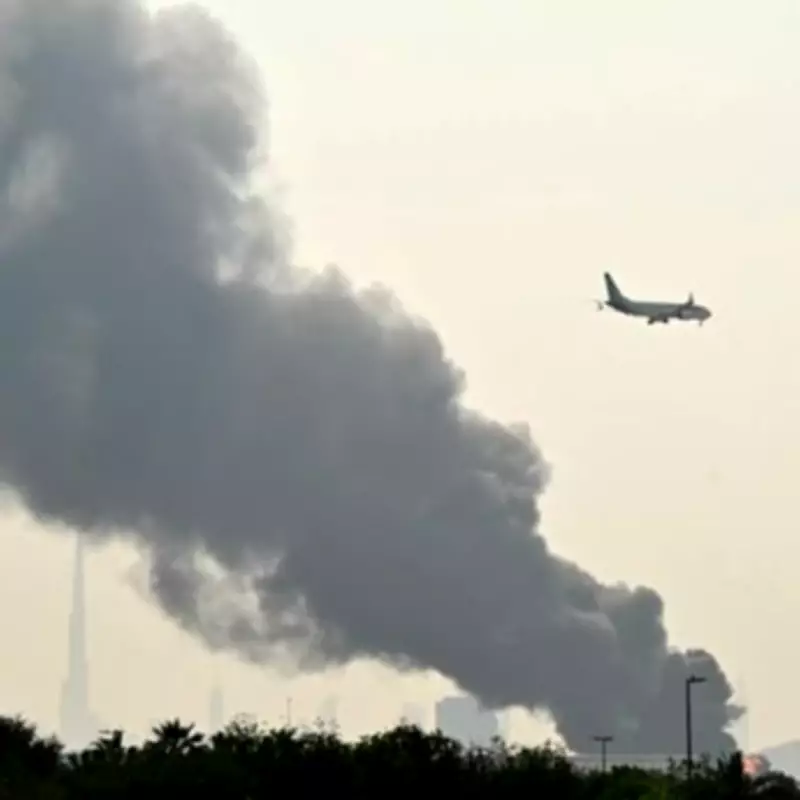
On March 16th, an Iranian drone assault on Dubai International Airport struck a fuel storage tank, causing significant fire damage. Earlier this month, Abu Dhabi's Zayed Airport experienced an attack resulting in one fatality and seven injuries, according to airport authorities. These incidents have prompted multiple airlines to extend flight cancellation periods and adjust their operational schedules.
Airline Responses and Operational Changes
Etihad Airways has implemented a restricted commercial flight schedule between Abu Dhabi and key destinations, accommodating previous bookings while advising passengers not to travel to airports without confirmed reservations. "Guests and members of the public should not travel to the airport unless they have been contacted directly by Etihad or hold a confirmed booking," the airline stated on its official website.
British Airways has suspended all flights to and from Dubai until at least June, citing continuing uncertainty and airspace instability in the region. Meanwhile, Emirates continues operating flights to Dubai, though many aircraft are reportedly departing with minimal passenger loads. Flight tracking data indicates Emirates operated 369 flights on a recent Sunday, representing approximately 70% fewer services than pre-conflict levels.
Symbolic Significance and Regional Strategy
Analyst Yasmine Farouk of the International Crisis Group suggests Iran's targeting of major Gulf airports carries symbolic importance beyond physical disruption. "The Iranian strikes are used to inflict a sense of isolation to those countries, to make their residents feel they are on their own and create panic," Farouk explained. She added that Tehran's strategy appears designed to regionalise and internationalise the conflict through Gulf nations from the outset.
While Gulf air defences have intercepted numerous drones and missiles, sufficient threats have penetrated to cause substantial operational disruption across the aviation sector. Dubai authorities recently confirmed successful air interception operations following reports of overnight explosions, urging residents to rely on official information sources.

Passenger Experiences and Practical Advice
Former England football manager Sam Allardyce found himself temporarily stranded in Dubai during the escalating tensions. The 71-year-old, who had been holidaying in the UAE, described his relief upon returning to Manchester Airport. "I'm happy to be back because of the devastating stuff that happened in Dubai," Allardyce commented on a football podcast, reflecting the uncertainty many travellers have experienced.
Simon Calder concluded with practical guidance for prospective travellers: "Things are changing all the time. If you are thinking of travelling to or through Abu Dhabi, please check ahead." His warning underscores the importance of verifying both travel advisories and insurance coverage before embarking on journeys involving Middle Eastern transit points during this period of regional instability.