The Danish Boycott Movement Against American Products
When Donald Trump declared last month that military intervention was "an option" for acquiring control of Greenland, an autonomous territory belonging to Denmark, it sent shockwaves across Europe and the NATO alliance. The controversy saw thousands of furious Danes march through Copenhagen, chanting "Greenland is not for sale." The American president had struck a nerve in a country where such protests almost never happen.
Tech Response to Political Tensions
Amidst the fury, tech developers in Denmark spotted an opportunity. Two applications called UdenUSA and Made O'Meter, both available on the App Store, can scan products and lay out where they have come from and by whom they are owned. In the past few weeks, they have been helping Danish consumers to systematically avoid purchasing American products as a form of political protest.
Our reporter Alex Croft attempted to join this boycott movement by avoiding American products for 24 hours. The assignment seemed straightforward initially, but revealed surprising complexities about global economic interdependence.

The Immediate Failure of Digital Detachment
"When my editor approached me with the idea of boycotting American products for 24 hours, it seemed straightforward," Croft reported. "The Canadians have been doing it. So have the Danes, using their new app. The truth is: I failed in seconds."
The failure came immediately when Croft responded to the assignment commission on Slack, which is owned by American software giant Salesforce. This initial stumble highlighted how deeply embedded American technology has become in daily professional and personal communications across Europe.
Uncovering American Dominance in Daily Life
After downloading the Danish apps, Croft began scanning personal items. An initial scan provided encouraging results: clothes came from British retailer Marks & Spencer and Japanese company UniQlo, while the smartphone was a Samsung device made in South Korea.
However, the situation deteriorated quickly. "I realised I was taking down my notes in a Google Doc on an Apple MacBook Pro, which was connected to a Dell monitor and an HP mouse: all American products," Croft discovered. This dilemma illustrated how US technology holds a uniquely dominant position in the global market, particularly in the digital sphere.
The Pervasive American Digital Footprint
According to recent Ofcom reports, more than half (54 percent) of UK smartphone users aged 16 or over use Apple iPhones, while 45 percent use Android devices primarily developed by Google. Streaming giant Netflix reaches an extraordinary 17.6 million homes in the UK - approximately one third of the entire population.
Croft's attempt to avoid American digital platforms proved particularly challenging. "All I had to do was block American apps such as Instagram, Facebook, X and WhatsApp - a difficult undertaking for a screen-addicted Gen Z man," he noted. The experiment revealed how social media and communication platforms have become essential infrastructure in modern life.
American Ownership in British Sports
Attempting to watch football provided another revelation. When Croft turned on his television to watch Chelsea battle Napoli in the Champions League on TNT Sports, he discovered the broadcaster is owned by American entertainment company Warner Bros Discovery. Furthermore, his own team Chelsea is owned by a California-based private equity firm and an American billionaire.
This situation highlighted the creeping dominance of British sport by American big business. Four of the country's biggest football clubs - Arsenal, Manchester United, Liverpool and Chelsea - are now majority US-owned, along with Fulham, Bournemouth and Everton. Given the centrality of football to English national life, the cultural impact of this ownership shift should not be underestimated.
Supermarket Surprises and Gym Revelations
A brief trip to the supermarket painted a slightly less bleak picture regarding food consumption. Approximately 60 percent of food consumed in the UK is sourced domestically, while 40 percent is imported - with the vast majority coming from the European Union rather than the United States. Iconic American food products like Spam and Quaker oats were notably absent from Croft's shopping list.

However, the boycott faced another setback at the gym. Only after his workout did Croft discover that his monthly PureGym subscription was being paid to US private equity firm Leonard Green & Partners, who acquired the company in 2017. This revelation demonstrated how American investment permeates even seemingly local services.
The Unavoidable Reality of Economic Interdependence
Croft's unsuccessful boycott reflected an unavoidable reality of European economic life. Despite political rhetoric about "strategic autonomy" in European capitals, the American economy still determines - to a large degree - the success of European economies. The United States remains the UK's largest single-country trading partner overall, accounting for approximately 17-18 percent of total trade in goods and services according to government figures.
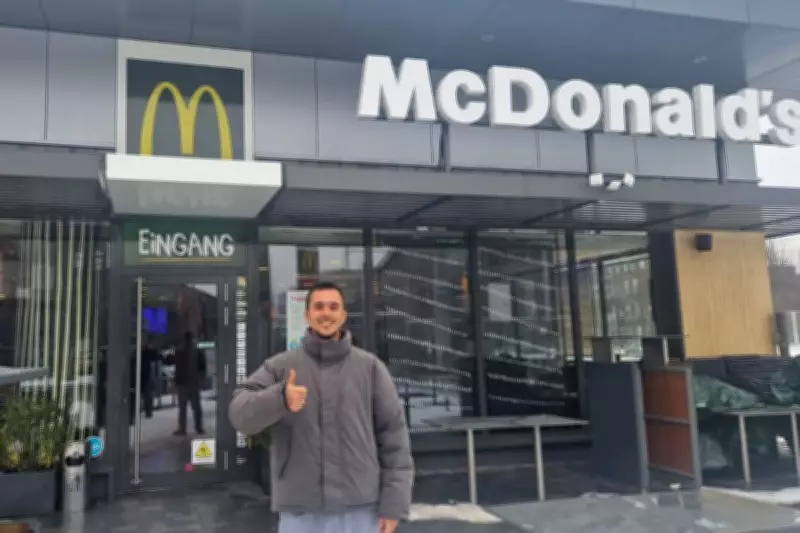
The experiment continued in Germany, where Croft traveled later in the week. Germany's culture and economy are also shaped in significant ways by American influence. After completing the 24-hour boycott attempt, Croft had only one destination in mind: McDonald's, perhaps the ultimate symbol of American cultural and economic presence in Europe.
The Danish boycott apps represent a novel form of political consumerism, but the reporter's experience suggests that completely avoiding American products and services in today's globalized economy presents nearly insurmountable challenges for the average European consumer.