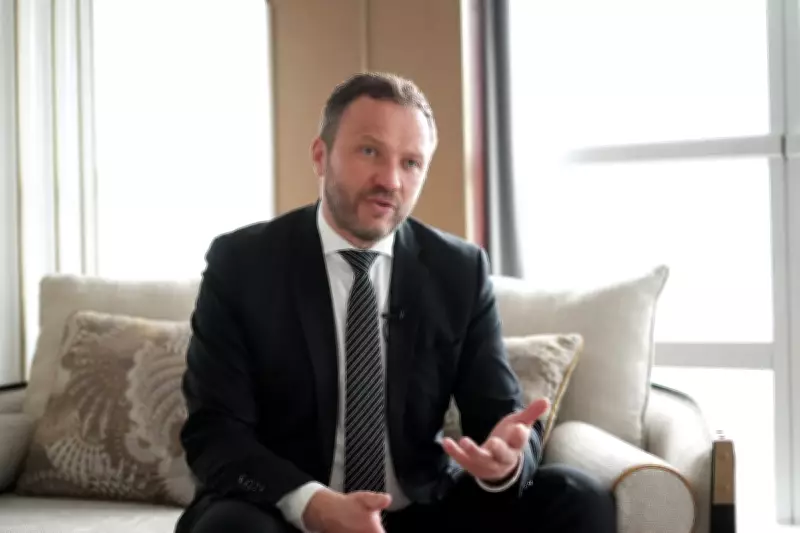
Estonian Foreign Minister Margus Tsahkna met with Vietnamese Prime Minister Le Minh Hung in Hanoi on Wednesday, marking a significant step in bilateral relations as Estonia seeks to expand cooperation in trade, technology, and digital transformation.
Deepening Digital Cooperation
Relations between Vietnam and Estonia have accelerated in recent years, culminating in a digital cooperation agreement signed in 2025. Despite Estonia's GDP accounting for only 0.2% of the European Union's total, the nation is renowned for its digital expertise and e-governance innovation. Estonia is now offering this expertise to Vietnam, a Southeast Asian export powerhouse pursuing reforms to become a high-income economy by 2045.
Tsahkna emphasized that cooperation on digitalization of services could help Vietnam reduce bureaucracy, improve transparency, and lower costs. “It is much more quicker for citizens to be part of public sector services,” he told the Associated Press in Hanoi. He also noted that Vietnam had proposed an education cooperation agreement.

Trade and Investment Requests
Prime Minister Hung requested Estonia to urge the European Union to ratify an Investment Protection Agreement and support efforts to lift the European Commission’s “yellow card” restricting imports of Vietnamese seafood due to illegal fishing concerns, according to state media.
Tsahkna highlighted that Estonia could serve as a gateway for Vietnamese businesses to Europe, while Vietnam offers Estonia a larger market and a foothold in Southeast Asia. “For us, Vietnam is one of the priority countries in the region,” he stated.
Geopolitical Context
The meetings also provided an opportunity for Tsahkna to convey Europe’s view of Russia as an “existential threat.” Vietnam has maintained a neutral stance on the war in Ukraine, advocating peace but avoiding direct criticism of Russia, with which it has had diplomatic relations since 1950.
Tsahkna noted that Estonia's outreach to Vietnam and Southeast Asia is driven by geopolitical pressures and economic opportunity, particularly as U.S. President Donald Trump’s criticism of European defense spending and tariff tensions compel Europe to look outward.
This article includes reporting from the Associated Press.