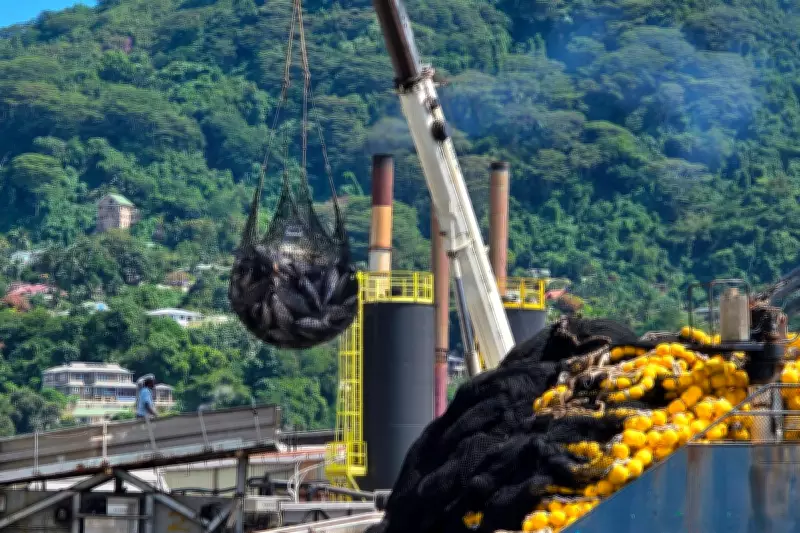
A new report published by the Blue Marine Foundation and Kroll has uncovered that European fishing companies are reflagging their vessels under the flags of coastal states such as Mauritius, Tanzania, Kenya, and Oman to gain access to larger tuna quotas in the Indian Ocean. This practice has allowed the European-owned fleet to expand to over 50 purse seine ships and supply vessels, enabling them to capture a third of the region's tropical tuna catch, including skipjack, yellowfin, and bigeye tuna.
Report Findings
The investigation, led by Jess Rattle, head of investigations at the Blue Marine Foundation, tracked the ownership of these vessels through layers of shell companies and foreign registries. While reflagging is common in the fishing industry and not illegal, it obscures the true impact of European companies on tuna stocks, which are already under pressure from overfishing. The report comes ahead of the annual Indian Ocean Tuna Commission meeting in the Maldives, where the EU and 28 countries will discuss management measures.
Industry Response
Europeche Tuna Group, representing the European tuna industry, defended the practice, stating that it reflects long-term investment in the region and strong local partnerships. Spokesperson Anne-France Mattlet highlighted that European companies pay taxes, fishing license fees, and invest in local infrastructure, benefiting coastal economies. However, environmental groups argue that reflagging undermines conservation efforts, especially for yellowfin and bigeye tuna, which are showing signs of recovery after severe overfishing.

EU Position
The European Commission stated that reflagging is a private business decision and that the EU does not represent vessels flagged to other countries. A spokesperson, Maciej Berestecki, emphasised that the EU promotes catch limits and has reduced yellowfin tuna catches by 21% for EU-flagged vessels. Yet, critics argue that these limits may be driving companies to seek quotas from other nations.
Calls for Transparency
Organisations like Pew Charitable Trusts, Global Fishing Watch, and Oceana are advocating for greater ownership transparency. A January report by Oceana found that European companies routinely register vessels under foreign flags, including countries accused of turning a blind eye to illegal fishing. Oceana's Vanya Vulperhorst noted that the real European fleet doubles when non-EU flagged vessels are included, and called for EU countries to collect and publish ownership data to enforce laws against illegal fishing.