US President Donald Trump's renewed ambition to acquire Greenland is colliding with the island's harsh realities, as experts warn its potential as a source of rare earth elements remains a distant and uncertain prospect. The president's drive to dismantle China's near-total control over these critical minerals is fuelling a geopolitical push that may overlook profound practical obstacles.
The Geopolitical Drive Behind the Mining Dream
President Trump has made it a clear priority to break Beijing's stranglehold on the global supply of rare earths. This urgency intensified after China restricted exports in response to widespread US tariffs imposed last spring. The administration has committed hundreds of millions of dollars and taken stakes in several companies to secure alternative supplies.
Now, the idea of wresting control of Greenland from Denmark is back on the table. "We are going to do something on Greenland whether they like it or not," Mr Trump declared last Friday. He framed the move as a strategic necessity, stating, "We don’t want Russia or China going to Greenland, which if we don’t take Greenland, you can have Russia or China as your next door neighbour. That’s not going to happen."

However, analysts suggest the interest is less about immediate mineral access and more about countering rivals. "The fixation on Greenland has always been more about geopolitical posturing — a military-strategic interest and stock-promotion narrative — than a realistic supply solution for the tech sector," said Tracy Hughes of the Critical Minerals Institute. "The hype far outstrips the hard science and economics."
Formidable Barriers: Ice, Rock, and No Roads
Greenland's capacity to produce rare earths is uncertain for years, if not indefinitely. The challenges are immense:
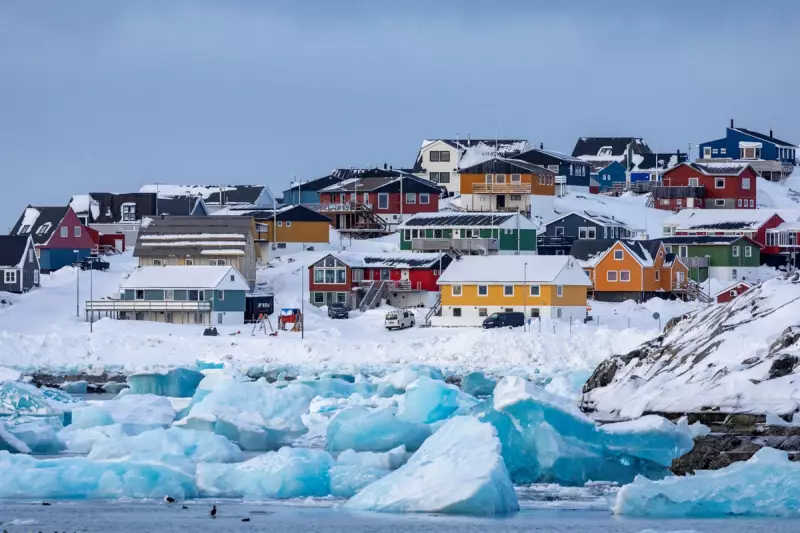
- Remoteness and Infrastructure: "Even in the south where it’s populated, there are few roads and no railways, so any mining venture would have to create these accessibilities," explained Diogo Rosa, a researcher at the Geological Survey of Denmark and Greenland. Power generation and importing expert manpower add to the complexity.
- Hostile Geology and Climate: The rare earths are trapped in a complex rock called eudialyte, from which no one has developed a profitable extraction process. Elsewhere, they are found in simpler carbonatites. Much of Greenland is under ice, with northern fjords frozen for much of the year.
- Environmental and Economic Conflict: The toxic chemicals needed to separate minerals pose a high pollution risk. Patrick Schröder of Chatham House notes this threatens a budding tourism industry. Furthermore, the elements are often found alongside radioactive uranium.
David Abraham, a rare earths expert, argues for pragmatism: "If we’re in a race for resources — for critical minerals — then we should be focusing on the resources that are most easily able to get to market."
A Global Race: More Promising Projects Elsewhere
While some companies are exploring Greenland's estimated 1.5 million tonnes of rare earths, progress is slow. Critical Metals' stock surged this week after announcing a pilot plant, but it and over a dozen others are far from building a mine, needing to raise hundreds of millions of dollars.
Many in the industry believe the US should focus on proven ventures. "There are very few folks that can rely on a track record for delivering anything in each of these instances, and that obviously should be where we start," said Scott Dunn, CEO of Noveon Magnetics, which already produces magnets in Texas from non-Chinese elements.
The US is scrambling during a one-year reprieve from tougher Chinese restrictions, agreed in October. More advanced projects in the US, like MP Materials' mine, and in allied nations like Australia, offer quicker potential. China's history of dumping material to crash prices also makes any new venture risky.
As Ian Lange, a professor at the Colorado School of Mines, starkly put it: "Everybody’s just been running to get to this endpoint. And if you go to Greenland, it’s like you’re going back to the beginning." For now, the dream of Greenland's rare earths wealth remains locked in ice, overshadowed by a geopolitical struggle.