Sanctions Reshape Russian Wine Shelves
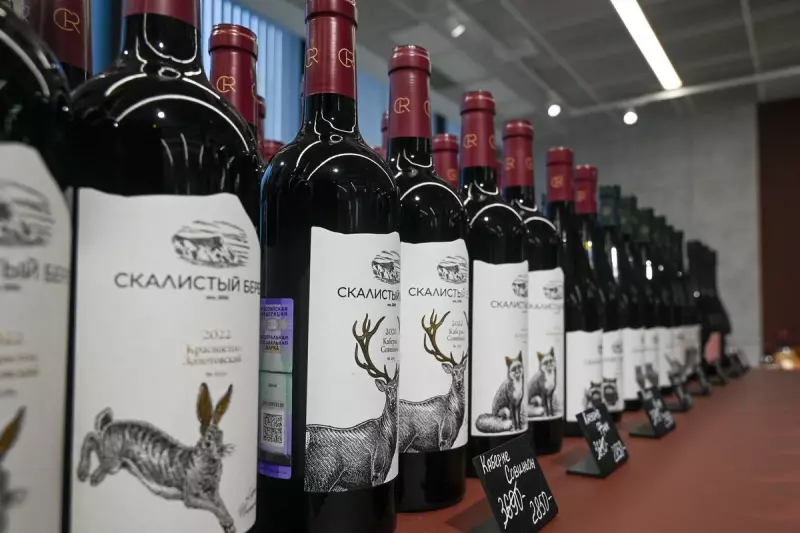
Supermarket aisles in Russia, once filled with prestigious French Burgundy and Italian Barolo, are now dominated by homegrown vintages. This dramatic shift in consumer habits is a direct consequence of the extensive Western sanctions imposed following President Vladimir Putin's decision to send troops into Ukraine in early 2022.
The measures have driven up prices and severely limited the availability of foreign brands, pushing Russian consumers towards local alternatives. Russian wine sales have surged to comprise around 60% of the market, a significant leap from just 25% a decade ago.
A Market Transformed by Taxes and Taste
Yury Yudich, head of the Federation of Restaurateurs and Hoteliers' committee on Russian winemaking, confirmed the trend. "Russian wine has gained a very high share of the Russian market," he stated, pointing to higher taxes levied on goods from "unfriendly countries" as a key driver.
"Gradually the market began to change, and wine prices began to rise," Yudich explained. "Imported wines have probably increased in price by 30-40%." Despite the rapid growth, he noted that Russian consumers are still in the process of acclimatising to the flavours of local wines, which now sit alongside Georgian and Armenian offerings on Moscow's shelves where French, Italian, and South American labels once held pride of place.
Reviving a Historic Wine Region
The backdrop to this modern-day boom is the ancient Black Sea region, where grapes have been cultivated for millennia. However, this tradition was brutally interrupted by the tumult of the 20th century. Revolution, civil war, and later Soviet anti-alcohol campaigns—notably under Mikhail Gorbachev in 1985—decimated countless Russian vineyards.
The industry's rebirth began after the economy started to recover from the chaos that followed the 1991 collapse of the Soviet Union. Pioneering investors began acquiring land in southern Russia and even recruited top-tier vintners from renowned wine regions in France and Italy to help re-establish quality production.
This revival is palpable at wineries like Cote Rocheuse, nestled near the Black Sea resort of Anapa. Chief vintner and production director Irina Yakovenko detailed their success: "We began selling wines in 2022, and that same year we opened to tourists. Since then, we have been increasing production volumes every year, and sales are still increasing."
Their growth, however, is not without its limits. Yakovenko added, "We have a limit on both vineyards and winemaking capacity - 500,000 bottles per year." The winery cultivates classic European varieties like Merlot and Chardonnay alongside native Russian grapes such as the Krasnostop Zolotovsky, creating a distinct local profile shaped by Russian soil and climate, despite relying on French and Italian equipment.
This domestic success story is one that the Kremlin has been keen to promote. President Putin has repeatedly highlighted Russia's economic resilience in the face of over 25,000 different sanctions—the majority imposed after the 2022 invasion—and has urged businesses to find ways to circumvent them.
For some visitors, like tourist Galina Romanova, the choice is now a patriotic one. "I want other people, mainly our children, to see this, so they don't buy Italian or German wines, but ours," she told Reuters. "Our wines are the best."