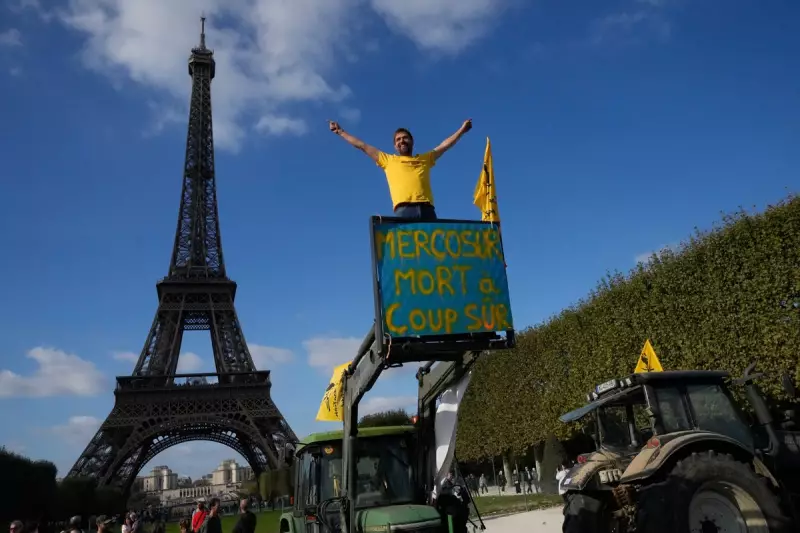
A historic free-trade agreement between the European Union and South America's Mercosur bloc, negotiated over a quarter of a century, is facing a dramatic last-minute collapse. The deal is being jeopardised by fierce political opposition from France and large-scale protests from European farmers who are converging on Brussels.
French Veto and Farmer Fury Derail Final Signing
Just days before a scheduled signing ceremony, French Prime Minister Sébastien Lecornu declared the current terms of the EU-Mercosur trade deal "unacceptable." He stated that the conditions for a crucial vote by EU leaders this Thursday "have not been met" and formally requested a delay, potentially pushing ratification into 2026 or later.
This intervention throws plans into chaos. Both European Commission President Ursula von der Leyen and European Council President António Costa were due to travel to Brazil to sign the accord on 20 December. The deal, agreed in principle a year ago, would progressively eliminate duties on most goods traded between the two blocs over 15 years, creating a unified market of 780 million people representing a quarter of global GDP.

Core Concerns: Agriculture and Geopolitical Credibility
At the heart of the dispute are fears from European farmers and several member states, including Poland, Austria, and the Netherlands, that the pact will unleash unfair competition. They argue that producers from Mercosur nations—Brazil, Argentina, Uruguay, Paraguay, and Bolivia—could undercut EU products because they are not bound by the same stringent labour, sanitary, and environmental regulations, such as restrictions on pesticides.
Alicia Gracia-Herrero of the Bruegel Institute noted that France has failed to secure a "mirror clauses" agreement, which would force Mercosur exporters to match EU standards. She suggested the stalemate reflects limits on the EU's political unity, stating, "If we cannot get this done even with (U.S. President Donald) Trump’s pressure, what can you expect from the EU?"
Despite the opposition, the European Commission insists the deal is vital for the bloc's geopolitical standing. A spokesperson, Olof Gill, argued it creates a "platform based on trust" to tackle global challenges like climate change and economic security. Proponents highlight the potential for the deal to save businesses an estimated $4.26 billion in duties annually and boost exports of products like French wine and German pharmaceuticals.
Protections Fail to Soothe Anxieties as Tractors Roll Again
In response to the backlash, Brussels has proposed new safeguards. These include a mechanism allowing farmers to trigger investigations if Mercosur import prices are at least 10% lower than EU equivalents, and a pledge to increase border inspections for banned pesticides.
However, these measures have not placated French concerns or the anger of the agricultural sector. Agricultural unions are planning fresh demonstrations in Brussels to coincide with the European Council meeting. This echoes the disruptive tractor protests seen across European capitals in early 2024, which were championed by far-right groups.
The fate of the EU-Mercosur trade agreement now hangs in the balance. Its failure would represent a significant setback for the EU's trade strategy, especially as it seeks to diversify partnerships in the face of aggressive trade tactics from both the United States and China.