US Invests in South African Rare Earth Extraction Despite Diplomatic Rift
The United States is advancing a significant $50 million equity investment in South Africa's Phalaborwa Rare Earths Project, targeting the extraction of critical minerals from industrial mining waste. This initiative forms a key component of the Trump administration's broader strategy to diminish American dependence on China for essential resources used in high-tech industries.
Project Details and Strategic Importance
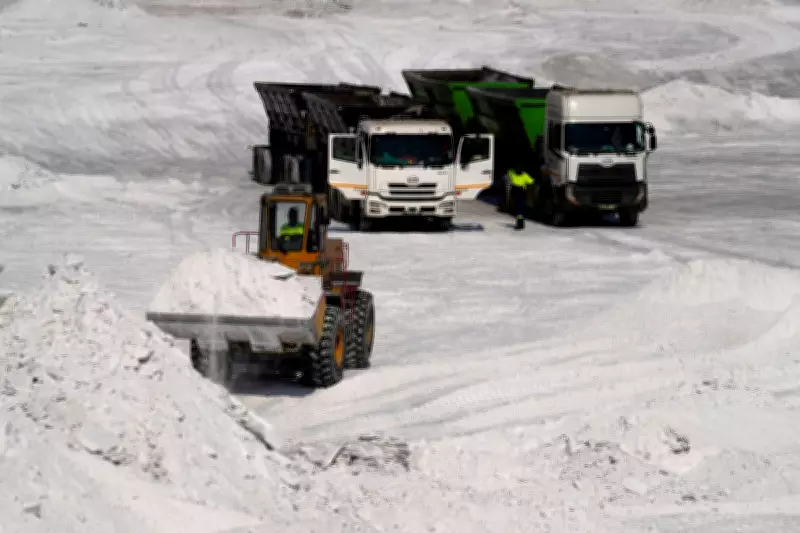
Located at an old chemical processing plant in South Africa, the Phalaborwa project focuses on two enormous sandlike dunes composed of 35 million tons of phosphogypsum, a byproduct from phosphate rock processing. These dunes contain rare earth elements like neodymium, praseodymium, dysprosium, and terbium, which are vital for manufacturing electronic devices, robotics, defense systems, electric vehicles, and wind turbines.
The investment is facilitated through the US International Development Finance Corporation (DFC), established during the first Trump administration. Despite a major diplomatic rift with South Africa that began when President Trump returned to office and halted financial assistance to the country in February, the administration has prioritized economic concerns, moving forward with the project to secure mineral supplies.

Operational Timeline and Environmental Aspects
Rainbow Rare Earths, the company developing the project, aims to commence extraction in 2028, with operations expected to last 16 years. The $50 million DFC funding will be allocated once construction of the processing factory in Phalaborwa begins in early 2027. Notably, the project plans to utilize up to 90% renewable energy for mineral extraction, potentially making it a low-cost producer comparable to Chinese operations.
George Bennett, CEO of Rainbow Rare Earths, emphasized the project's significance for US defense systems, while project director Alberto Bruttomesso highlighted the cost advantages, noting that previous processing of the waste has already incurred energy-intensive steps like heating, which typically drive up expenses.
Broader Context and Global Competition
This project is part of accelerated US efforts to create a strategic reserve of critical minerals, with the Trump administration deploying nearly $12 billion this year. It aligns with other initiatives, such as investments in US domestic mining and deals abroad, including in Ukraine and Greenland. In Africa, the US is also supporting projects like the Monte Muambe rare earths study in Mozambique and the Lobito Corridor railway linking mineral-rich regions.
Experts like Neha Mukherjee of Benchmark Mineral Intelligence point out that while the Phalaborwa project's experimental above-ground extraction process is unique and low-cost, its full potential remains uncertain. However, it addresses a critical gap, as there are insufficient projects outside China to meet global demand. Patience Mususa from the Nordic Africa Institute notes that the US is "trying to catch up" in African mining investments, where China currently dominates.
The South African government does not hold a direct stake in the Phalaborwa project, which is being developed in partnership with TechMet, a company focused on securing critical mineral supplies for Western nations. This underscores the project's role in advancing US strategic interests while tapping into Africa's mineral potential, despite ongoing diplomatic tensions.