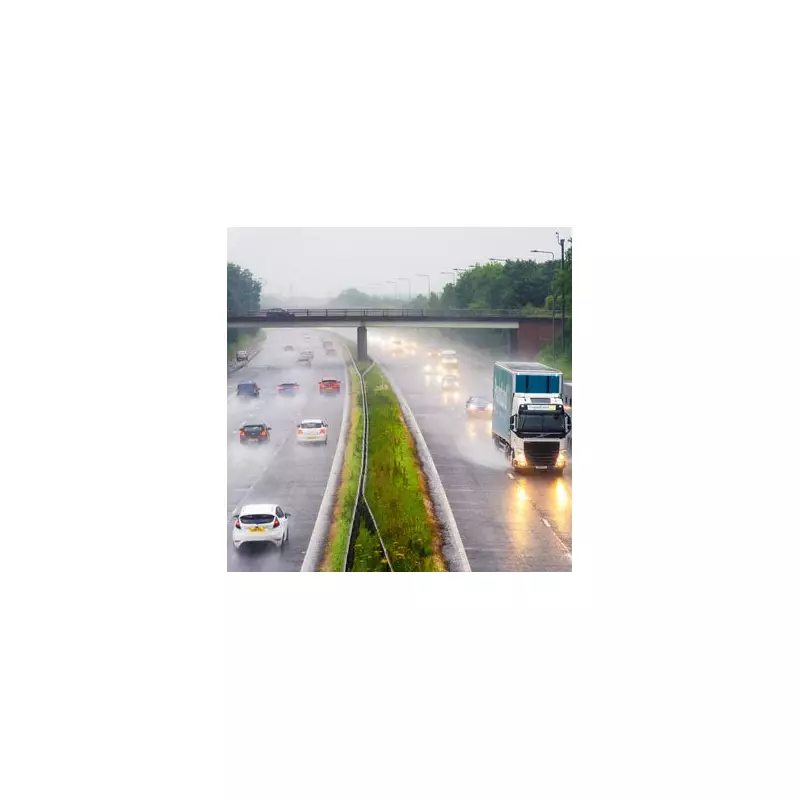
Driving Instructor's Vital Safety Guidance for Storm Chandra Conditions
A qualified driving instructor has issued three fundamental rules that all motorists should follow as Storm Chandra brings severe weather conditions to roads across the United Kingdom. With the Met Office implementing an amber weather warning and nearly three hundred flood alerts active, these guidelines could prove essential for driver safety.
Critical Weather Conditions and Official Warnings
The Met Office has confirmed that amber weather warnings are in effect, with forecasts predicting wind gusts reaching up to 80 miles per hour in certain regions. As of Tuesday morning, January 27th, authorities have activated 290 separate flood alerts across the country. The initial weather alerts commenced at midnight and are scheduled to remain active for approximately seventeen hours.
Forecasters are anticipating significant rainfall totals of 20-30 millimetres across impacted areas, with some locations potentially experiencing between 40-50 millimetres. Furthermore, the Met Office has warned of a sharp increase in snow accumulation at higher altitudes, predicting two to five centimetres above 300 metres, five to ten centimetres above 400 metres, and ten to twenty centimetres above 500 metres.

Three Essential Driving Rules for Storm Conditions
Mark Zondo, a driving instructor who shares expertise as Theory Test Hero on social media platforms, has outlined three critical safety measures for drivers facing these treacherous conditions.
- Utilise Your Headlights Effectively: "In these kind of conditions there's a lot of spray and surface spray, so it's a good idea to put your headlights on," Zondo advised. He emphasised that using dipped headlights makes vehicles significantly more visible to other drivers, including lorry operators who may struggle to spot cars during lane changes, even in daylight hours.
- Maintain Substantial Following Distance: Regarding spacing between vehicles, Zondo recommended keeping a "nice" distance from the motor ahead. "You can't really see much for one, there's a lot of spray and also the road is very slippery because of the wet and so you don't want to be too close in case you have to brake suddenly," he explained.
- Employ Gradual Deceleration Techniques: Demonstrating his final piece of advice, Zondo highlighted the importance of easing off the accelerator gradually rather than applying brakes sharply. This technique allows for safer vehicle deceleration during torrential rainfall when road surfaces become particularly hazardous.
Road Closures and Official Guidance
Several major roads and bridges have already been closed in both directions due to the dangerous conditions created by Storm Chandra. In response to the severe weather, National Highways has issued its own comprehensive guidance for road users.
"Road users are advised to plan ahead, avoid unnecessary travel where possible, and allow extra time for journeys," the transport authority stated. They further cautioned that "drivers should be aware that surrounding local roads may also be affected by flooding and should not attempt to drive through floodwater."
Infrastructure Concerns and Flood Management
Addressing wider flooding concerns, National Highways revealed that specialist crews will be conducting thorough inspections of carriageway drainage infrastructure. These inspections will focus on gullies, culverts, and ditches, searching for obstructions caused by leaves, silt, and debris swept along by the heavy downpours.
The transport body issued a stern warning: "If drainage systems are overwhelmed or obstructed, water cannot recede naturally, prolonging closure times." This highlights the importance of maintaining clear drainage systems to minimise disruption and ensure roads can reopen safely once weather conditions improve.
With Storm Chandra expected to cause significant disruption across UK transport networks, following these expert driving guidelines and official advisories could prove crucial for motorist safety during this period of extreme weather.