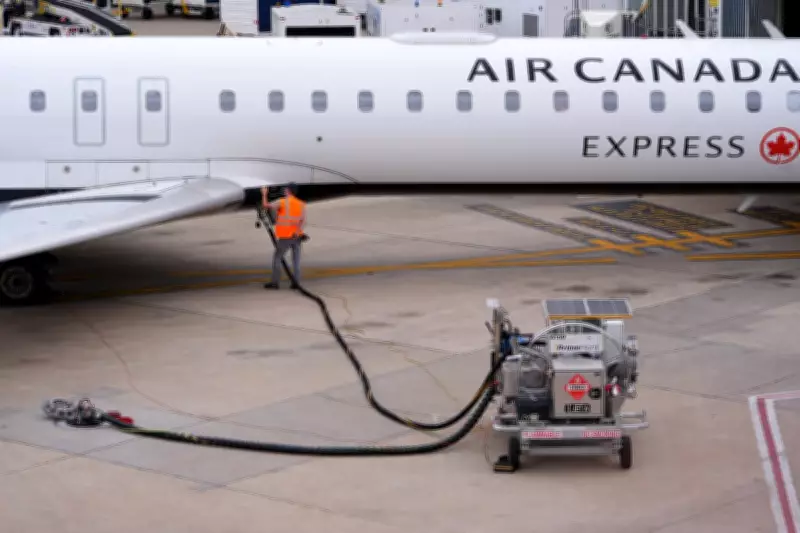
Air Canada Suspends Key Routes as Aviation Fuel Costs Skyrocket
Air Canada has announced a temporary suspension of flights from Toronto and Montreal to New York's John F Kennedy International Airport, effective from 1 June. The airline cites escalating aviation fuel prices, which have doubled since the onset of the US and Israel's military conflict with Iran earlier this year. This move highlights the growing strain on global airlines as fuel costs remain elevated despite a recent ceasefire in the region.
Fuel Price Surge Forces Schedule Adjustments
In a statement released on Friday, Air Canada explained that jet fuel prices have risen dramatically, making some lower-profitability routes economically unviable. The airline is implementing schedule adjustments, including frequency reductions, to mitigate the impact. Flights from Montreal and Toronto to JFK will be paused until 25 October, with affected customers being offered alternate travel options to nearby airports such as New York's LaGuardia and New Jersey's Newark Liberty International Airport.
According to reports from the Canadian Broadcasting Corporation, the suspension affects one flight from Montreal and three from Toronto. Air Canada emphasized that it will continue to operate 34 daily flights to LaGuardia and Newark from six Canadian cities, aiming to minimise disruption for travellers.

Broader Industry Turmoil and Emergency Measures
The aviation industry is facing widespread challenges due to the fuel cost crisis. Separately, Spirit Airlines has reportedly requested hundreds of millions of dollars in emergency funding from the US federal government to offset soaring fuel expenses, as revealed by industry website The Air Current. Spirit Airlines has not yet commented publicly on the matter.
Other airlines are also feeling the pressure. EasyJet, a British budget carrier, anticipates a pre-tax loss of £540 million to £560 million for the six-month period ending in March. In Australia, Qantas and Virgin Australia have responded by increasing ticket prices and reducing flight frequencies.
Additional Route Suspensions and Capacity Impact
Air Canada's temporary suspensions extend beyond New York routes. The airline will halt its Salt Lake City to Toronto service from 30 June, with plans to resume in 2027. Additionally, the launch of a new route from Guadalajara, Mexico, to Montreal has been delayed. These changes are expected to affect approximately 1% of Air Canada's overall passenger-carrying capacity.
Global Fuel Reserves and Future Concerns
The International Energy Agency has issued a stark warning, noting that Europe has only about six weeks of jet fuel reserves remaining before potential shortages occur. Fatih Birol, the IEA's executive director, attributes this precarious situation to ongoing instability in the Middle East. He cautioned that flight cancellations could "soon" follow if oil supplies from the region are not restored in the coming weeks.
Although Iran reopened the Strait of Hormuz recently, providing some relief to oil prices, aviation fuel costs remain significantly higher than pre-conflict levels. The fragile ceasefire between the US, Israel, and Iran has done little to alleviate the financial burden on airlines, which continue to grapple with the aftermath of weeks of disruption.
As airlines worldwide reassess their operations, passengers may face further schedule changes and price increases. The situation underscores the vulnerability of the aviation sector to geopolitical tensions and fluctuating fuel markets, with no immediate resolution in sight.