Airlines Introduce Fees for Human Customer Service as AI Becomes Default
In a significant shift for the travel industry, several major airlines have begun charging passengers substantial fees for the privilege of speaking with human customer service representatives rather than interacting with automated artificial intelligence systems. This emerging practice, which sees carriers like American Airlines imposing a $50 charge for telephone bookings with live agents, represents what industry experts describe as a potential "business class" approach to customer service in an increasingly automated world.
The Human Interaction Premium
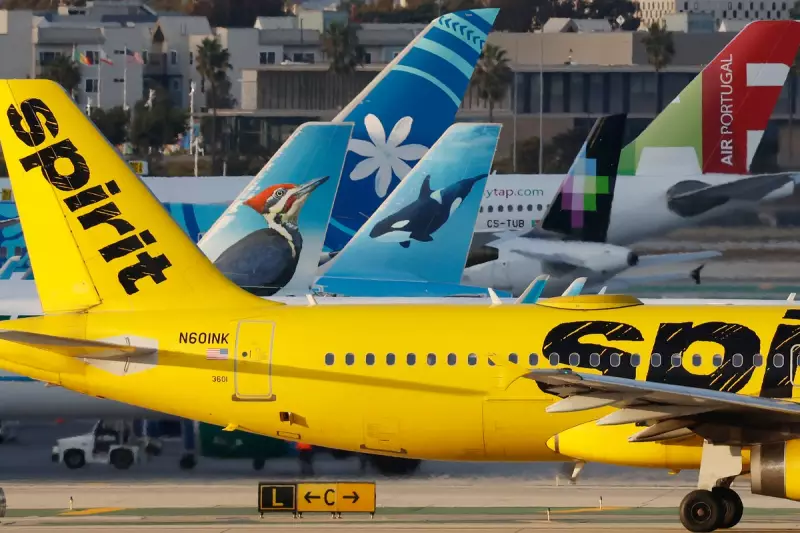
While no airline explicitly states that these fees are designed to "bypass AI," the practical reality for consumers is exactly that. American Airlines leads with the highest charge at $50 for phone bookings with human assistance, while Hawaiian Airlines, JetBlue, and Spirit Airlines all implement a $25 fee for similar services. These charges come despite overwhelming consumer preference for human interaction, with recent surveys indicating that 93 percent of customers prefer talking to a human representative and 89 percent believe brands should always offer a human option.
Steve Schwab, CEO of vacation rentals firm Casago, highlighted a significant demographic concern, noting that "a large percentage of older generations don't understand AI well enough to use it effectively." This creates potential accessibility issues as airlines increasingly push customers toward automated systems.

Industry Perspectives on Human Value
Travel industry professionals offer contrasting perspectives on this controversial development. Luciano Armanasco, founder of Italy-based tour operator Our Dolce Vita, argues that charging for human access can be reasonable when tied to genuine value. "From our perspective as a high-ticket, all-inclusive tour operator, the question isn't whether people will use AI—they already do," he explained. "The real question is when AI is enough, and when a human advisor becomes worth paying for."
However, James Heimers from customer engagement agency Rapp warns of significant brand risks. "If you monetize access to humans, you risk creating a two-tier experience where those who can afford it get help and those who cannot get stuck in loops," he cautioned. "If the default AI route is knowingly unable to resolve real issues and customers have to pay to access basic problem-solving, that is a dangerous brand position in an industry where things do go wrong."
The AI Advantage in Travel Services
Proponents of AI integration point to significant operational advantages. Lori Stephens, Founder and CEO at Sojourney Travel, notes that "AI tools are excellent at handling routine tasks. They can quickly create policies, booking options, pricing ranges and basic itinerary details. For straightforward information and research, AI can give efficiency that benefits both the company and the consumer."
Hakob Astabatsyan, CEO and founder of voice AI platform SynthFlow AI, emphasizes AI's scalability during disruptions. "When weather events or mass cancellations overwhelm call centers, AI can scale instantly, handling thousands of conversations at once, and that's something no human team can realistically do overnight," he explained. "Used properly, it prevents customer service from collapsing when demand spikes."
Where Human Expertise Remains Essential
Despite AI's capabilities, industry leaders agree that human judgment remains irreplaceable for complex situations. Hakob Astabatsyan notes that human support remains essential for decisions "that require empathy, discretion or creative problem-solving," while Lori Stephens adds that "a trained travel professional understands nuance, emotion, and consequence."
Stephens elaborated further: "Travel advisors advocate during disruptions, anticipate issues before they happen, and solve problems clients do not know they have. They make judgment calls based on experience, not just data and available information on the web. They leverage relationships and reputation to their benefit. That value is not something you get with automation."

As airlines test consumer willingness to pay for human interaction, the industry faces a delicate balancing act between operational efficiency through AI and maintaining customer satisfaction through accessible human support. The outcome of this experiment could reshape customer service expectations across the entire travel sector and beyond.