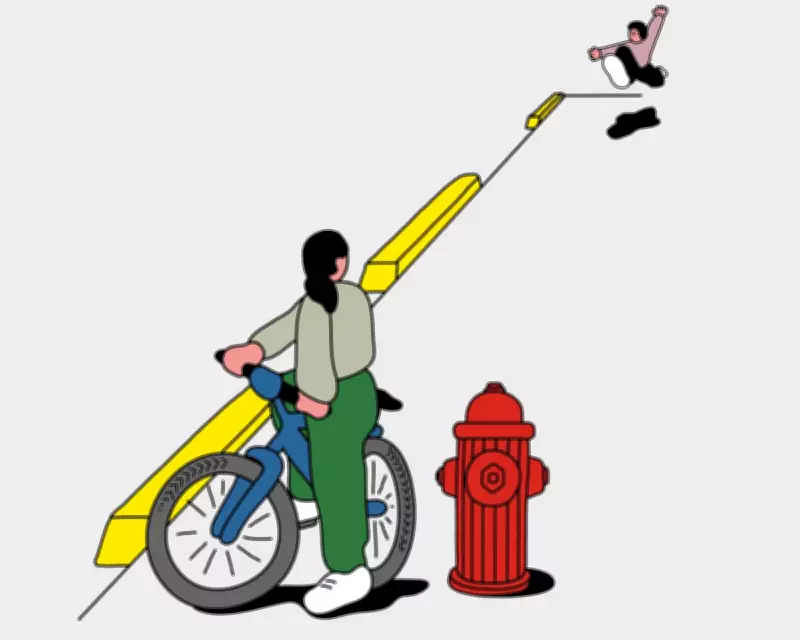
In the heart of Berlin, a domestic dispute has unfolded that speaks to broader urban living dilemmas. Frida and Frantz, a couple who have been together for over twenty-five years, find themselves at odds over their preferred modes of transport within the German capital. Their disagreement, which pits the efficiency of cycling against the leisurely pace of walking, has captured public attention and prompted a wider discussion about personal preferences, time management, and marital compromise.
The Cycling Advocate's Perspective
Frida presents a compelling case for embracing two-wheeled transport throughout Berlin. She argues that cycling offers a superior combination of speed, enjoyment, and discovery compared to walking. "Bikes are a quicker way to get around," she states firmly. "We should use them so we can enjoy more of our destination." For Frida, walking represents monotony and wasted time, whereas cycling opens up new trails, parks, and urban discoveries that pedestrian routes might miss.
Having lived in their Berlin neighborhood for twelve years but only acquiring bicycles two years ago, Frida believes the novelty factor strengthens her position. She particularly emphasizes the practical advantages during Berlin's harsh winters, where cycling, though challenging in snow and wind, proves preferable to what she describes as "dawdling" in the cold. Her philosophy centers on maximizing every moment rather than "pretending that slowness is a virtue."

The Walking Enthusiast's Defence
Frantz counters with an equally passionate defence of pedestrian exploration. He values walking precisely for its slower pace, which allows for spontaneous discoveries and appreciation of neighborhood character. "You can stop and say, 'Let's grab a coffee,' or 'Can we buy a book here?'" he explains, highlighting how walking's tempo facilitates engagement with urban environments.
Central to Frantz's argument is his observation about Frida's time management. He suggests her cycling preference stems from chronic lateness rather than genuine transport philosophy. "Frida wants to go quickly to make up for being too slow to leave," he remarks, noting that bicycle preparation often adds fifteen minutes to their departure time. For Frantz, the journey matters as much as the destination, and rushing compromises the experience of urban discovery.
Cultural and Personal Dimensions
The couple's disagreement extends beyond mere transport preferences into deeper cultural and personal territory. Both identify as Afro-German, but Frantz humorously notes their different upbringings have shaped contrasting attitudes toward time. Having grown up in a white family, he describes himself as more time-conscious, while Frida's Caribbean heritage, they joke, has made her more relaxed about schedules.
Despite their differences, both express willingness to compromise. Frida acknowledges sometimes persuading Frantz to cycle on weekends, while Frantz admits he's "happy to cycle a little more to keep the peace." Yet fundamental disagreements persist about whether transport choices should accommodate personal pacing differences or represent shared experiences.
Public Verdict and Compromise Suggestions
The debate has attracted considerable public commentary, with readers proposing various compromise solutions. Suggestions include taking turns between cycling and walking days, agreeing on set times for each transport mode, or having Frantz begin walking first with Frida catching up on her bicycle.
Several commentators questioned the relevance of punctuality arguments, noting that lateness issues might persist regardless of transport choice. Others emphasized that marriage doesn't require identical preferences, suggesting that arriving separately using different modes might represent the most practical solution.
The discussion highlights broader questions about urban mobility, relationship dynamics, and how couples negotiate differing lifestyle preferences in shared spaces. As Berlin continues to evolve as a cycling-friendly city while maintaining its walkable neighborhoods, Frida and Frantz's personal dispute reflects larger conversations about sustainable transport, time efficiency, and quality of life in modern European capitals.