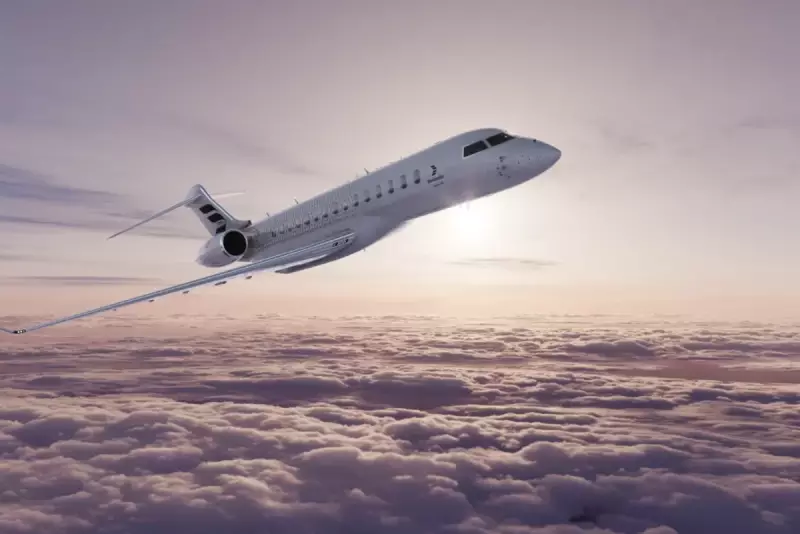
The aviation world is abuzz with the recent certification of the Bombardier Global 8000, a state-of-the-art business jet that its makers boldly market as the fastest civil aircraft to grace the skies since the legendary Concorde. With an "ultra high-speed cruise" capability of 605 miles per hour, this new private jet promises to shave precious hours off long-haul journeys for the ultra-wealthy, though it falls significantly short of the supersonic speeds that made Concorde a true icon of air travel.
A Glimpse into the Future of Fast Travel
Bombardier's claims for the Global 8000 centre on substantial time savings for intercontinental routes, a selling point aimed squarely at high-net-worth individuals and corporate clients for whom time is the ultimate luxury. However, these purported benefits pale in comparison to the revolutionary experience offered by Concorde, which first carried paying passengers half a century ago. The supersonic marvel flew at a breathtaking 1,350mph, famously allowing passengers to arrive at their destination earlier than their local departure time—a genuine "time machine" effect that the new jet cannot replicate.
Contrasting Capabilities with Concorde's Legacy
The article draws a sharp contrast between the Global 8000's subsonic performance and the unparalleled speed of Concorde. While the Bombardier jet offers greater flexibility in routing and scheduling, its time-saving advantages come at an astronomically high price, with a single aircraft costing a staggering $78 million. For context, proposed non-stop flights such as a London to Sydney link are seen as a more practical application of this technology in the near future, rather than a return to the supersonic passenger era.

Expert Predictions on Supersonic Travel's Return
Aviation authorities, including former Concorde pilot Captain Jock Lowe, remain sceptical about the imminent revival of commercial supersonic flights. Despite ambitious projects like Boom Supersonic aiming to introduce new supersonic aircraft by the end of this decade, Lowe and other experts predict that widespread supersonic passenger travel is unlikely to materialise before 2050. This timeline underscores the significant technological and regulatory hurdles that must be overcome, making the Global 8000 a notable but interim step in the quest for faster air travel.
In summary, while the Bombardier Global 8000 represents a cutting-edge advancement in private aviation and is being touted as a spiritual successor to Concorde, it does not herald the return of supersonic passenger travel. Instead, it serves as a high-speed, high-cost option for the elite, bridging the gap until true supersonic capabilities become commercially viable once more.