

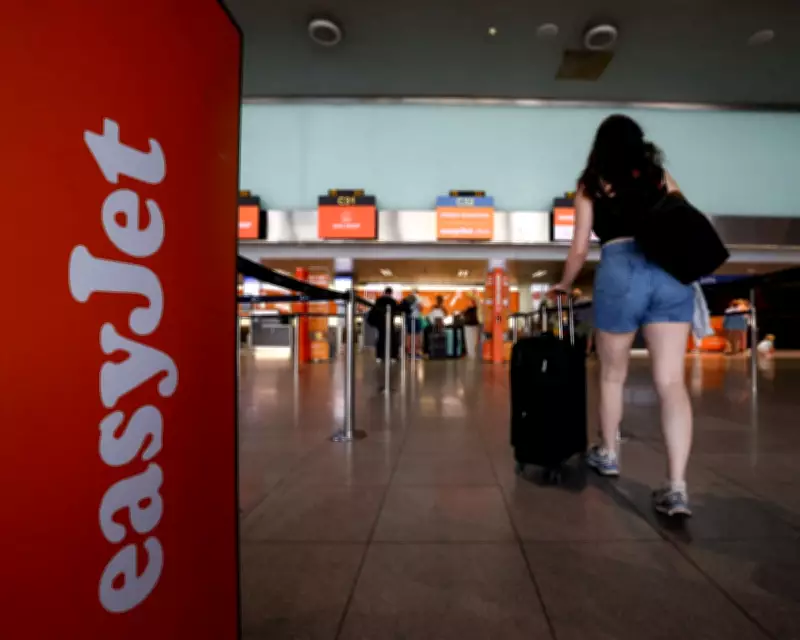
EasyJet Chief Executive Blasts EU's 'Crazy' Free Cabin Bag Proposals
EasyJet's chief executive has launched a scathing attack on European Union proposals to enforce free additional cabin baggage for all passengers, labelling the plans a "lunatic idea" that would prove "terrible for the consumer." Kenton Jarvis warned that implementing such legislation would inevitably lead to significant fare increases and widespread flight delays across European aviation.
European Parliament's Overwhelming Vote for Passenger Rights
The European Parliament last week voted overwhelmingly to grant all air passengers the right to carry both a small suitcase and the currently permitted free underseat bag. This forms part of broader legislation designed to strengthen passenger rights across the continent. The proposed rules would allow travellers to bring one "personal item" such as a handbag, backpack, or laptop case, alongside a piece of hand luggage weighing up to 7kg with combined dimensions not exceeding 100cm.
This single cabin case alone would be larger than the current maximum permitted free cabin item on several airlines including Ryanair. The changes, which still require ratification by the European Council before becoming law, would apply to all passengers travelling to or from EU airports using EU-based carriers. This would directly affect the vast majority of short-haul flights departing from the United Kingdom.

Financial Implications and Operational Challenges
Jarvis expressed particular concern about the financial impact, revealing that bag charges constitute a substantial portion of easyJet's annual ancillary revenue, which exceeds £2.5 billion. "That would have to be passed on" through fare increases affecting all passengers, he cautioned. The easyJet boss argued that politicians were "completely not understanding their subject and getting involved with things they shouldn't."
From an operational perspective, Jarvis warned that aircraft cabins simply lack the physical space to accommodate additional baggage for every passenger. "We would go back to the days of having to offload cabin bags and put them in the hold – it was one of the number one causes of delayed boarding in the old days," he explained, predicting a return to the boarding chaos that characterised earlier eras of air travel.
Advertising Controversy and Wider Industry Context
The comments emerge alongside recent controversy surrounding easyJet's advertising practices. The airline received criticism from the Advertising Standards Authority this week for claiming luggage costs could be as low as £5.99 without providing sufficient evidence that such prices were widely available. Jarvis described the ruling as "irritating" but confirmed easyJet had amended wording on its website accordingly.
Despite some advertised fares being lower than luggage charges, Jarvis maintained that easyJet's total offering represents "incredible value" for passengers. He confirmed that any new baggage rules would likely be applied consistently across easyJet's entire fleet, regardless of jurisdictional differences.
Technological Developments and Financial Performance
In related developments, Jarvis revealed that easyJet has been in discussions with Starlink regarding potential in-flight wifi provision, though concluded that "the economics of the deal don't work" at present. This follows a public dispute between Ryanair's Michael O'Leary and Starlink owner Elon Musk, during which both parties exchanged insults regarding the value of satellite wifi services.
Addressing concerns about associating with Musk's brand amid declining Tesla sales in Europe, Jarvis stated: "It will be difficult to deliberately buy an inferior product for your customers because you have opinions on the CEO." He noted that alternative satellite providers would likely involve other controversial billionaires, remarking: "It's always going to be one of the guys when it comes to satellites."

The baggage controversy unfolds against a challenging financial backdrop for easyJet, which announced increased losses for the last quarter. The airline reported a pre-tax loss of £93 million, representing a 50% increase from the same period the previous year, despite carrying 7% more passengers. Jarvis attributed these losses partly to strategic investments at Milan Linate and Rome Fiumicino airports, where regulatory agreements require initially operating unprofitable routes.
Looking ahead, Jarvis reported record January bookings for the coming year, with passengers increasingly travelling to more distant destinations including Morocco, Tunisia, Cape Verde, and Georgia. This suggests growing consumer confidence in international travel despite the ongoing debates about baggage policies and passenger rights.





