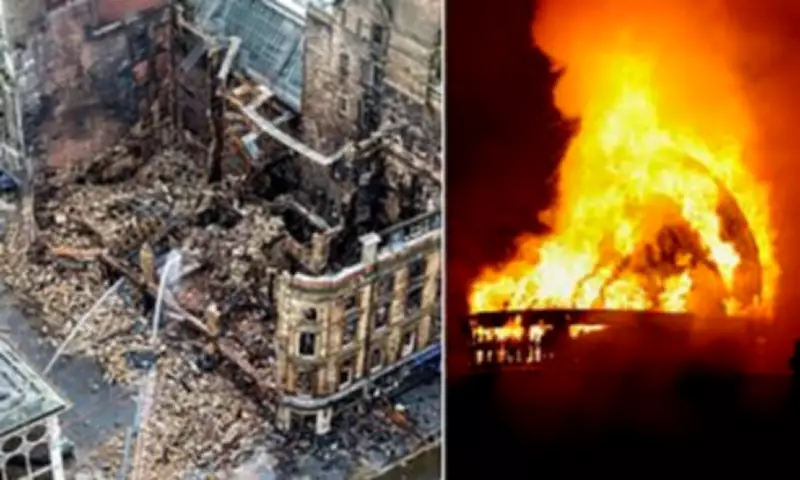
Glasgow Central Station Faces Prolonged Closure After Devastating Fire
Scotland's busiest railway station, Glasgow Central, could remain shut for an extended period beyond next week after council authorities declared that fire-damaged buildings at Union Corner must be demolished. The decision follows a blaze that gutted the historic 19th-century landmark last weekend, leaving only the facade of the Gordon Street section standing.
Public Safety Concerns Prompt Demolition Order
Glasgow City Council has taken control of the site from the Scottish Fire and Rescue Service, establishing a 'safe zone' that includes Central Station. Officials confirmed that the remaining structures pose a significant risk to public safety due to falling debris, necessitating their complete removal. "We are now in control of the Union Street site, and after a full and final assessment of the remaining structure, has decided that demolition must happen in the interests of public safety," stated the local authority.
Uncertain Timeline for Reopening
Network Rail has indicated that the safe zone may stay in place until an official assessment and any demolition work is completed. However, the rail operator cannot provide a specific timeframe for reopening the high-level platforms at the station. A contractor for the demolition has yet to be announced, with no clear start or completion date for the work, leaving rail chiefs unable to predict when full services will resume.

Ross Moran, route director at Network Rail Scotland, expressed gratitude for the emergency services' efforts and emphasized the commitment to restoring operations. "As soon as access is granted, our focus will be on getting the station ready to welcome passengers again. Our teams are prepared to carry out the detailed inspections, cleaning, repairs and operational checks that may be required," he said.
Historical Building Destroyed
The fire, which began in a vape shop on Union Street before spreading through the building to Gordon Street, destroyed the iconic dome that had been a familiar sight to generations of Glaswegians. The B-listed structure, constructed in 1851 and predating Glasgow Central Station itself (opened in 1879), was reduced to ruins. Council bosses confirmed that even the surviving facade is too unsafe and will be demolished.
Political and Business Implications
The decision to demolish has sparked controversy, with Glasgow MSP Paul Sweeney questioning the haste of the move. The Labour politician argued that conservation-accredited engineers should have been consulted to assess potential preservation of elements, drawing parallels to the Ayr Station Hotel case.
At Holyrood, Scottish Conservative leader Russell Findlay pressed First Minister John Swinney on support for businesses affected by the fire. Swinney responded that the government is in active discussions with Glasgow City Council to gather information from affected businesses, though specific financial support details are pending.
Current Rail Services and Damage Assessment
Trains continue to operate from Glasgow Central's low-level lines, but all other services remain suspended indefinitely. Network Rail engineers have conducted limited inspections, finding no significant structural damage to the station itself. However, they noted water damage in a small office and a glazed area above it. Full access is required for comprehensive assessments and preparations for reopening.
Network Rail is exploring possibilities for a partial or phased reopening but cannot currently provide a timeline. The disruption underscores the challenges faced by passengers and the local community as authorities work to ensure safety and restore normal operations.