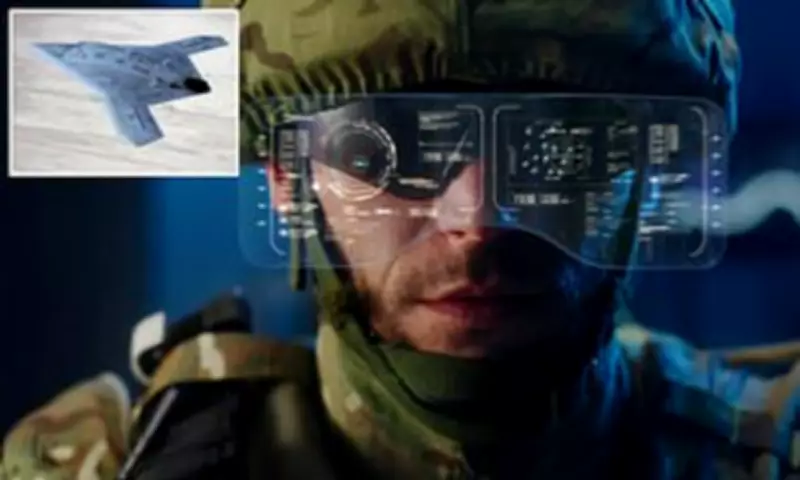
The White House boasts of futuristic military weapons, but details have emerged about a secretive Pentagon project to merge soldiers with machines. The Defense Advanced Research Projects Agency (DARPA) quietly published a report on its Next-Generation Nonsurgical Neurotechnology (N3) program, which aimed to create a portable brain-computer interface allowing able-bodied service members to control drones and other military hardware with their minds, without surgery.
DARPA's N3 Program: A Timeline
DARPA, known as the Pentagon's 'idea factory' for developing the Internet, GPS, and stealth technology, launched the N3 program in 2018. It was structured in three phases: the first tested basic brain signal reading and writing components; the second integrated these into a system tested on animals; and the third focused on human trials and performance enhancement. The agency provided funding to six research teams, including Battelle Memorial Institute, Carnegie Mellon University, Johns Hopkins University Applied Physics Laboratory, Rice University, and California's Palo Alto Research Center and Teledyne Scientific.
Mysterious Silence After Phase III
After reaching Phase III in 2021, the project went quiet. A July 2023 update from Carnegie Mellon confirmed human testing had begun, with researcher Derya Tansel stating their 'SharpFocus' technique achieved radical improvements. However, DARPA's N3 webpage now states the content is for reference only and is no longer maintained. DARPA told the Daily Mail the program is complete, but it does not operationalize technologies, and the research teams will have the latest knowledge by 2026.

Context: US Military Tech Superiority
The revelation comes as President Donald Trump boasted about America's technological superiority, including during conflicts in Venezuela and Iran. The US reportedly used 'sonic weapons' in the raid to capture Venezuelan President Nicolás Maduro, causing nosebleeds and vomiting among guards. Additionally, a secret CIA tool called 'Ghost Murmur' using quantum magnetometry located an American pilot shot down over Iran by detecting his heartbeat. Trump stated on January 20: 'We have weapons nobody else knows about.'
Implications for Future Warfare
Unlike Elon Musk's Neuralink, which requires surgical implantation, DARPA's N3 aimed for noninvasive, portable devices for healthy users. If successful, this technology could revolutionize military operations, but its current status remains classified. The Trump Administration has publicly emphasized that US military hardware remains state-of-the-art, with Press Secretary Karoline Leavitt sharing an account of the Venezuelan raid where soldiers 'didn't look like anything we've fought against before.'