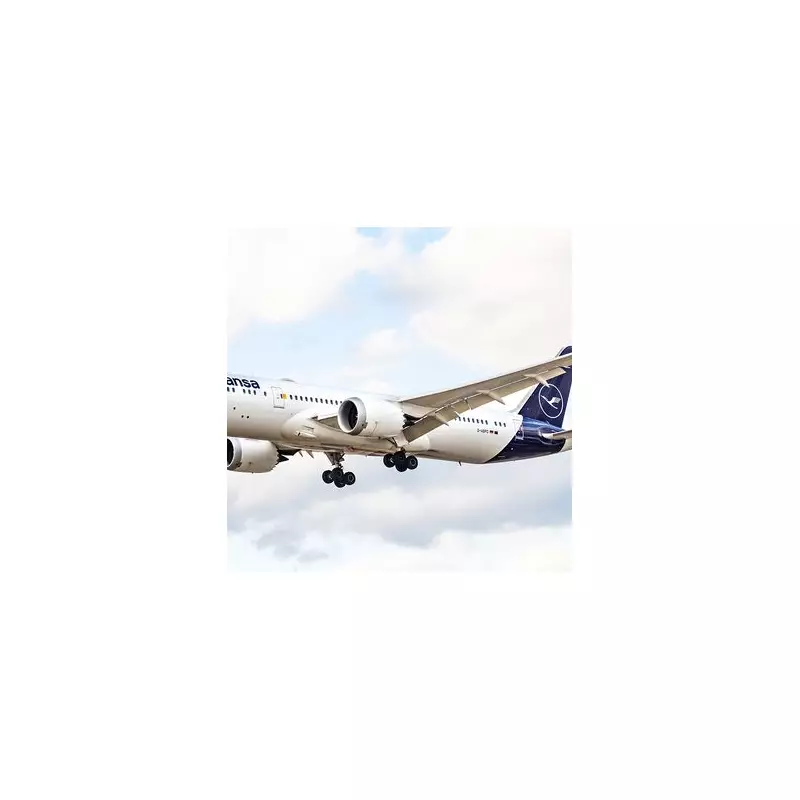
A Lufthansa flight bound for Munich was compelled to execute an emergency landing at Geneva Airport on Saturday afternoon following the declaration of a technical problem shortly after departure. The incident, which unfolded in real-time across European airspace, highlights the critical safety protocols activated during in-flight emergencies.
Flight Details and Emergency Declaration
Flight LH2249, operating from Lyon to Munich, departed from Lyon Airport at 1.51pm Central European Time, nearly an hour behind its scheduled timetable. Shortly after takeoff, the crew identified a potential issue with the aircraft's landing gear, prompting immediate action.
According to aviation monitoring service AirLive, the flight ceased its climb at an altitude of 5,400 feet and initiated a circling pattern in the vicinity of Lyon Airport. The pilots subsequently issued a "Squawk 7700" radio code, the universal signal for a general emergency, specifically citing a "gear issue" as the cause for concern.

Diversion and Landing in Geneva
Flight-tracking data reveals that the aircraft later ascended to 10,000 feet and entered Swiss airspace. It proceeded to circle near Lausanne before ultimately diverting to Geneva Airport as its designated safe landing site.
The jet touched down on runway 22 at Geneva Airport at 3.39pm local time, approximately two hours after its initial departure from Lyon. It had been originally scheduled to arrive in Munich at 4.04pm. Emergency vehicles were positioned on high alert at the airport in preparation for the landing, underscoring the seriousness of the situation.
Following the safe touchdown, the aircraft was towed off the runway just before 4pm and relocated to a remote stand for further inspection and assessment. Lufthansa has been contacted for an official statement regarding the incident and the nature of the technical fault.
Context of Recent Aviation Incidents
This emergency landing occurs against a backdrop of recent aviation incidents where similar emergency protocols have been activated. Earlier this month, an Air India flight approaching Birmingham Airport issued a "Squawk 7700" due to adverse weather conditions linked to Storm Goretti.
In that instance, heavy snowfall and freezing temperatures reduced visibility to below 500 metres, falling short of the minimum requirements for a safe landing. The Boeing 787-8 Dreamliner was diverted near Leamington Spa and rerouted towards London after declaring a "Minimum Fuel" situation, as extended holding patterns critically depleted its fuel reserves.
The emergency code granted the aircraft priority handling from Air Traffic Control, facilitating its safe diversion to London Heathrow Airport. Heathrow's longer runways and advanced Category III Instrument Landing Systems provided the necessary safety margin for a successful landing under challenging conditions.
These consecutive incidents underscore the vital importance of robust emergency procedures, real-time decision-making by flight crews, and the coordinated response of ground services in ensuring passenger safety during unforeseen aerial events.