Network Rail Criticised for Over-Reliance on Contractor in Fatal Derailment Case
A fatal accident inquiry into the devastating Stonehaven train derailment has heard damning evidence that Network Rail placed "too much reliance" on the contractor responsible for building a faulty drainage system that contributed to the tragedy. The inquiry at Aberdeen Sheriff Court continues to examine the circumstances surrounding the catastrophic incident that claimed three lives.
The Tragic Events of August 2020
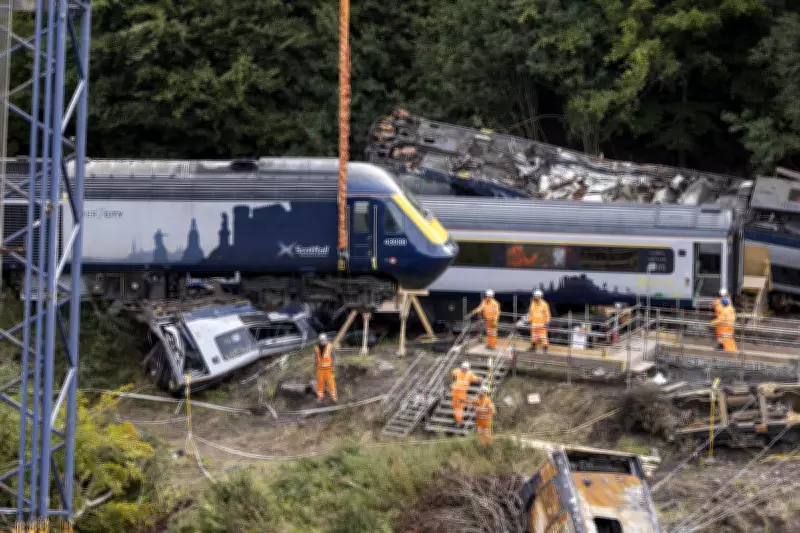
On August 12, 2020, during torrential rainfall in Aberdeenshire, a passenger train derailed at Carmont near Stonehaven after striking debris that had been washed onto the tracks. The debris originated from a drainage system that had not been constructed according to the agreed design specifications. Of the nine people aboard the train, three lost their lives: train driver Brett McCullough, 45; conductor Donald Dinnie, 58; and passenger Christopher Stuchbury, 62.
"Self-Assurance" and Lack of Oversight
William McKay, who served as Network Rail's project manager for the drainage construction project that began in 2010, testified that Carillion had been permitted to "self-assure" its own work. As a "large, competent contractor and a key supplier," Carillion was granted significant autonomy, with Network Rail adopting only a "light-touch" approach to monitoring the construction process.

Mr McKay explained that this arrangement meant Network Rail relied heavily on Carillion to confirm that the work was being executed correctly and in compliance with the design plans. He further revealed that during a final "walk-around" inspection, Network Rail staff could not verify what had actually been built because the drainage system was already underground.
Missing Documentation and Legal Failures
The inquiry heard that Carillion failed to provide the mandatory health and safety file upon project completion—a legal requirement that should have included "as built" drawings and photographs documenting the actual construction. Stuart White, former head of project management at Network Rail Scotland, testified that the company only became aware of this missing documentation after the fatal crash occurred.
Sheriff Lesley Johnson pointedly suggested that Network Rail's insufficient oversight effectively allowed Carillion to "mark its own homework." She questioned whether excessive trust had been placed in the contractor, to which Mr McKay agreed, stating that had Network Rail known about deviations from the design, construction would have been halted immediately.
Contractor Responsibility and Systemic Changes
Mark Stewart KC, representing design firm Arup, emphasised that Carillion were the "only people" who truly knew what had transpired on the construction site. He noted that while trust in contractors to build according to agreement is standard, in this instance Carillion "didn't properly supervise the job, didn't properly follow the design, and didn't produce as-built drawings."
Both witnesses confirmed that since the derailment, Network Rail has implemented a "massive focus" on ensuring proper documentation is provided for all projects. The company has also made significant changes to how it manages severe weather risks following recommendations from the Rail Accident Investigation Branch (RAIB).
Aftermath and Continuing Inquiry
In 2023, Network Rail was fined £6.7 million after admitting health and safety failings related to the crash. Carillion, meanwhile, had entered compulsory liquidation in January 2018, years before the inquiry began. A Network Rail spokesperson stated the government-owned company remains "committed to supporting the work of the inquiry and continuing to deliver on the recommendations."
The fatal accident inquiry before Sheriff Lesley Johnson continues as further evidence is examined regarding one of Britain's most tragic rail incidents in recent years.