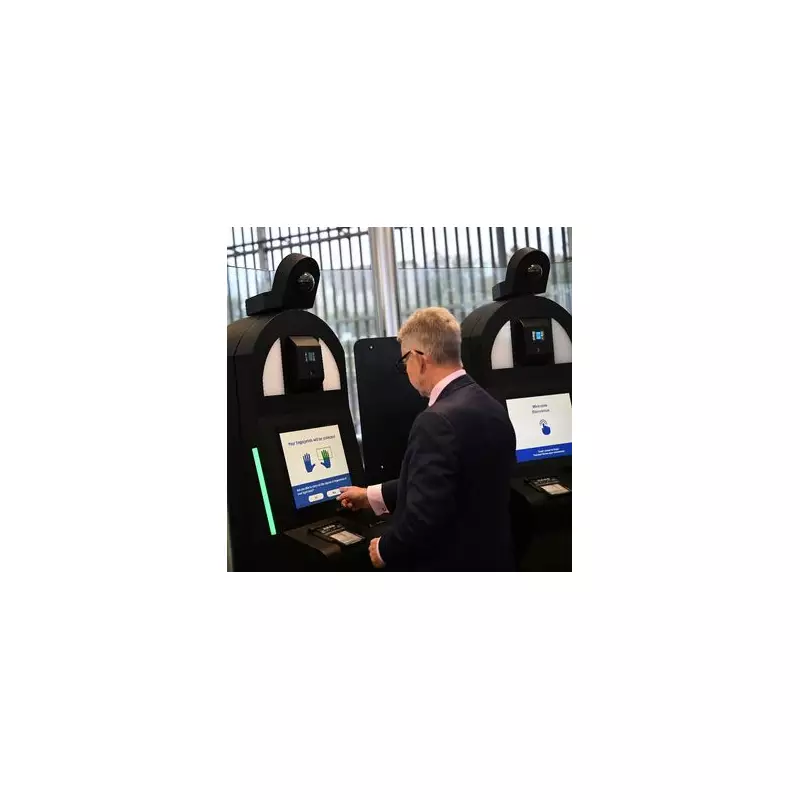
British holidaymakers and business travellers heading to the European Union are being urged to brace for longer queues at border control from today. The expansion of the EU's new automated Entry/Exit System (EES), while designed to streamline entry in the long term, presents an immediate risk of significant delays, according to the travel association ABTA.
What is the New EU Entry/Exit System?
The automated Entry/Exit System represents a major shift in how non-EU citizens, including British passport holders, cross into the Schengen Area. Upon a first arrival under the new regime, travellers must register by having their passport scanned and providing four fingerprints and a facial biometric image at a dedicated kiosk. This registration is valid for three years or until the passport expires.
For subsequent trips within that period, the process is quicker, requiring only a passport scan and either a fingerprint or facial verification. The EU had set a deadline of 10 January 2026 for member states to implement the EES at half of their border crossings, with a full rollout expected by April.

Immediate Impact and Potential for Delays
ABTA has issued a stark warning about the initial phase of the rollout. "As more places introduce the system, and more passengers are processed through it, there is a greater risk that people will face queues and delays," the association stated. They are urging travellers to factor in extra time when planning their journeys through passport control.
The situation is further complicated during a transitional period. Until 9 April 2026, manual passport stamping will continue alongside the new digital checks, effectively creating a system of 'double red tape'. While each EES check is estimated to take one to two minutes per person, the cumulative effect at busy terminals could lead to lengthy waits.
ABTA has called on border authorities to use contingency measures, such as temporarily standing down the system or limiting checks, to help manage passenger flows and minimise disruption.
Specifics for UK Departure Points and Government Response
For travellers departing the UK via Eurostar at St Pancras International, Eurotunnel at Folkestone, or the Port of Dover, the EES registration process will be completed before departure, at juxtaposed border controls on British soil. Operators at these key transit points have contingency plans to handle increased processing times.
The UK government has allocated £10.5 million to support these ports with the necessary infrastructure upgrades. Minister for Border Security and Asylum, Alex Norris, emphasised collaborative efforts: "We recognise that EES checks will be a significant change for British travellers, which is why we have worked closely with our European partners to ensure the rollout goes as smoothly as possible."
Keir Mather, Minister for Aviation, Maritime and Decarbonisation, reiterated the focus on minimising disruption for travellers and hauliers, particularly at the nation's busiest crossing points.
Important details for travellers include:
- The EES applies to travel to Schengen Area nations, including popular destinations like France, Spain, Italy, Greece, and non-EU members Iceland, Norway, Switzerland, and Liechtenstein.
- It does not apply to travel to Ireland or Cyprus.
- Children under 12 are exempt from fingerprinting but will still be photographed.
- The process is free and requires no action before travel; registration happens at the border.
- The UK has its own digital system, the Electronic Travel Authorisation (ETA), for visitors coming to Britain.
While the long-term goal of the EES is a more secure and efficient border, the message for UK travellers in the coming months is clear: prepare for potential delays and allow extra time for your journey to Europe.