

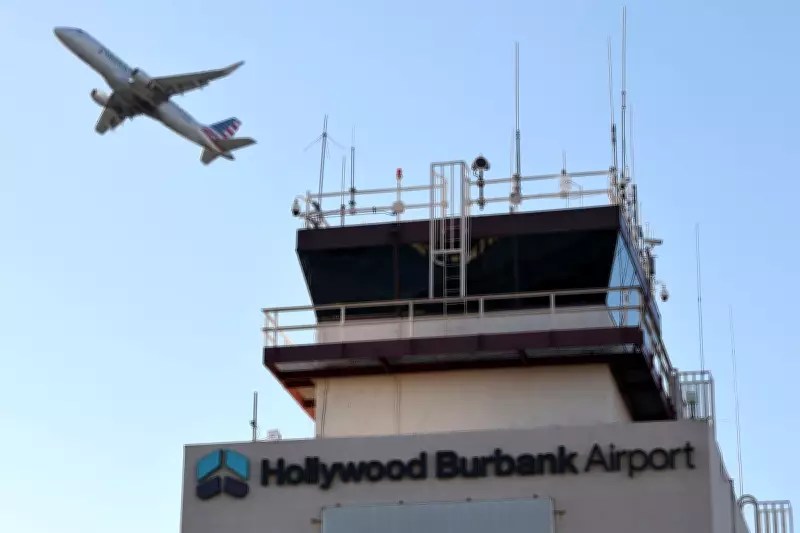
Transportation safety officials have raised alarming concerns about the potential for a catastrophic midair collision at Hollywood Burbank Airport in California, with the chair of the National Transportation Safety Board delivering stark warnings during a recent board meeting in Washington, D.C.
"People Are Raising Red Flags"
Jennifer Homendy, who has led the NTSB since 2021, expressed serious fears about safety at the Los Angeles County airport during Tuesday's meeting, which coincided with the one-year anniversary of a devastating crash near Reagan National Airport that claimed 67 lives. That incident stands as the deadliest commercial aviation accident in the United States in over a decade.
"Burbank is one where commercial airlines have called me to say the next midair is going to be at Burbank," Homendy revealed, according to reports from The Los Angeles Times. She added pointedly that "no one at the Federal Aviation Administration is paying attention to us" regarding these concerns.

A Recognised "Hotspot" for Potential Disaster
The midsized airport, which serves as a significant hub for domestic travel, has been identified as a particular safety concern due to its combination of airplane and helicopter traffic operating within a relatively confined airspace. This mixture of aircraft types in limited airspace creates what aviation experts describe as a "hotspot" for potential conflicts.
"Whether it is involving helicopters or not, people are raising red flags, and why aren't people listening?" Homendy questioned during the meeting. "The FAA has to ensure safety. That is their job."
FAA Disputes Safety Neglect Claims
The Federal Aviation Administration, which maintains oversight of national airspace safety, has strongly disputed Homendy's characterisation of neglect at Burbank. An agency spokesperson told media outlets that security measures have been enhanced and that Burbank has not been overlooked in safety planning.
Following last year's deadly crash in Washington, the FAA "acted immediately to improve safety" and began "using innovative AI tools to identify similar hotspots with high volumes of mixed helicopter and airplane traffic and implement appropriate mitigations," the spokesperson explained.
Specific Safety Measures Implemented
The FAA identified both Van Nuys Airport and nearby Hollywood Burbank Airport in the Los Angeles area as primary focus areas for safety improvements. Based on detailed safety analysis, the agency lowered the Van Nuys traffic pattern by 200 feet during a 2025 evaluation period to determine if this adjustment would reduce conflicts with aircraft landing at Burbank.
"Preliminary data indicated the change resulted in a reduction of Traffic Collision Avoidance System alerts for Burbank arrivals," the FAA spokesperson noted, adding that the agency made the lowered Van Nuys traffic pattern permanent effective January 5, 2026.
Airport Officials Emphasise Safety Commitment
Representatives for Hollywood Burbank Airport have emphasised that safety remains their utmost priority. "The safety of our guests, staff, tenants and all stakeholders is our top priority," a spokesperson stated, noting that work to alleviate risks at both Burbank and Van Nuys airports has been underway since immediately after the midair collision near Reagan Washington National Airport in January 2025.
History of Close Calls at Burbank
The safety concerns about Hollywood Burbank Airport are not without precedent. The facility has experienced several concerning close calls in recent years, including a 2023 incident where an inbound Mesa Airlines flight came within just 1,680 feet of a departing SkyWest Airlines plane, according to reports.
During Tuesday's board meeting, Homendy emphasised that last year's catastrophic collision in Washington was "100 percent preventable." Following an extensive investigation, the NTSB concluded the crash was likely caused by the FAA's decision to place a helicopter route in close proximity to an airport runway.

Rare but Catastrophic Events
While commercial airline crashes in the United States remain extremely rare occurrences, the potential consequences are devastating. Before last year's mass casualty collision in Washington, the country had experienced nearly 16 years without a major airline crash, highlighting both the safety record of commercial aviation and the catastrophic impact when accidents do occur.
The FAA has stated it will "diligently consider" the NTSB's recommendations while maintaining that safety "is and always will be" the agency's foremost priority. This exchange between the nation's top transportation safety agencies underscores ongoing tensions about how best to prevent future aviation disasters in increasingly crowded airspace.





