

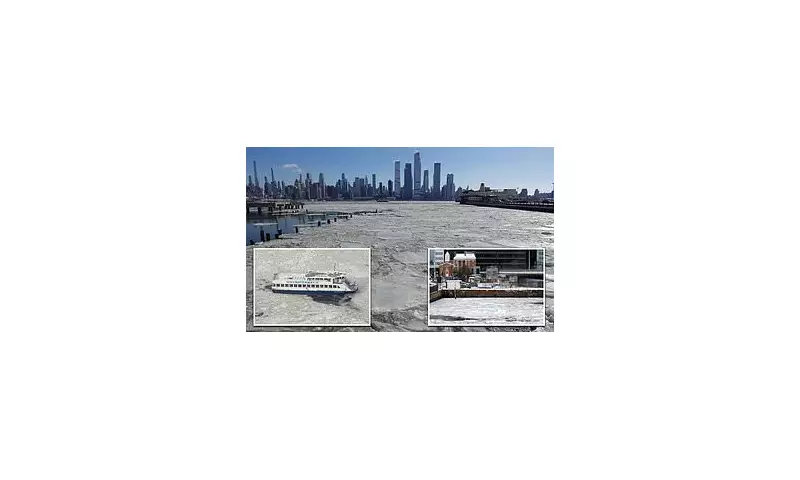
New York City has been forced to indefinitely suspend its entire commuter ferry network after dangerously thick ice formations rendered the city's iconic waterways impassable. The unprecedented freeze has created treacherous conditions across the Hudson River, East River, and New York Harbor, with officials warning the disruption could extend for days or even weeks.
Ferry Fleet Grounded by Unrelenting Freeze
All NYC Ferry routes have been completely halted due to continued ice accumulation that began during last weekend's massive winter storm. Service was initially suspended on January 25th because of visibility issues caused by Winter Storm Fern's heavy snowfall, but the situation has dramatically worsened as temperatures have plunged into the teens and remained there for days.
"The safety of all crew, passengers, and vessels is of the utmost importance," stated NYC Ferry officials in a service alert. "NYC Ferry crew continues to monitor evolving waterway conditions and prepare the fleet to ensure service can resume once conditions improve."

Navigational Nightmare for Experienced Captains
Even veteran ferry operators are finding the current conditions exceptionally challenging. Luis Melendez, a riverkeeper patrol captain with sixteen years of experience navigating New York Harbor, described the situation as "nerve-wracking."
"You're moving people from place to place, and you're navigating through these kind of like ice patches and ice floes," Melendez told CBS New York, highlighting the extraordinary difficulties posed by the frozen waterways.
Commuters Left Stranded and Frustrated
The suspension has created significant disruption for thousands of daily commuters who rely on the ferry network to connect Manhattan, Brooklyn, Queens, and the Bronx. With no immediate timeline for service restoration, exasperated New Yorkers have taken to social media to voice their concerns.
"How am I going to get my child to school in the morning?" one user questioned on Instagram, while another commented pessimistically: "Since it's gonna stay freezing for two more weeks, I guess the ferry's shutting down until spring."
The impact is particularly significant given the ferry system's popularity, with more than 7.4 million total passengers using NYC Ferry services last year according to the city's Economic Development Corporation.
Regional Ferry Services Also Affected
While the Staten Island Ferry continues operating on its regular schedule as a separately managed service, other regional ferry operations have been similarly disrupted:
- NY Waterway service from Edgewater has been suspended, with a bus shuttle available to the Port Imperial terminal
- Seastreak trips to the West 39th Street terminal have been halted
- The Haverstraw-Ossining Ferry, which crosses Haverstraw Bay and the Hudson River, has been replaced by bus service since January 20th
Arctic Blast Brings Deadly Consequences
The dangerous conditions extend beyond transportation disruptions. According to New York City mayor Zohran Mamdani, at least ten New Yorkers died during the winter storm last weekend as temperatures plunged to dangerously low levels.
The city has experienced below-freezing temperatures since Friday night, with subzero wind chills reported at night due to Arctic air blowing in from Canada. Forecasters predict the bitter cold could persist through at least next Monday, with some models suggesting it might continue into February.
Further Winter Weather Threats Loom
Complicating recovery efforts, the National Weather Service warns that another winter storm could batter the eastern half of the United States this weekend. While forecasts remain mixed regarding whether additional ice and snow will directly impact New York City, the continued cold temperatures make significant ice melt unlikely in the near term.
With another potential snowstorm approaching and Arctic conditions expected to persist, transportation officials face difficult questions about when the vital ferry network can safely resume operations for New York's commuting public.






