

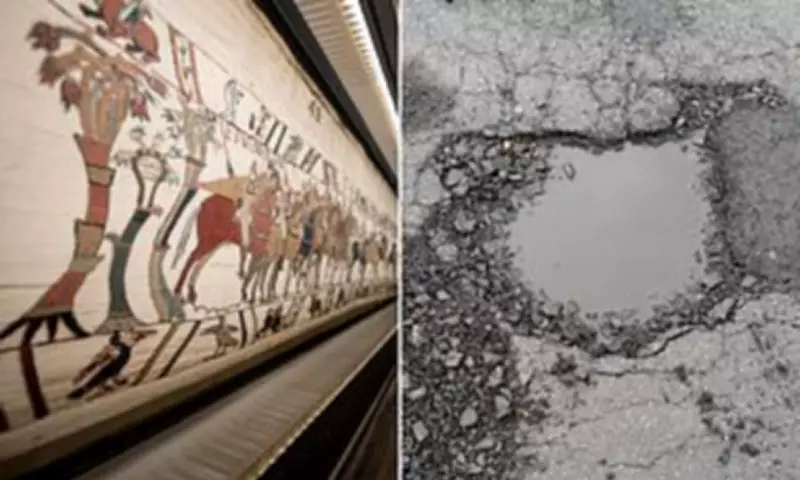
Britain's notorious pothole epidemic, which plagues millions of drivers daily, is now posing an unexpected threat to a major cultural exchange. The planned loan of the historic Bayeux Tapestry from France to the UK faces potential cancellation due to serious concerns about road vibrations damaging the ancient artefact during transport.
Fragile Treasure Faces Perilous Journey
Plans are being finalised to transport the 11th-century, 70-metre embroidery from Bayeux in northern France to the British Museum in London. This would mark the first time the tapestry has crossed the English Channel in over 900 years, with a scheduled public display beginning in September. However, French heritage campaigners have initiated urgent legal proceedings to block the arrangement.
Legal Challenge Mounts Against Macron's Decision
Court documents submitted to France's highest administrative court, the Conseil d'État, argue that President Emmanuel Macron committed a legal "error of judgment" in authorising the loan to the British Museum. The heritage group Sites and Monuments, leading the challenge, contends that the risks to the "extremely fragile" artefact have been dangerously underestimated.

Julien Lacaze, president of Sites and Monuments, emphasised the specific dangers: "The risks are those associated with handling the tapestry and the vibrations during a long journey. If the roads are in poor condition, that is obviously not a good thing. They must be limited to the bare minimum."
Potholes Identified as Critical Threat
A 2022 study commissioned by the French ministry of culture specifically identified potholes as potential "shock sources" that could cause irreparable damage to the tapestry. The report strongly advised against any transportation journey exceeding three hours, highlighting the particular vulnerability of the medieval embroidery to road vibrations.
Despite these warnings, arrangements have progressed with the Treasury agreeing to an £800 million insurance package and both governments establishing maximum vibration thresholds for the transport vehicle. Heritage campaigners question why previous expert concerns, which also delayed a similar loan attempt during Theresa May's premiership in 2018, have been disregarded.
Britain's Road Crisis Worsens
The legal challenge comes amid growing evidence of Britain's deteriorating road infrastructure. In one particularly extreme case, residents have renamed their street "Potholesville" due to its "undriveable" condition, with the road falling into permanent disrepair after the previous maintenance company went bankrupt in 2024.
Earlier this month, at least fourteen drivers suffered wheel damage from a single dangerous pothole on an M3 motorway slip road in Hampshire, creating a trail of stranded vehicles along the hard shoulder. Motorists faced hours of delays with multiple burst tyres and buckled wheels, highlighting the severity of the national problem.
Diplomatic Implications and Historical Significance
While officials have hailed the tapestry loan as a significant advancement in Anglo-French relations, the controversy threatens to unravel diplomatic goodwill. The legal challenge represents an eleventh-hour attempt to prevent what conservationists consider an unacceptable risk to one of Europe's most important historical artefacts.
The Bayeux Tapestry, which depicts the Norman invasion of 1066, holds particular significance as some historians believe it was originally woven in Kent. Its potential return after nine centuries has generated considerable public interest, but now faces uncertainty as French judges consider whether road conditions make the journey too hazardous for the fragile embroidery.






