

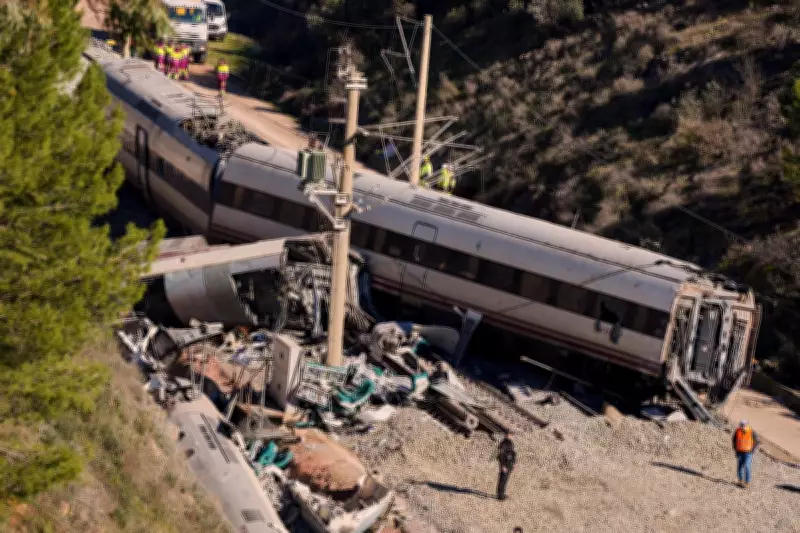
Relatives of those killed in Spain's catastrophic train derailment gathered in solemn mourning this week, their grief mingled with a fierce determination to uncover the truth behind the disaster that claimed 45 lives. At a funeral mass in the southern city of Huelva, survivors bearing visible injuries stood alongside bereaved families, united in their demand for answers and accountability.
A Nation in Mourning Seeks Solace and Truth
The service, attended by hundreds, became a powerful platform for the collective anguish of those affected by the January 18 collision near the village of Adamuz. This incident represents one of the deadliest rail crashes in European history, sending shockwaves through a nation proud of its acclaimed railway infrastructure.
Royal Presence Contrasts with Political Absence
King Felipe VI and Queen Letizia offered their personal condolences to the grieving families, providing a symbol of national unity. However, their presence highlighted a notable absence: neither Prime Minister Pedro Sanchez nor Transport Minister Oscar Puente attended the memorial service. This has intensified public scrutiny of the government's response and its oversight of rail safety.

Liliana Saenz, who lost her mother in the tragedy, articulated the profound despair and resolve shared by many. Flanked by her brother, she addressed the congregation, stating, "Only the truth will help us heal this wound. We will know the truth, we will fight so that there will never be another train." Her words captured a sentiment echoed by the 45 bereaved families, who feel abandoned in their search for clarity.
The Devastating Timeline of the Collision
Authorities investigating the crash have revealed a harrowing sequence of events. Preliminary findings suggest a fracture in the rail occurred before one train, travelling from Malaga to Madrid, derailed. Just seconds later—with Transport Minister Puente indicating the gap could have been as brief as nine seconds—a second train bound for Huelva, moving in the opposite direction, collided with the wreckage.
Ms Saenz poignantly expressed the families' desperation, saying, "We are the 45 families who would trade all the gold in this world, which is now worthless, for the chance to move the hands of the clock forward just 20 seconds." This statement underscores the tragic brevity of time that separated normalcy from catastrophe.
Mounting Pressure on Railway Safety and Investment
Spain continues to grapple with the aftermath of the disaster, which occurred amid a week of other serious rail incidents, including the death of a train driver in Catalonia. The government now faces intense questioning over its investment in maintaining the nation's railway system, long considered a point of national pride.
Emergency services responded to yet another derailment in Gelida, near Barcelona, where a collapsed retaining wall sent a commuter train off the tracks. These consecutive tragedies have sparked a national debate about infrastructure resilience and regulatory oversight.
As the investigation progresses, the families of the victims remain steadfast in their pursuit of transparency. Their vow to "fight so that there will never be another train" like this one resonates as both a memorial to the lost and a call to action for systemic change in Spain's transport policies.






