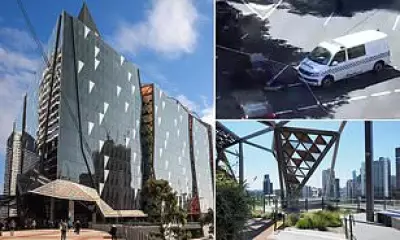
A major Sydney motorway tunnel was forced into an emergency closure this week, sparking severe traffic disruption and raising serious safety questions. The WestConnex M4 tunnel was shut in both directions after engineers discovered dangerous bulges in its concrete roof lining, prompting fears of a potential collapse.
What Triggered the Emergency Shutdown?
The crisis began in the early hours of Thursday morning. During a routine overnight inspection, engineers from the toll road operator Transurban identified "a couple of large bulges" in the tunnel's roof. The material in question was shotcrete – a sprayed-on concrete used to line the tunnel. Authorities were concerned that sections of this material could detach and fall onto vehicles below.
By 6am on Thursday, all westbound lanes between Haberfield and North Strathfield were closed for what was described as "emergency roadworks." The closure lasted for hours, with one lane reopening around 2pm. However, the remaining two lanes stayed shut, funnelling all traffic into a single lane and causing gridlock. Some motorists reported being stuck inside the tunnel for up to four hours.

The Blame Game and Communication Breakdown
The incident quickly escalated into a political row. New South Wales Roads Minister Jenny Aitchison criticised Transurban for an "absolute failure... of communication," arguing that road users were not adequately warned ahead of the morning peak. She revealed her office had received calls from stranded drivers missing work and critical appointments.
Transport for NSW coordinator general, Howard Collins, added that Transurban had declined offers of assistance from engineers working on the nearby Western Harbour Tunnel project. Transurban, however, defended its actions. WestConnex general manager Denise Kelly stated the company had been in contact with the Transport Management Centre five times before 6am and insisted they had the necessary resources on site.
All westbound lanes were closed again at 10pm on Thursday for further remedial work, before fully reopening on Friday morning after being certified safe.
What Exactly is Shotcrete?
For many, the term "shotcrete" was the mystery of the day. Experts explained it is a form of concrete, named for the method of application where it is shot at high pressure from a hose onto a surface. It is commonly used in tunnel construction to form a seal and support structure.
Associate Professor Sorn Vimonsatit of Macquarie University explained that shotcrete uses finer aggregates than standard concrete for strength and sprayability. In the M4 tunnel, it sits between a waterproof membrane and the sandstone above. Associate Professor Wengui Li from the University of NSW noted the material can last 50-100 years; the M4 tunnel only opened in 2019.
While initial reports suggested a water leak, Transurban later confirmed this was not the cause. Professor Li indicated the failure could stem from the mix composition, tension on the roof lining, or vibrations from traffic.
Is the Tunnel Now Safe and What Happens Next?
Transport for NSW confirmed that overnight repairs had made the tunnel safe and it was "certified for full operation." Transurban stated that safety was its top priority and that work had secured a "small section" of the roof, with re-shotcreting to be completed later. Professor Vimonsatit assessed the risk from the localised exposed sandstone as low.
The fallout continues regarding compensation. Transurban has directed affected customers to seek refunds via the Linkt app. Minister Aitchison has argued that refunds should be extended across Transurban's wider network, including the M5 and M8 tunnels.
This incident has thrown a spotlight on the complex relationship between the NSW government and private toll road operators, with negotiations for a unified tolling system already underway. As Howard Collins wryly noted, the extensive tolling infrastructure did at least provide precise data on just how long drivers were delayed.