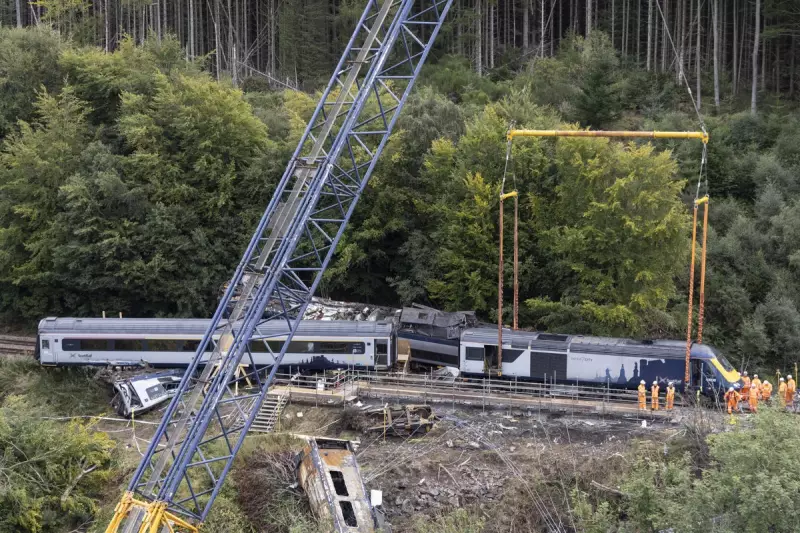
Train Driver Instructed to Proceed at Normal Speed Minutes Before Fatal Derailment
A fatal accident inquiry has heard that the driver of a train that derailed in Aberdeenshire was told the line was "fine" and he could proceed at normal speed just minutes before the catastrophic incident. The crash of train 1T08 at Carmont near Stonehaven on August 12, 2020, resulted in the deaths of three people after the train struck gravel washed onto the track by heavy rainfall.
Timeline of a Tragedy
The inquiry at Aberdeen Sheriff Court heard detailed evidence about the circumstances leading to the derailment. Train 1T08 had departed Aberdeen at 6.39am bound for Glasgow when it encountered severe weather disruption across Scotland's rail network.
Ash Gardner, inspector of rail accidents at the Rail Accident Investigation Branch, told the inquiry that the train passed the eventual derailment site at 6.59am. Shortly after passing Carmont signal box, the driver was instructed to stop and return north to Stonehaven due to a landslip ahead.

"During this conversation, the driver queried whether there was any speed restriction to Stonehaven; the signaller replied that the line was fine between Carmont and Stonehaven, and that the driver could proceed at normal speed," Mr Gardner testified.
The driver responded that he would be in no rush, but after slowly passing the signal box and clearing the crossover, he accelerated toward what would become the crash site. The derailment was reported at 9.37am.
Systemic Failures in Weather Response
The inquiry heard concerning evidence about systemic failures in how the rail network managed severe weather risks. Mr Gardner revealed that an extreme weather action team should have been convened on August 11 and 12 according to National Rail standards, but wasn't.
Furthermore, a "gold command structure" that could have ordered a cessation of travel wasn't activated until after 10am – too late to prevent the accident. The rail control room operation that morning was under "severe workload pressure" due to multiple weather-related incidents across Scotland.
"Controllers lacked the situational awareness necessary to assess the risks facing individual trains on the network, including train 1T08," Mr Gardner stated.
He also criticised control room staff for not making full use of the National Rail Weather System, designed to monitor extreme weather events, despite it being procured in 2015.
Victims and Vehicle Safety Concerns
The crash claimed the lives of three people:
- Train driver Brett McCullough, 45
- Conductor Donald Dinnie, 58
- Passenger Christopher Stuchbury, 62
Only nine people were aboard the train at the time due to Covid-19 restrictions, with passenger numbers across the network down approximately 65%. The inquiry heard the death toll would have "almost certainly" been higher with normal passenger levels.
Dominique Louis, a principal inspector at RAIB, told the inquiry that the 50-year-old train lacked modern safety features that could have improved the outcome. The vehicle had been built before requirements for "anti-climb devices" and "energy-absorbing vehicle ends" came into force.
"Had these been in place, they would have reduced the risk of coach D overriding the lead power car," Mr Louis explained, noting this caused a "complete loss of survival space" that resulted in Mr Dinnie's death.
Aftermath and Accountability
In 2023, Network Rail was fined £6.7 million after admitting health and safety failings related to the crash. A Network Rail spokesperson stated the government-owned company is "committed to supporting the work of the inquiry and continuing to deliver on the recommendations made by RAIB."
"We've made significant changes to how we manage the risk of severe weather since the accident and our work to make our network more resilient will continue," they added.
The fatal accident inquiry before Sheriff Lesley Johnson continues as investigators and rail authorities seek to understand the full sequence of events and systemic issues that led to this preventable tragedy.