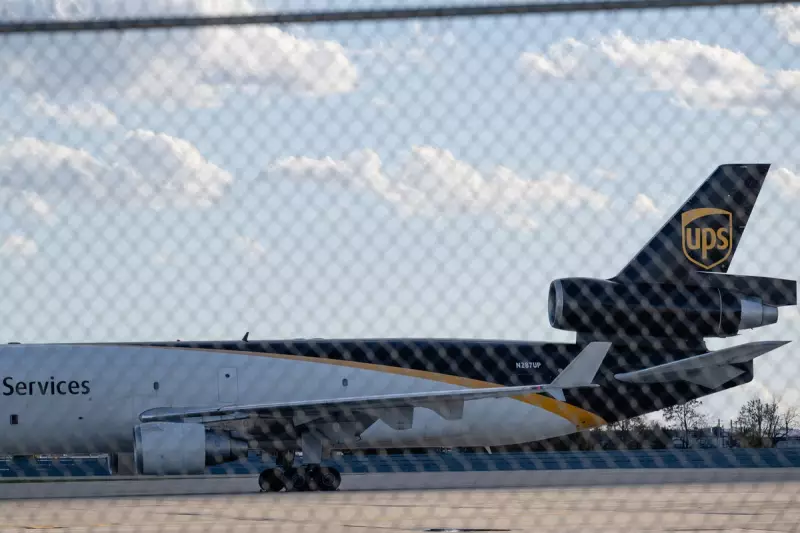
UPS Permanently Grounds MD-11 Fleet After Louisville Crash Tragedy
Global logistics giant UPS has announced the complete retirement of its entire fleet of McDonnell Douglas MD-11 cargo aircraft, a decisive move coming just months after one of the planes crashed during takeoff in Louisville, Kentucky, resulting in fifteen fatalities.
Accelerated Retirement Following Fatal Incident
CEO Carol Tomé confirmed the accelerated fleet retirement during the company's fourth-quarter earnings call on Tuesday. "We decided to accelerate our plans and retire all MD-11 aircraft in our fleet," Tomé stated, marking a significant operational shift for the delivery company.
The tragic incident occurred on November 4th when the MD-11 crashed shortly after departure from Muhammad Ali International Airport. The aircraft's left engine detached from the wing, causing it to climb only approximately 30 feet (9 metres) before plummeting to the ground.

Investigation Uncovers Critical Maintenance Issues
The National Transportation Safety Board investigation revealed troubling findings that contributed to the decision. Investigators discovered cracks in critical components that secured the engine to the aircraft's wing—flaws that had gone undetected during routine maintenance checks.
Alarmingly, the last inspection of these crucial engine mount parts occurred in 2021, raising serious questions about maintenance protocols and inspection intervals for the aging aircraft type.
Financial and Operational Impact
The retirement carries substantial financial consequences for UPS. The MD-11s represented approximately 9% of the company's total aircraft fleet, and their write-off resulted in a significant after-tax charge of $137 million.
To address the capacity gap created by the fleet retirement, UPS has secured 18 new Boeing 767 aircraft scheduled for delivery over the next fifteen months. During the recent peak holiday season, the company implemented contingency measures including repositioning aircraft from international operations, increasing ground transportation volume, and leasing additional planes to maintain service levels.
Regulatory Response and Community Impact
Following the November crash, the Federal Aviation Administration took immediate action by grounding all MD-11 aircraft. In a statement issued Tuesday, the FAA confirmed it continues to review "all the facts and circumstances" before determining whether MD-11s might be permitted to return to service with other operators.
The crash devastated the Louisville community, with the aircraft striking a Kentucky Petroleum Recycling plant—causing secondary explosions—and crashing into Grade A Auto Parts, an auto salvage yard where many victims were either working or visiting at the time of impact.
Tomé expressed gratitude for the community response, stating: "I am incredibly proud of our team at Worldport and how they responded to this accident. And I would like to thank the Louisville community as well as our business and industry partners for their outpouring of support."
The permanent retirement of the MD-11 fleet represents one of the most significant fleet transitions in recent aviation history, driven by safety concerns following one of the deadliest cargo aircraft accidents in modern times.