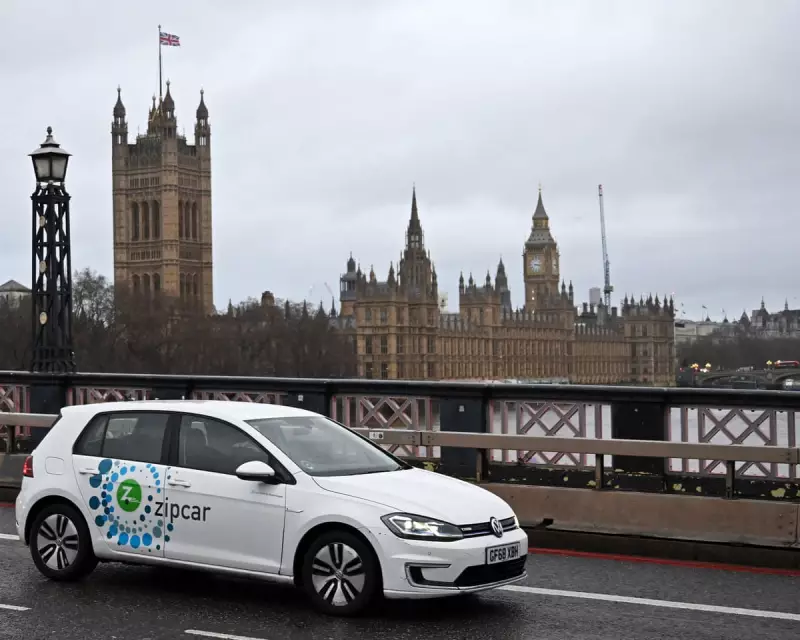
The imminent collapse of a major pillar of Britain's sustainable transport network has been confirmed, as Zipcar, the world's largest carsharing club, announces it will cease UK operations at the end of the month. This decision leaves hundreds of thousands of members stranded and deals a severe blow to efforts aimed at reducing traffic congestion and transport emissions.
A Personal and National Setback
For many, like writer Phineas Harper, the news is a deeply personal blow. Harper recently learned to drive specifically to access Zipcar's service, only to find the rug pulled from beneath him. His story highlights a widespread dilemma: without affordable, flexible carsharing, individuals are forced back into costly private car ownership for journeys that represent less than 1% of their annual travel needs.
The national implications are stark. Domestic transport remains the UK's largest source of greenhouse gas emissions. Car clubs like Zipcar offered a proven solution, with research indicating that each shared vehicle can replace around 20 privately owned cars. With Zipcar operating roughly 3,000 vehicles in Britain, its exit represents a significant step backwards.

Britain Lags Behind as Government Policy Falters
The UK was already trailing European neighbours in carsharing adoption. According to data from carsharing technology firm Invers, Germany has over six times as many shared cars per person as Britain. Zipcar's withdrawal will shrink the UK's shared car ratio to approximately one for every 30,000 people, effectively ending access for vast portions of the population.
This collapse stands in embarrassing contrast to the government's stated aims. The revised National Planning Policy Framework explicitly urges local authorities to promote sustainable travel modes, including carsharing, to limit future car use. Yet, as Arthur Kay, a Transport for London board member and author of 'Roadkill', argues, the Treasury seems captivated by the electric vehicle (EV) manufacturing lobby. Billions in subsidies are being funnelled into private EV ownership and infrastructure, while cost-effective shared schemes are left to wither.
In the recent budget, Chancellor Rachel Reeves allocated £1.95bn in subsidies for new electric cars and a further £500m for EV charging points, alongside a £1.5bn loan guarantee for Jaguar Land Rover and another fuel duty freeze. This largesse for the private car sector starkly contrasts with the complete absence of support for car clubs and their 328,539 users.
Electric Cars Are Not a Silver Bullet
The government's EV-centric strategy ignores critical flaws. While electric cars reduce direct exhaust emissions, they are carbon-intensive to manufacture and still produce harmful particulate pollution from brakes and tyres. Some studies suggest certain EVs cut driving emissions by only 47%.
Perhaps more shockingly, evidence from Norway—where 94% of new cars sold are electric—suggests that rising EV ownership can actually increase overall car use. A study from the Norwegian University of Science and Technology found greater EV ownership led to a 10-20% rise in car trips. Just as new roads induce more traffic, cheap, subsidised private EVs encourage more driving.
Ultimately, EVs perpetuate a model of urbanism centred on expensive, privately owned machines that sit idle 95% of the time. Zipcar's demise is not merely a business failure; it is a warning that the UK's transport priorities are dangerously misaligned. If the country is serious about building communities for people, not parked cars, it must get serious about sharing.