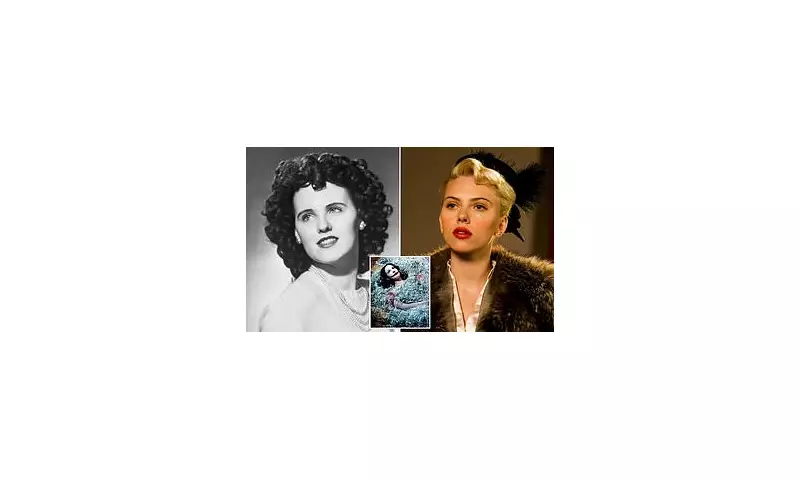
Seventy-nine years after one of America's most notorious unsolved murders, fresh evidence has emerged that could finally bring justice for Elizabeth Short, the young woman whose brutal killing shocked Los Angeles in January 1947. The 22-year-old's savagely mutilated body was discovered drained of blood and precisely bisected in a vacant lot, sparking an unprecedented manhunt that ultimately failed to identify her killer.
The Woman Behind the Myth
Elizabeth Short, known to friends as Betty, arrived in California just six months before her murder, having left her small New England hometown driven by curiosity and wanderlust. Contrary to the sensationalized "Black Dahlia" persona created by media coverage that transformed her into a femme fatale, those who knew her described a clever, courageous young woman navigating postwar America's shifting social landscape.
"She may have been a flirt, but according to the women who were her friends, she was inexperienced when it came to sex," notes crime historian William J. Mann. "Rather, she was a young woman whose father had abandoned and rejected her, who was fired up by curiosity to explore places far more exotic than the town where she was raised."

A Pioneer in Restrictive Times
Short came of age during a particularly challenging period for women in American society. After being praised for their vital contributions to the wartime economy, women faced increasing pressure to return to domestic roles as men returned from overseas combat. Betty Short represented those who resisted this social pressure, embarking on a journey of self-discovery that carried significant risk in an era when single women were often viewed with suspicion.
"It's not a surprise that the percentage of women murdered skyrocketed during the same period Betty Short came to Hollywood and was killed," observes Mann. "She defied increasingly draconian postwar gender expectations to live her own life, leveraging what little agency postwar society gave her to explore the world just as young men had been doing for generations."
The Emerging Suspect
Recent investigations have focused renewed attention on Marvin Margolis, identified by multiple researchers as the most compelling suspect in the decades-old case. According to exclusive reporting in the Daily Mail, Margolis fits the profile developed by FBI profiling pioneer John Douglas, whose equation "why + how = who" provides a framework for understanding criminal motivations and capabilities.
The "why" in Margolis's case appears rooted in deep-seated rage and resentment documented by military psychiatrists, demonstrated when he reportedly slapped Short and pushed her from his car during an earlier encounter. The "how" relates to surgical knowledge acquired during wartime service, where he assisted surgeons treating battlefield casualties and handled human remains.
Anatomical Expertise and Evasive Behavior
"Only someone who knew how to cut a body in half without damaging internal organs could have committed this murder," explains Mann, whose book Black Dahlia: Murder, Monsters and Madness in Mid-Century Hollywood identifies Margolis as the most likely perpetrator. "His anatomical experience during the war would have given him the surgical knowledge needed to dissect Elizabeth Short's body with such precision."
Compelling behavioral evidence includes Margolis changing his name shortly after detectives announced they were close to making an arrest, his connections to Chicago organized crime revealed in court files, and peculiar stories he told in Kansas where he assumed another identity to portray himself as Short's deceased fiancé. Perhaps most telling is the FBI's unusual response to records requests about Margolis - while providing files on other subjects, they simply denied requests concerning Margolis without confirming or denying whether records existed.

Decades of Speculation and False Claims
The Black Dahlia case has inspired countless theories over eight decades, with various individuals claiming to have solved the mystery. Writer John Gilmore, author of the first major book on the case in 1994, told Mann he wanted to be remembered as "the guy who cracked the Black Dahlia case," though his claims ultimately failed to withstand scrutiny. Another writer produced multiple books alleging his father was both Short's killer and the Zodiac Killer, convincing some retired detectives in 2003 before those theories also collapsed.
Most recently, codebreaker Alex Baber has proposed that Short's murderer was also the Zodiac Killer operating two decades later, suggesting the Zodiac Motel in Lynwood as the crime scene. Mann disputes this location, noting that every lodging establishment in Southern California was thoroughly examined by multiple law enforcement agencies using expert blood detection techniques.
"Draining the blood from a body and then cutting it in half would leave some trace, even if done in a bathtub," Mann argues. "That's why I conjecture the draining and bisection was done in a lab - a place investigators never searched."
Seeking Justice Through Understanding
As new evidence brings fresh attention to this historic case, Mann emphasizes that true justice for Elizabeth Short requires more than simply identifying a suspect. "My goal was not to solve the murder, but to tell the larger story of the crime - what it reveals about post-war society and today - and humanize a clever, courageous woman clouded by decades of myth," he explains.
The Black Dahlia mythology has inspired numerous cultural works including films like Brian de Palma's adaptation, novels by James Ellroy, and even contemporary art featuring burlesque performer Dita von Teese. Yet these interpretations often perpetuate the sensationalized narrative that obscures the real woman behind the legend.
"Elizabeth Short was no proto feminist," concludes Mann. "But it's time we see her less as a femme fatale and more as a Tom Sawyer in ankle-strap shoes. She was a young woman who struck out on her own and may have paid for it with her life. Her death was grisly and notorious, but what is far more important is the way she lived her short life."
With the Los Angeles Police Department potentially revisiting the case based on new evidence, there remains hope that some measure of justice might finally be achieved for Elizabeth Short - not merely by naming her killer, but by restoring her humanity after decades of mythological distortion.