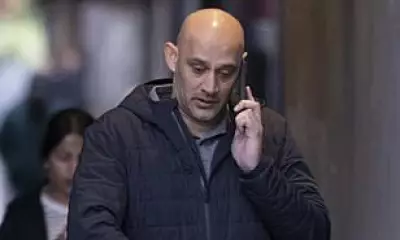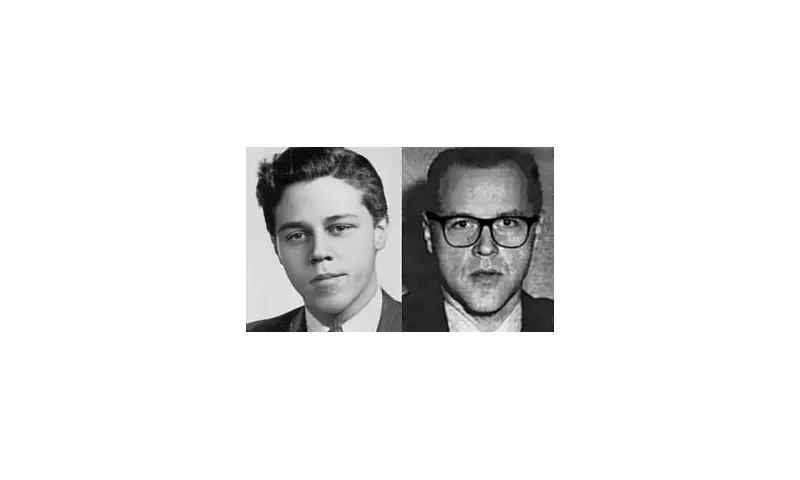
Two of America's most infamous and unsolved murder sprees, separated by two decades, may have been the work of a single killer, according to a bombshell new claim from an amateur investigator. The gruesome 1947 murder of aspiring actress Elizabeth Short, known as the Black Dahlia, and the Zodiac killer's reign of terror in the late 1960s have long been considered separate nightmares. Now, a sleuth alleges a former US Navy corpsman was responsible for both.
The Grisly Crimes That Haunt America
On the morning of January 15, 1947, a woman walking in Los Angeles's Leimert Park made a horrific discovery: the naked, mutilated body of a young woman, severed cleanly in half at the waist. The victim, soon identified as 22-year-old Elizabeth Short, had a grotesque smile carved into her cheeks. Her body showed signs of surgical precision, with organs carefully avoided during the bisection. The scene was bloodless, indicating she was killed and washed elsewhere.
Two decades later, a new monster emerged in Northern California. Beginning in December 1968, a killer calling himself 'the Zodiac' stalked young couples, shooting five victims dead and injuring two others. He taunted police and newspapers with cryptic letters and ciphers, boasting of his crimes and adopting a distinctive crosshair symbol. His attacks, including the stabbing of a couple at Lake Berryessa by a hooded assailant, plunged the region into fear.

A Compelling Suspect Emerges
Investigator Alex Baber now asserts that both crime waves were the work of one man: Marvin Skipton Margolis, later known as Marvin Merrill. Baber's theory, which is being reviewed by Californian law enforcement, is built on a web of circumstantial but compelling connections.
Baber claims Margolis was in a relationship with Elizabeth Short in Chicago in the summer of 1946 and that she lived with him in Los Angeles months before her murder. Grand jury records reportedly identified him as the only pre-medical student who had lived with Short. In the weeks before her death, Short allegedly told friends she feared a 'jeanously jealous' ex-Marine boyfriend would kill her.
Margolis's background fits the crimes. As a US Navy corpsman with the 1st Marine Division, he received surgical and sharpshooting training. He served in the Okinawa campaign and returned with a Japanese Nagoya rifle and Type 30 bayonet—a weapon matching injuries on Zodiac victims Bryan Hartnell and Cecelia Shepard.
From Motel to Moniker: The Zodiac Link
Baber's investigation suggests a chilling link between the two cases. On the night Short disappeared, a man matching Margolis's description approached several motels near San Pedro seeking a room with a bath. Just north of these locations was the Zodiac Motel in Lynwood, which opened in June 1946. Baber theorises this may be the origin of the killer's later moniker, not a watch brand as previously thought.
After Short's murder, Margolis changed his surname to Merrill, evaded police questioning in Chicago, and moved on with his life. He married, had children, worked as a used car salesman, and later reinvented himself as an artist in Kansas, claiming to have studied under Salvador Dali. He returned to the West Coast in 1962.
The Zodiac's first confirmed attack was on December 20, 1968. The killer's knowledge of cryptography is another link; during the war, Margolis's friend and former roommate Bill Robinson served in the US Army's Signal Intelligence Service, the military's code-breaking division.
A Deathbed Confession in Ink?
The most startling evidence comes from a box of items given to Baber by Merrill's youngest son. It contains a sketch from 1992, the year Merrill was diagnosed with cancer, signed 'Marty Merrill '92'. The drawing depicts a nude woman's torso with markings eerily similar to the mutilations on Elizabeth Short's body. The name 'ELIZABETH' is written below in block capitals reminiscent of the Zodiac's handwriting.
Using image-enhancement software, Baber claims to have found the word 'ZoDiac' hidden beneath the ink. To Baber, this sketch is a deathbed confession, physically linking the two sets of crimes.

Furthermore, Baber claims to have used AI and census records to decrypt the Zodiac's unsolved 'Z13' cipher, which begins 'My name is -'. His decryption, mirroring methodologies used to crack the Zodiac's other codes, points to the name Marvin Merrill.
The Search for Answers Continues
While Merrill's youngest son has dismissed Baber's findings as 'fiction' and a 'speculative cesspool', the investigator remains adamant. He has vowed to continue seeking justice, having spoken to one of Elizabeth Short's last surviving relatives before she died.
Marvin Merrill died in California in 1993, never having faced justice for any of the crimes. If Alex Baber's extraordinary theory is proven correct, it would represent one of the most significant breakthroughs in the annals of true crime, finally providing answers to mysteries that have transfixed and terrified America for generations.