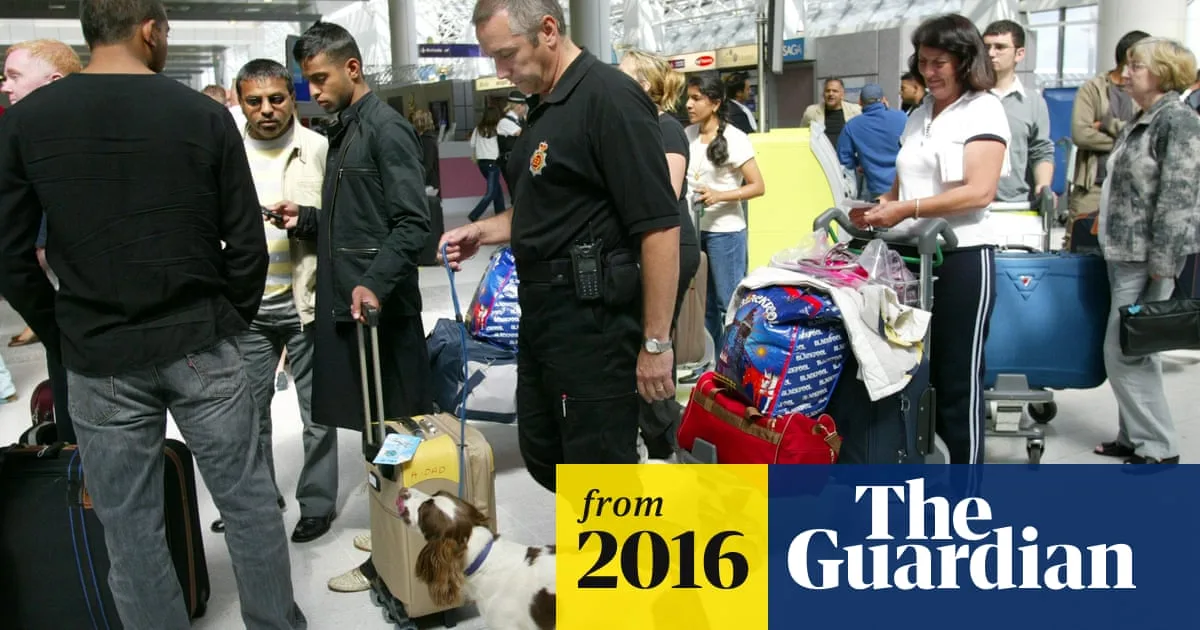
British Events Manager's LSD Smuggling Plot Foiled by Sniffer Dog in Munich
Brit's LSD Smuggling Foiled by Sniffer Dog at Munich Airport

A British events manager has been convicted after a brazen attempt to smuggle a substantial quantity of LSD across European borders was dramatically thwarted by an alert sniffer dog at Munich Airport. The 32-year-old man, whose identity is protected under German law, faced justice at the District Court of Erding following a chaotic sequence of events that saw him hiding in airports and evading authorities for weeks.

The Failed Smuggling Operation

The defendant's ill-fated journey began in Amsterdam in June 2025, where he claimed to have met drug dealers while staying with his girlfriend. He agreed to act as a courier, transporting what he believed would be a straightforward delivery for a promised reward of £1,700 in cash and ten days at a techno festival. The narcotics consisted of 1,200 high-strength LSD tabs, carefully concealed between the pages of magazines within his suitcase.

Discovery at Munich Airport

His travel plans involved flying from Amsterdam to Zadar, a popular Croatian party destination, with a scheduled stopover in Munich. It was during this layover that German customs officials, aided by a specially trained sniffer dog, identified his luggage as suspicious. The dog alerted officers to the presence of illicit substances, leading to the immediate seizure of the suitcase.

Authorities discovered not only the extensive stash of LSD but also three precision scales and dozens of small, sealable transparent bags packed among the man's holiday clothing. Crucially, customs were only able to identify the suitcase's owner after the flight to Zadar had already departed, leaving the courier to continue his journey unaware that his cargo had been intercepted.

Panic and Evasion

Upon landing in Zadar alone, the British national expected to be met by unknown contacts to complete the handover. When his bag failed to appear on the luggage carousel, he panicked. Fearing reprisals from the drug dealers and without the illicit goods, he became too frightened to leave the terminal building.

He subsequently hid inside Zadar Airport for several hours before contacting a friend who drove him away from the scene. In a further attempt to avoid detection, he switched off his mobile phone and went into hiding for a full two weeks, effectively disappearing from authorities' radar.

Legal Proceedings and Sentencing

During his period in hiding, prosecutors in Landshut issued an arrest warrant. The defendant later engaged a German lawyer, learned of the warrant, and voluntarily returned to face investigation, leading to the warrant being lifted. At his trial, he admitted to knowingly transporting illegal drugs, though he claimed ignorance of the exact substances involved, and refused to identify his contacts, citing fears of reprisals.

Judges convicted him of aiding drug dealing and attempting to illegally transport a significant quantity of narcotics through Germany. He received a two-year suspended prison sentence and was ordered to pay £1,700—the exact amount he expected to earn from the smuggling operation—to a drug-prevention charity. He was also instructed to cover court costs.

Ongoing Investigation

The dealers who supplied the LSD remain at large. Forensic analysis revealed that DNA found on the drug packages matched traces from an earlier narcotics case, but authorities have been unable to identify the suspects. The case highlights the ongoing challenges faced by European law enforcement in combating international drug trafficking networks.

This incident underscores the sophisticated methods employed by customs authorities, particularly the use of highly trained sniffer dogs, in intercepting illegal substances at major transport hubs. It also serves as a stark warning about the severe legal consequences awaiting those involved in drug smuggling across European borders.