An international drug lord once branded 'Asia's El Chapo' has been imprisoned, bringing down a methamphetamine empire with an annual turnover rivalling $26 billion. The syndicate's reach was comparable to the infamous operations of Pablo Escobar.
The Fall of a Global Kingpin
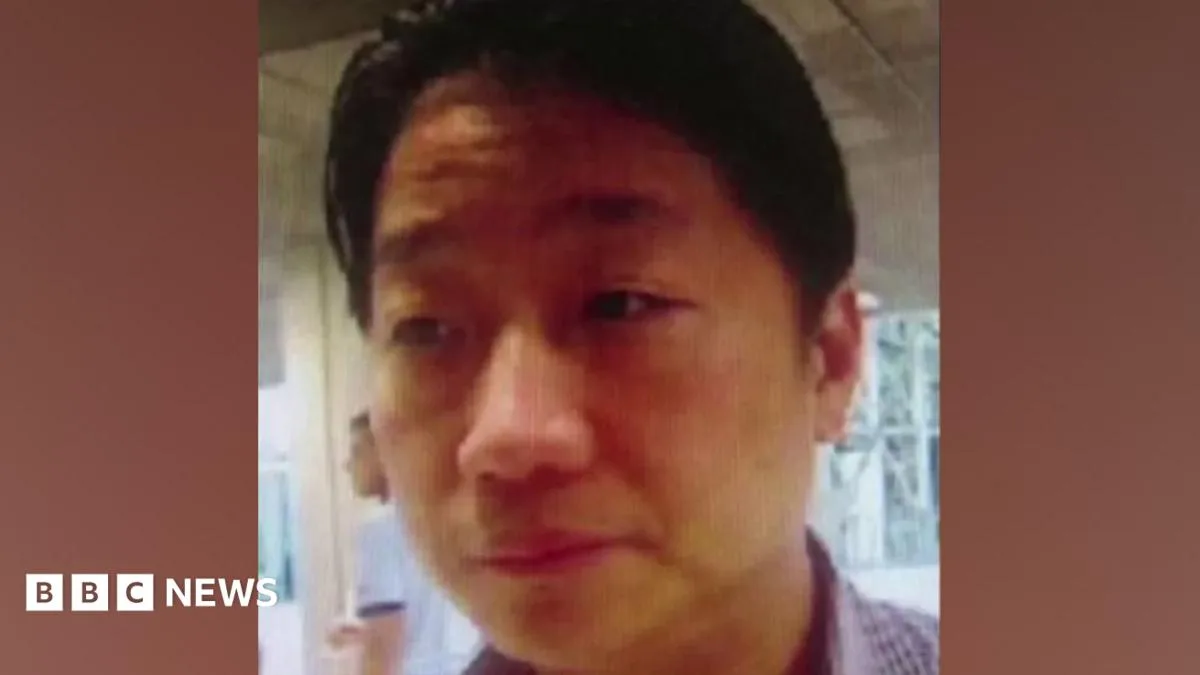
Tse Chi Lop, the 62-year-old Chinese-Canadian crime boss long considered Asia's most wanted man, was sentenced in Melbourne's County Court on Thursday to 16 years in prison. He pleaded guilty to conspiring to traffic commercial quantities of border-controlled drugs. The sentencing marks the climax of a decade-long global investigation, with Tse sitting stone-faced beside a translator as the details were revealed.
His organisation, known as 'The Company', achieved what law enforcement had feared for years: it united previously rival Asian triad groups and outlaw motorcycle gangs, including the Comanchero and Hells Angels, into a single, ultra-efficient drug machine. At its peak, authorities state The Company controlled an estimated 70% of the global meth trade and supplied three-quarters of Australia's market.
An Empire Built on Brutality and Huge Profits
The business model was ruthlessly effective. Profit margins were so enormous that the syndicate could offer a money-back guarantee to distributors if police seized their shipments. Producing a kilo of meth in Myanmar cost just $2,500, yet it could fetch up to $500,000 in Australia or $900,000 in Japan. This meant that even if 99 out of 100 consignments were intercepted, the operation remained wildly profitable.
Betrayal was met with horrific violence. Police uncovered mobile footage circulated within the network as a grim warning, showing a smuggler being tortured with a blowtorch and cattle prod after he was suspected of stealing 300kg of meth. The message was clear: no one crosses The Company.
The drug factories were hidden deep in the rebel-controlled jungles of north-west Myanmar, protected by the Kaung Kha militia. There, imported Taiwanese workers produced tonnes of high-purity meth, which was left to dry slowly across sprawling compounds before being shipped through Thailand.
A Decade-Long Global Manhunt
To combat the flood of meth into Australia, the Australian Federal Police (AFP) launched Operation Volante in 2012, a near decade-long investigation that built one of Asia's most sophisticated criminal intelligence databases. It logged names, chemical fingerprints of seized drugs, surveillance records, phone intercepts, and informant tips to map the empire.
Yet, The Company constantly adapted. When police targeted trucks moving meth from Myanmar into Thailand, shipments were diverted. When those routes were tightened, the syndicate allegedly paid hundreds of Laotians to trek through remote mountains carrying 30kg backpacks, using paths barely visible on maps.
Once out of Myanmar, drugs were moved via shipping containers and large offshore 'mother ships', disguised as loose-leaf tea. Smaller boats would rendezvous in international waters, confirming identities by matching two halves of a torn Hong Kong dollar bill. After verification, they would load hundreds of kilos of meth and ferry it ashore, bypassing traditional customs.
Detectives noted the syndicate's complex supply chain and distribution network would 'rival Apple's'. Tse himself lived like a ghost until a fateful flight in 2021 led to his dramatic arrest at Amsterdam's Schiphol Airport. He claimed the AFP had manipulated his flight route to enable the capture. Extradited to Australia in 2023 under extreme security, he was transported to court in an armoured BearCat vehicle.
AFP Commissioner Krissy Barrett said the sentence concluded one of the most high-profile operations in the force's history. 'This result showcases what the AFP does best - identifying and targeting criminal syndicates that cause significant harm to our communities,' she stated. 'Operation Volante is the culmination of 14 years of hard work… The long arm of the AFP can reach criminals across the world.'
With almost five years already spent in custody counted as time served, Tse Chi Lop must serve a minimum of 10 years before being eligible for release.