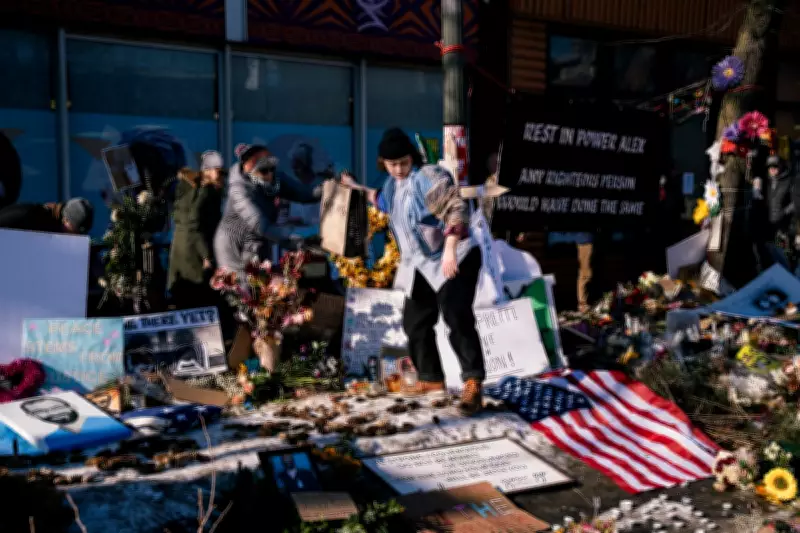
In the heart of Minneapolis, Minnesota, the stretch of Nicollet Avenue between 26th and 27th streets has become a poignant site of collective mourning and resilience. The spot where Alex Pretti was fatally shot by federal agents now stands cordoned off with orange stakes and caution tape, a stark reminder of the violence that has disrupted this vibrant community.
A Neighbourhood Transformed by Tragedy
"It's almost like a loss of innocence for a part of the neighbourhood that was just pure joy before," reflects Aldona Martinka, a healthcare worker who has called this area home for over a decade. The atmosphere along this corridor, affectionately known as "Eat Street" for its diverse array of global restaurants and bars, has shifted dramatically since Pretti's death.
Local establishments, including a beloved Jamaican restaurant and a popular thrift store, have evolved into community gathering spaces, opening their doors to mourners arriving from across the city and beyond. Restaurants along the avenue are offering complimentary food and handwarmers to those paying their respects, creating pockets of warmth amidst the winter chill.

Daily Rituals of Remembrance
Each day, neighbours arrive at Pretti's memorial to perform quiet acts of care: refreshing wilting flowers, rearranging handwritten cards and messages, and sprinkling salt along the pavement edges to prevent dangerous ice formation. As evening falls, the block becomes illuminated by candlelight, with dozens of flickering flames casting a gentle glow and filling the air with a mixture of fragrances from prayer lights and scented candles.
The memorial has become a stage for nightly performances and dedications. Brass Solidarity, a band formed in response to George Floyd's murder, delivered a powerful rendition of "Stand by Me" that had crowds singing along. Kalpulli Yaocenoxtli, a Mexica-Nahua cultural group from nearby St Paul, performed traditional dances in solidarity. Hundreds gathered for a vigil organised by Pretti's fellow nurses, creating moments of shared grief and support.
"Even throughout the day, you'll find people here who start singing," observes Aisha Chughtai, a local city council member, as she stands facing the memorial from across the street.
Escalating Tensions and Community Response
Chughtai recalls the immediate aftermath of Pretti's killing, when she rushed outside to bear witness alongside her neighbours. "I was trying to help my neighbours who were getting hit with irritants," she explains, describing how dozens of federal agents flooded the street, deploying teargas and projectiles against demonstrators and residents alike.
Martinka and her husband evacuated their home with their five-month-old baby, watching from safety as chemical smoke engulfed the bike lane where they had imagined teaching their daughter to cycle. From her mother's downtown apartment window, Martinka could see ominous gray fumes clouding Nicollet Avenue, worrying about neighbours with young children trapped in century-old homes with poorly sealed windows.
A Pattern of Enforcement and Fear
Pretti's death represents a culmination of weeks of escalating tensions in Whittier. Chughtai describes witnessing neighbours, including legal residents and refugees, being violently arrested by federal agents. Many community members had been avoiding public spaces for weeks, fearing profiling or detention by immigration authorities.
Residents organised themselves, patrolling street corners while wearing bright red and orange whistles, ready to alert others when immigration agents appeared. Chughtai worked to connect immigrant families with legal aid groups and joined fellow council members in calling for eviction protections for those unable to work due to the enforcement presence.
"Every day, I go through waves of grief and anger," Chughtai admits, reflecting on incidents including the handcuffing of teenage siblings outside a local clinic just days before Pretti's killing.
Businesses Become Sanctuaries
In the wake of the violence, local businesses transformed into unexpected sanctuaries. Jeff Cowmeadow, proprietor of the Prodigal Public House, opened his establishment to neighbours injured by teargas and projectiles. Chughtai was among those helping people wash chemical irritants from their eyes at the pub.

My Huong Kitchen, a Vietnamese restaurant, became a makeshift emergency medical centre. Owner Tracy Wong ushered in protesters and press members suffering from exposure to irritants, some of whom were vomiting. "I'm so sorry, I'm so sorry," she repeated as people sought refuge inside.
Wong, described by locals as "the neighbourhood auntie," distributed piles of egg rolls from her kitchen while medics set up treatment stations in the restaurant. Samie Solina, a reporter for KARE-11, posted a video about Wong's kindness that prompted customers to return in droves, leaving generous tips and thank-you notes.
Economic Impact and Community Support
The sustained federal presence had severely impacted businesses along Nicollet Avenue, many owned and staffed by immigrants who had been unable to report to work. Following Pretti's death, crowds from across Minneapolis booked out restaurants that had been struggling, providing crucial economic support.
The Copper Hen Cakery & Kitchen, which had served as another makeshift field hospital, once again filled with brunchers. Glam Doll Donuts, located behind its distinctive pink facade across from where Pretti was killed, reopened to long lines of supportive customers.
"The way that our community comes together in crisis – it's a coming together, not a hunkering down," Martinka observes, capturing the spirit of collective response that has defined these difficult weeks.
Looking Forward with Determination
Despite the Trump administration's demotion of border patrol commander Gregory Bovino following Pretti's death, Chughtai remains cautious. "It's a testament to the power of people that we were able to whistle Bovino out of Minneapolis," she acknowledges. "But this cruelty did not start with Greg Bovino and it certainly will not end with him."
Her concerns proved warranted when, just days after border czar Tom Homan committed to reducing federal presence in Minneapolis, agents violently arrested another man in a nearby neighbourhood while deploying mace against bystanders.
For Martinka, the corner where Pretti died will forever hold painful memories. "I will never be able to walk by this corner again without thinking about this really horrible time for our neighbourhood and our city," she says, reflecting on the loss of what was once a place of comfort and community.
As the memorial continues to draw daily visitors, with neighbours maintaining their rituals of care and businesses serving as pillars of support, the community demonstrates remarkable resilience in the face of tragedy, determined to honour Pretti's memory while rebuilding their sense of safety and belonging.