In moments of terror, when panic sends crowds fleeing, a rare few run directly towards the threat. The recent attack at Sydney's Bondi Beach and past atrocities in London have thrown a spotlight on these extraordinary individuals, prompting a question for neuroscientists and psychologists alike: what compels a person to become a 'have-a-go hero'?
The Split-Second Decision to Confront Terror
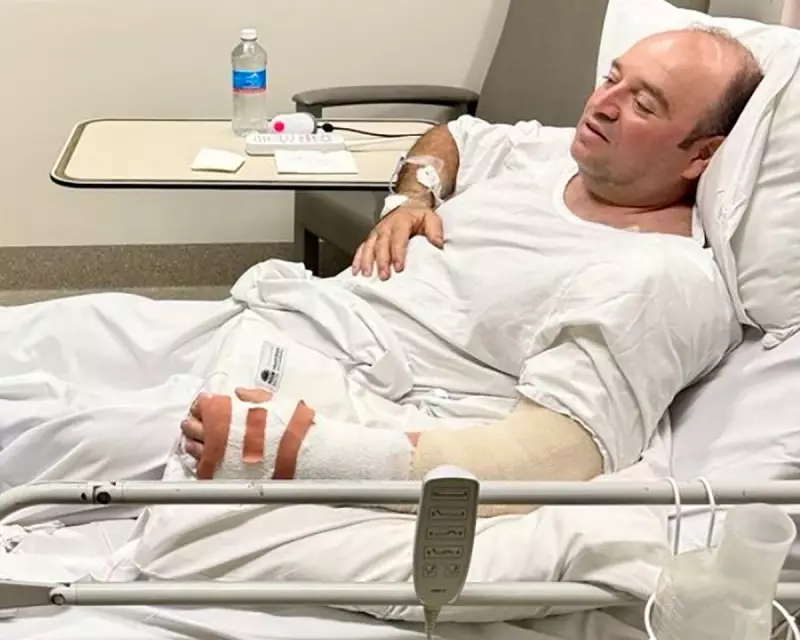
Ahmed al-Ahmed is currently recovering in a Sydney hospital after he tackled and disarmed one of the attackers during the violent rampage at Bondi Beach. His actions, caught in the chaos of last Sunday, echo those of others who have faced similar horrors.
In London, on 29 November 2019, Darryn Frost found himself in a terrifyingly similar situation. As a knife-wielding terrorist wearing a fake suicide belt caused panic inside Fishmongers' Hall during the London Bridge attack, Frost, a formerly shy civil servant, grabbed a decorative narwhal tusk from a wall. He describes entering a state of intense focus, zoning in on the danger and helping to pin the attacker, Usman Khan, to the ground.

"I don't think it comes naturally to anyone," Frost, now 44, insists. "I saw Saskia Jones fall to the stairs... So the next thought in my mind was: 'I need to prevent that from happening to anyone else'." He recalls the surreal sensation of time slowing down, his senses narrowing to a hyper-focused point. "My vision went tunnel vision just on to him... I can still remember the flecks of dust in the air."
Beyond Instinct: Training, Experience and Perception
Neuroscientist Dr Daniel Glaser explains that while humans have a primal "fight or flight" response to threat, it does not dictate the specific action taken. "It prepares your muscles, and to some extent your brain, for action, but the action that you take depends on a bunch of other things," he states.
Glaser emphasises that perception, shaped by life experiences, prejudices, and even any prior training, plays a critical role. "Your sense of what's happening depends on what you expect to be happening... The kind of bravery that caused people to run towards danger... was guided not by 'instinct', but by life experiences."
This week, former soldier Dan Barr was hailed for his intervention during the Liverpool FC parade incident, where Paul Doyle drove into crowds. His military background likely informed his rapid response.
No Typical Profile for a Hero
Professor Craig Jackson, a chartered psychologist specialising in mass violence, stresses there is no single profile for a person who intervenes. "It's just as likely to be an angry mum in defence mode as it could be a fit, healthy rugby-playing male," said the professor of workplace health psychology at Birmingham City University. "That's reassuring because that means that attackers... they're never quite sure who's going to be the hero who could challenge them."
Roy Larner, 56, famously demonstrated this during the 2017 London Bridge attack. As three knife-wielding terrorists burst into the Black and Blue steakhouse, Larner, a football fan with no formal combat training, fought them with his fists, shouting "Fuck you, I'm Millwall." He was stabbed eight times and slashed in the head. "It gave that 20 or 30 people a chance to get out... It nearly cost me my life," he recalled. Larner, dubbed the "Lion of London Bridge," said a split-second decision to protect an older man in the room motivated him.
Despite his bravery, Larner, who has past convictions, was not formally recognised for his actions and received no compensation for his injuries. Yet, he says he would not hesitate to do it again. "I've done something good. Whether that makes up for the bad things I've done, who knows?"
From the narwhal tusk of Fishmongers' Hall to the sands of Bondi Beach, the stories of these individuals reveal a complex interplay of conscious choice, subconscious conditioning, and profound humanity that defies simple explanation.