Organised Crime Targets Alpine Winter Olympics Venue
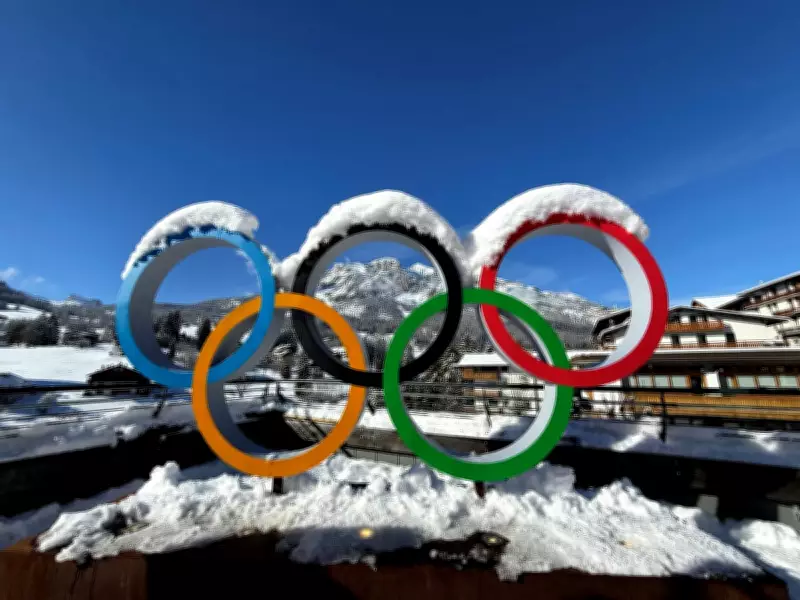
The picturesque alpine ski resort of Cortina d'Ampezzo, nestled high in the Dolomites and scheduled to host the 2026 Winter Olympics from 6th to 22nd February, has become an unexpected battleground against organised crime infiltration. What should be a celebration of international sporting achievement has instead revealed a troubling pattern of suspected mafia involvement in construction projects surrounding the Games.
Operation Reset Uncovers Criminal Networks
Early on 8th October, the Provincial Command of the Carabinieri in Belluno announced three arrests following a year-long investigation dubbed "Operation Reset." Among those detained were two brothers, identified as known members of the notorious SS Lazio Ultras, the Irriducibili, who allegedly boasted personal ties to former boss Fabrizio Piscitelli, murdered in 2019. Though still awaiting trial, the local public prosecutor's office has presented a disturbing three-phase plan attributed to the brothers.
The alleged operation began with taking control of Cortina's drug distribution network, progressed to seizing three local nightclubs, and culminated in attempts to extort the local council into awarding lucrative construction contracts for Olympic-related works. Prosecutors claim to possess evidence including a note on one brother's phone stating: "We want the cemetery area for the garages, the former pastry shop, the slip road and the new ring road, the construction of the tourist village."

Systemic Construction Sector Vulnerabilities
According to Italy's Antimafia Investigative Directorate, a staggering 38% of all anti-mafia measures taken nationally in 2024 related to the construction sector, with approximately 200 public works sites investigated for suspected organised crime infiltration. This pattern echoes previous mega-events in Italy, most notably the 2015 World Exposition in Milan, which was blighted by corruption around construction contracts.
The financial scale of the problem is substantial. While the 2015 Expo cost €2.6 billion, the Winter Olympics bill currently exceeds double that amount. The DIA has reported to parliament that "the Winter Olympics represent a significant event ... for criminal syndicates interested in gaining a foothold in the tender awarding procedures." In Lombardy alone during 2024, authorities adopted 50 anti-mafia interdiction measures, including one against a construction company working on an underground car park for the Games whose directors allegedly maintained relationships with multiple 'Ndrangheta gangs.
The "Mafia Method" in Action
Though prosecutors state the arrested brothers were not formal mafia members, they face charges of employing the "mafia method" through extortion, coercion and intimidation. Allegations include threatening and beating rival drug dealers, dragging a nightclub owner into woods at gunpoint, and attempting to corrupt a councillor by offering votes in exchange for construction contracts, followed by threats when he refused cooperation.
During their arrest, the men reportedly declared: "This is Cortina, we're in charge here," adding, "I'm not a small-town criminal, I'm the boss and we'll solve this thing with guns."
Civil Society Fights Back with Transparency
Against this backdrop of criminal infiltration, Italian anti-mafia organisations have mobilised in innovative ways. Leonardo Ferrante of the anti-mafia organisation Libera explains: "Italy is known as the country of the mafia, but it should also be known as the country of the anti-mafia movement."
Libera, founded in 1994 by streetwise priest Luigi Ciotti, has joined with other groups in a radical programme called Open Olympics 26, aiming to make public procurement procedures around the Games more transparent. Their signature achievement has been securing a commitment from Games organisers to publish all financial dealings on a single, publicly accessible portal updated every 45 days.

Revealing the True Costs and Timelines
This unprecedented transparency has revealed crucial details about the Games' finances and implementation. Of the total expenditure, only €1.6 billion is being spent directly on realising the Games themselves, while the remaining €4.12 billion funds related works, including an astonishing €2.816 billion on road projects. Perhaps most concerning, more than half the projects won't be completed until after the Games conclude, with some scheduled for completion as late as 2033.
Ferrante explains the initiative's origins: "The initiative originated in the autumn of 2023, emerging from a significant rift between Italian civil society and the institutional bodies. After years of attempted dialogue, we started to organise a community and a network of associations asking for transparency and accountability."
Thanks to these civic groups, we now know that 60% of the 98 Olympic projects listed on the portal proceeded without any environmental impact assessment.
A "Very Italian Problem" with International Implications
Elisa Orlando, Ferrante's colleague at Libera, describes the situation as "a very Italian problem" seen previously in other mega-events like Milan's Universal Exposition a decade ago. "We get into a position where it becomes an emergency," she explains. "We have to deliver before the opening date of the event, and this provides for exemptions, not only to transparency, but sometimes also to procedures in the public procurement processes."
The transparency initiative represents a crucial defence against organised crime, as more transparent dealings become less inviting to criminal infiltration. However, success has been partial. Libera continues pushing for greater disclosure around subcontracting, noting that an entire tranche of Olympic projects exists off the portal in the hands of private companies, with the Fondazione Milano Cortina described as "the black hole of transparency."
Creating an International Legacy
With three of the last six Olympic Games (Sochi, Rio and Tokyo) involving enormous corruption scandals, and fewer cities willing to bid due to public scepticism about costs, the Open Olympics project represents a radical step toward addressing longstanding problems. The team is already working with French organisations to replicate this work before the 2030 Winter Olympics across the Alps.
"The risk of criminal infiltration exists everywhere, not only in Italy," Ferrante acknowledges. "But here in Italy, we have lenses that allow us to recognise criminal infiltration when it occurs. Our third aim is to build an international civic legacy. We want to create an international movement for the transparency of the Olympics."
As Cortina d'Ampezzo prepares to welcome the world in February 2026, this battle between criminal infiltration and civic transparency continues to unfold, with implications that extend far beyond Italy's borders to future international sporting events worldwide.