Senior police officers have pledged that the iconic British bobby, epitomised by Dixon of Dock Green, will be "reincarnated" for a new technological era. This transformation will be driven by artificial intelligence and live facial recognition systems as part of major reforms announced by Home Secretary Shabana Mahmood.
Major Structural Overhaul and National Service
The Home Secretary has revealed ambitious plans to dramatically reduce the number of police forces across England and Wales. The current structure of 43 separate forces, which dates back to the 1960s, will be consolidated into as few as 12 regional organisations. This radical restructuring will create a new National Police Service with specific responsibility for tackling organised crime and counter-terrorism operations nationwide.
Technological Transformation at the Frontline
Labour's comprehensive measures include a national rollout of live facial recognition technology, with the Home Office funding an additional 40 vans equipped with advanced camera systems. This expansion will bring the total number of facial recognition vans to 50, ensuring that all police forces will have access to this technology for the first time. These sophisticated cameras scan faces in public spaces and compare them against police databases of mugshots to identify wanted criminals in real-time.

Forces will also implement AI-powered "chat bots" designed to handle non-urgent queries from crime victims, according to the Home Office's police reform White Paper. Additionally, police 999 control rooms will utilise "AI-assisted operator services" to help call handlers manage tasks more efficiently and effectively.
The Reimagined British Bobby
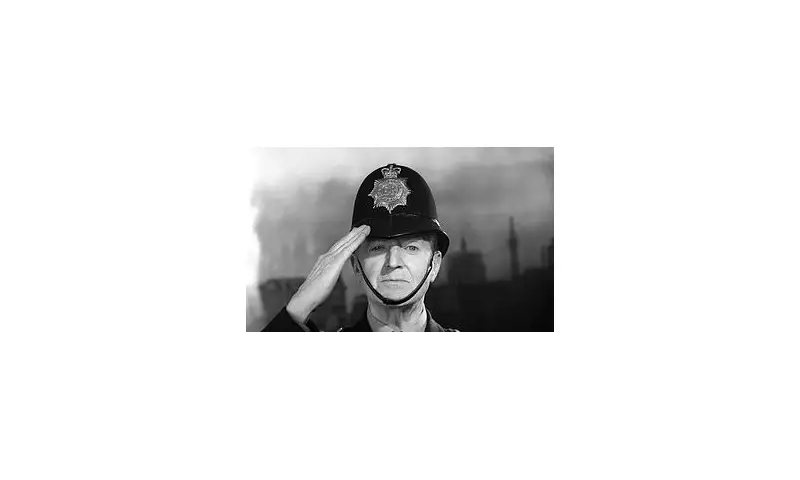
Police leadership suggests that the traditional British officer will evolve into something resembling a technologically-enhanced guardian. When questioned whether these proposals signal the end of the traditional beat bobby, Sir Andy Marsh, chief executive of the College of Policing, declared: "Dixon of Dock Green is not dead. He or she is reincarnated into 2026."
Matt Jukes, deputy commissioner of the Metropolitan Police, elaborated on this vision: "The difference for Dixon of Dock Green after these reforms is that in his or her hand will be officer-controlled facial recognition technology. There will be AI leading them to prioritise the work in their area, and there will be knowledge that if they need specialist support consistently across the country that will be available."
Jukes added enthusiastically: "I would love to be the Dixon of Dock Green in 2030 with all of what's promised by these reforms around me and in my hands."
Financial Savings and Frontline Focus
Ms Mahmood believes this comprehensive reorganisation will generate significant financial savings while allowing police officers currently working in administrative backroom positions to be redirected to frontline duties. Officials have described the current 43-force structure as "absurd" given modern policing requirements.
The Home Secretary will also acquire new powers to dismiss under-performing chief constables, while forces will face a series of new performance targets focused on response times and operational efficiency.
Criticism from Police and Crime Commissioners
These sweeping reforms have faced substantial criticism from police and crime commissioners, whom Ms Mahmood has already announced will be abolished as part of the shake-up. Hertfordshire PCC Jonathan Ash-Edwards warned that reducing the number of forces would leave rural areas with leftover "scraps" of resources.
"Bigger does not mean better," Ash-Edwards argued. "Huge regional police forces will be slower to respond, less interested in local priorities, harder to hold to account and more likely to divert resources away from neighbourhood policing. Regional forces will see resources pulled into cities and big urban centres, leaving towns and rural areas with scraps."
He further cautioned: "Time and time again, taxpayers see that top-down public sector reorganisations and mergers are expensive, distracting and rarely deliver the savings and benefits promised."

Emily Spurrell, chairwoman of the Association of Police and Crime Commissioners, expressed constitutional concerns: "Policing must be rooted in the local communities it serves, and this planned structure will place unprecedented power in the hands of just two people at the centre – the Home Secretary and the Commissioner of the new National Police Service. This concentration of policing power in England and Wales is constitutionally alien and brings enormous risks. It must be balanced by robust scrutiny and oversight."
Cultural References and Historical Context
The fictional policeman George Dixon, portrayed by actor Jack Warner, first appeared in the 1950 film The Blue Lamp. The character, famous for his "Evening, all" catchphrase, subsequently featured in more than 400 episodes of the BBC drama Dixon of Dock Green from 1955 to 1976, becoming synonymous with community-focused British policing.
Meanwhile, the 1987 film Robocop presented a radically different vision of law enforcement, featuring a Detroit police officer resurrected as a crime-fighting cyborg after being murdered by violent criminals. This cinematic contrast highlights the ongoing tension between traditional community policing and technologically-driven law enforcement approaches.