Mayfair's Berkeley Square Transforms from Aristocratic Haven to Crime Hotspot
Once celebrated for its elegant Georgian townhouses owned by the aristocracy, Berkeley Square in Mayfair epitomised the refined, old-money lifestyle of London's elite. However, since the 1960s, this once tranquil square—famed in folklore for nightingales—has undergone a dramatic transformation, becoming notorious for its vibrant nightlife and, more recently, escalating street crime.
A Disturbing Surge in Criminal Activity
Official figures now reveal that the area surrounding Berkeley Square has emerged as one of the worst locations in the capital—and consequently across Europe—for robberies and street crime. Statistics indicate that individuals are approximately thirty times more likely to fall victim to crime here compared to other parts of London. This alarming trend is largely attributed to the square's magnetic appeal to a new demographic of affluent visitors, many from overseas, who conspicuously display wealth through luxury items, inadvertently attracting thieves.
During a recent visit by the Daily Mail, visible symbols of this opulence were ubiquitous. A purple Lamborghini parked defiantly on double yellow lines and bejewelled Swiss watches valued at over £100,000 adorning exposed wrists underscored the area's cash-rich clientele. These individuals have become prime targets for so-called 'Rolex-ripper' thieves, who executed a high-profile mugging just last week, stealing an ultra-rare £2 million Richard Mille watch from Hollywood fashion designer Catalin Botezatu, aged 59. A 33-year-old man has since been charged in connection with this theft.

Police Data Highlights Stark Contrasts
Shocking police data illustrates the severity of the situation, with around 115 robberies per 1,000 residents recorded in the local area. In stark contrast, London's overall robbery rate stands at approximately 3.7 per 1,000 people for the period from December 2024 to November 2025—a differential of thirtyfold. Thefts and robberies, particularly targeting mobile phones, have tripled over a recent four-year span across London's West End, with tens of thousands of cases reported, and areas like Mayfair and St James's bearing the brunt.
In a notable incident from July, two Algerian thieves were sentenced to five years imprisonment after targeting undercover police officers posing as a wealthy couple wearing high-end watches. Footage captured Yakob Harket, aged 21, snatching a fake Patek Philippe rose gold watch from a female officer before his apprehension. Despite such successes, many thefts remain unsolved, exacerbating concerns among residents and visitors alike.
Local Reactions and Security Measures
Local residents have expressed dismay at the area's decline. Katerina Bates, a 39-year-old full-time mother, described the scene as "a total circus," noting the overwhelming presence of escorts and intoxicated patrons on weekends. "The whole place is like a nightclub. It's so tacky," she remarked, adding that while she feels secure with her husband, others are vulnerable, especially after hours in clubs. Some affluent visitors have resorted to hiring private security during their visits, with one local chef observing that super-wealthy individuals from Dubai and the United Arab Emirates now travel with protection to mitigate risks.
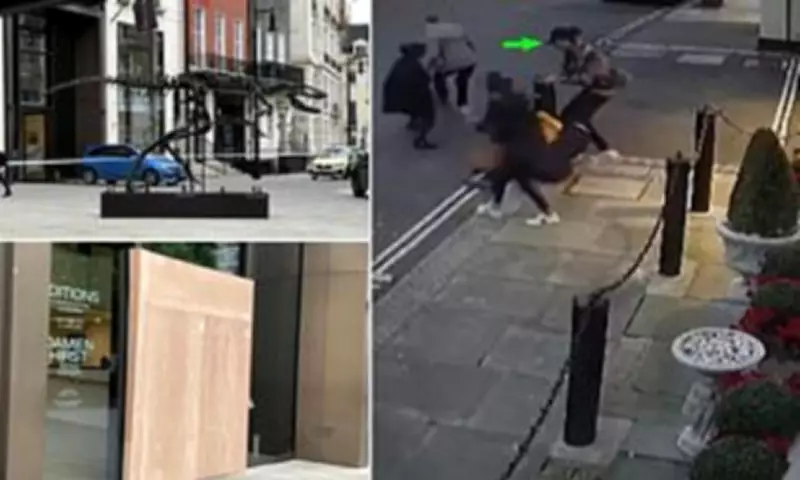
Businesses have not been spared from criminal activity. In May, raiders drove a car into the front of Phillips auction house in a suspected attempt to steal a Damian Hirst artwork, leaving workers in shock and glass scattered across the pavement. Nearby jewellery shops have adopted precautionary measures, removing stock of Rolexes and Cartiers from windows overnight. A shop worker lamented, "We can't take our eye off the ball for a minute around here. There's more people looking to take the p**s than there are punters. If things don't change, it will become a s**t hole."

Expert Advice and Broader Implications
James Bore, a chartered security professional at Bores Group, advises pedestrians to remain vigilant, keeping watches and phones concealed. "Don't have your phone walking around, don't stare at it," he cautioned. "Do not appear like an easy target because you are distracted. If you don't seem like an easy target, they will go after someone who is." He emphasised the importance of observing unusual behaviour, as thieves often surveil potential victims before striking.
The challenges extend beyond robberies. In October, squatters occupied Morton's, a former Michelin-starred restaurant and club once frequented by A-listers like Pippa Middleton and Lindsay Lohan. The Grade II listed building, originally the private home of the Chancellor of the Exchequer in the 1820s, had been vacant since going into administration during the pandemic, until unwanted guests claimed squatters' rights.
London maintains its status as Europe's phone theft capital, with approximately 80,000 devices stolen annually—equating to one every six minutes. According to Metropolitan Police data, just over 1 percent of phone thefts result in a charge or conviction, compared to 11 percent for robberies. In February last year alone, 2,097 thefts were recorded in the West End, encompassing exclusive areas such as Mayfair, Fitzrovia, Oxford Street, Regent Street, and Bond Street.
Westminster City Council was approached for comment regarding these issues, highlighting ongoing concerns about safety and urban management in one of London's most historic districts.