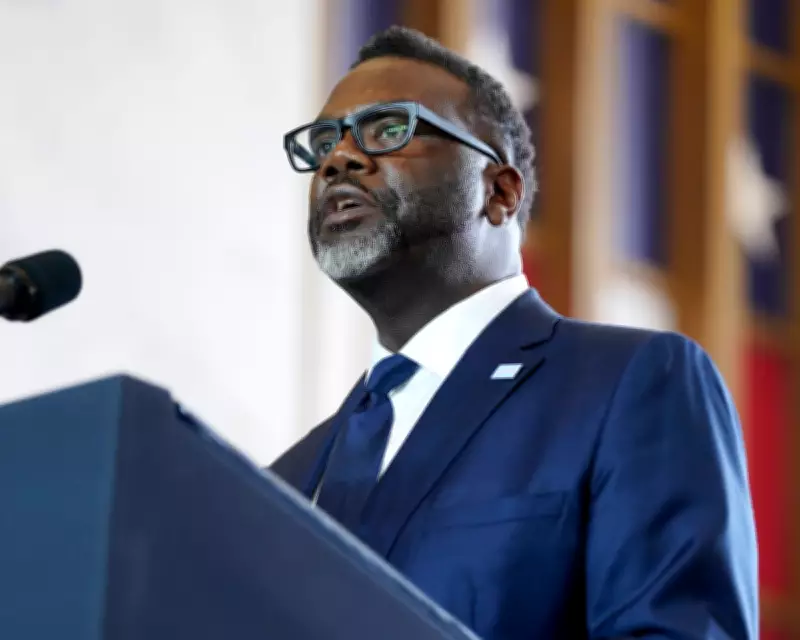
Mayor Brandon Johnson has issued a significant directive to the Chicago Police Department, mandating them to investigate and formally document any alleged illegal activities conducted by federal Immigration and Customs Enforcement (ICE) agents within the city limits. This executive order, titled ICE on Notice, establishes a clear procedural framework for local law enforcement to follow when they witness or receive reports of potential misconduct by federal immigration officers.
A Clear Procedure for Local Police
The order provides Chicago police with specific guidelines to preserve body-camera footage from incidents involving ICE agents, identify the federal supervisory officer present at the scene, and report any violations of state or local law to city prosecutors. Nobody is above the law, Johnson asserted in a public statement, emphasising that Chicago is pioneering as the first city to create an infrastructure aimed at holding ICE and Customs and Border Protection (CBP) agents accountable for alleged crimes against community members.
Escalating Jurisdictional Tensions
This move by the Chicago mayor is set to intensify existing tensions over jurisdiction between local and federal authorities. While the order asserts the city's power to investigate and prosecute actions of federal law enforcement, it operates within a complex legal landscape. Federal authorities typically possess the power to block local inquiries, and federal judges often uphold federal authority over local matters, particularly in immigration-related cases.

The directive was drafted in response to immigration operations that, according to the mayor's office, have violated constitutionally protected rights, destabilised communities, and provoked life-threatening confrontations while remaining insulated from local or civilian oversight.
Broader Context and Political Statements
This development occurs alongside a federal judge's recent denial of Minnesota's request to temporarily block immigration enforcement activities in that state. Chicago's approach represents a different strategy, focusing on local investigation rather than federal court challenges.
Mayor Johnson has been vocal in his criticism of federal immigration policies, calling recently for a national civil rights movement in response to federal actions. This moment calls for boldness – not some sort of pragmatic pragmatism to a tyrant, he declared, suggesting that previous Democratic approaches had been too cautious in confronting what he described as federal overreach.
The Cook County State Attorney's Office has responded to the mayor's order, stating it remains committed to protecting public safety, ensuring accountability and upholding the rule of law alongside our law enforcement partners.
Historical Precedents and Future Concerns
This is not Mayor Johnson's first action regarding ICE operations in Chicago. In October, he signed an executive order declaring certain city-owned properties as ICE-free zones, including parking lots, vacant lots, and garages. The current directive comes amid growing concerns that ICE operations might increase in Chicago as enforcement activities potentially wind down in other locations like Minneapolis.
The political context remains charged, with former President Donald Trump recently warning that he wouldn't send federal assistance to quell protests in poorly run Democratic cities unless specifically requested, while pledging to protect federal buildings from what he described as attacks by highly paid Lunatics, Agitators, and Insurrectionists.
Mayor Johnson's administration continues to explore legal avenues, not only for bringing charges against what they perceive as federal overreach but also for establishing processes that could enable prosecution of individual federal agents under local jurisdiction.