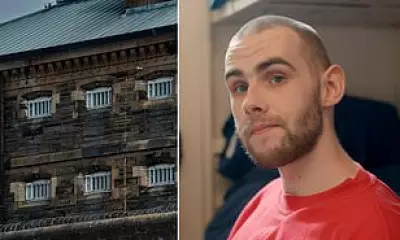
Young Father Dies Moments After Police Handcuffing in Staffordshire Incident
A 25-year-old father of two died just minutes after being placed in handcuffs by police officers who were responding to reports of a street disturbance in North Staffordshire. Joshua Cooper was found by officers behaving erratically and under the influence of cocaine before he collapsed and died on March 26 last year.
Police Response to Erratic Behaviour
Staffordshire Police were called to Biddulph after receiving reports of a man acting erratically. Upon arrival, officers discovered Joshua Cooper concealed beneath a pile of bricks. According to testimony from responding officer PC Lawton, Cooper was heard making growling noises as he resisted arrest.
"We approached and identified ourselves as police," PC Lawton stated in a hearing. "We asked him what he was doing and gave him a hand to get out. The next noises I could hear were not words. They were consistent with someone heavily under the influence."

Officers reported that Cooper had earlier wandered into the home of an elderly woman, heightening their concerns. They were informed via radio that the male might be under the influence of 'monkey dust', a synthetic psychoactive substance known to cause paranoia and volatile behaviour.
Rapid Deterioration and Death
PC Lawton described attempting to assist Cooper to his feet, but the young father was unresponsive and heavy. "He fell to his knees in a praying position and began to throw his upper body back and forth," the officer recounted. Handcuffs were applied within a minute of the officers' arrival at 11.26pm due to concerns Cooper posed a threat to himself or others.
By 11.35pm, a member of the public observed that Cooper's lips had turned blue. The handcuffs were immediately removed so that CPR could be administered. Despite these efforts, Joshua Cooper was pronounced dead shortly thereafter.
Inquest Findings and Investigation
An inquest into Joshua Cooper's death heard forensic evidence from pathologist Dr Brett Lockyer, who concluded that the cause of death was cocaine intoxication combined with pre-existing coronary artery disease. Dr Lockyer noted that Cooper's underlying heart issues were likely exacerbated by his history of cocaine abuse.
Coroner Emma Serrano formally ruled the death as drug-related. "If he had not taken cocaine that night, he would not have passed away," she stated, offering her condolences to the family.
The Independent Office for Police Conduct conducted a mandatory investigation, as is standard procedure when a death occurs following police contact. The IOPC review, led by Patrick Cragg, found that the officers had acted appropriately and in line with established policies.
"Officers requested ambulance attendance after 90 seconds of seeing Mr Cooper, suspecting he was suffering from an acute behavioural disturbance," Cragg told the inquest. "They used their common law powers to handcuff Mr Cooper... They were concerned he could be a threat to himself or others."
Family Statement and Background
A statement from Joshua Cooper's partner was read during the proceedings, revealing his struggle with a long-term cocaine addiction. She described how he had hidden his addiction well, with changes in behaviour only becoming apparent in the last year of his life.
"He would go out all night, hide his phone and lie about where he was," she said. "He would shut himself off whereas normally he would be talkative all day." She also mentioned that Cooper had unresolved questions regarding his own mother's overdose, which he believed influenced his substance abuse.
On the night of his death, she noted his eyes appeared "wired and almost black" during a phone call, and his behaviour had become threatening. She later learned of his passing after going to her parents' house for safety.
The coroner's conclusion brings a tragic close to the case, highlighting the severe risks associated with cocaine use and the challenging circumstances faced by emergency responders dealing with individuals in acute distress.