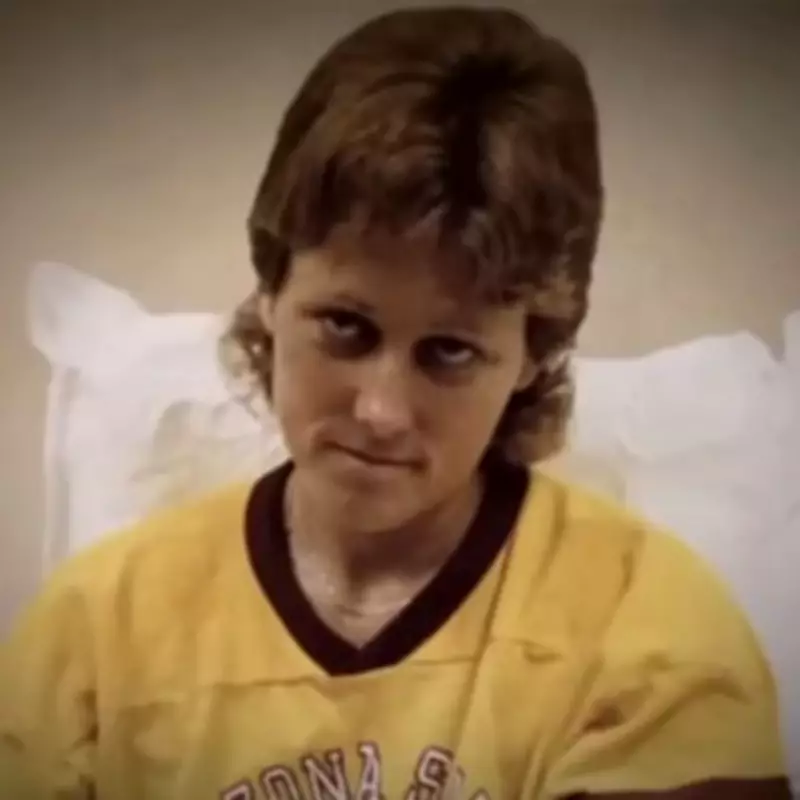
In May 1983, a tranquil country lane outside Springfield, Oregon, was transformed into the scene of one of America's most harrowing and perplexing criminal cases. Diane Downs, a 27-year-old divorced postal worker, arrived at McKenzie-Willamette Hospital late at night with a gunshot wound to her left arm and her three young children bleeding profusely in the back of her vehicle.
The Initial Account and Immediate Suspicion
Downs told emergency staff and police that a "bushy-haired stranger" had flagged her down on a rural road, demanded her car keys, and opened fire during a struggle. Her seven-year-old daughter Cheryl was pronounced dead shortly after arrival, while her other children—eight-year-old Christie and three-year-old Danny—were left fighting for their lives in critical condition.
However, from the very beginning, medical professionals and investigators found Downs' behaviour deeply unsettling. Staff testified that she appeared remarkably calm and composed, a reaction that seemed wholly inconsistent with a mother who had just witnessed a violent attack on her children. This initial observation planted the first seeds of doubt regarding her version of events.

Forensic Evidence Contradicts the Story
As detectives delved into the case, forensic examination yielded crucial evidence that directly contradicted Downs' account. Investigators found no blood splatter on the driver's side of the vehicle, where it would have been expected if the shooting had unfolded as she described. Furthermore, no gunshot residue was found consistent with her narrative of a struggle with an assailant.
Witness statements further undermined her story. One motorist reported seeing Downs' car travelling at walking speed on the way to the hospital, not at the frantic pace one would expect from someone fleeing a gunman. These discrepancies began to paint a very different picture of that fateful night.
The Uncovering of a Chilling Motive
Authorities soon uncovered a potential motive that would shock the nation. Downs was involved in a relationship with a married man who had made it clear he did not want children. Prosecutors argued that she viewed her three young children as obstacles to the life she desperately desired with this man.
The investigation revealed that Downs had purchased a .22-calibre handgun during her marriage, though she initially failed to disclose this ownership to police. While the murder weapon itself was never recovered, authorities located unfired ammunition with markings consistent with the type used in the shootings.
Devastating Testimony from a Survivor
The most compelling evidence against Downs came from within her own family. After months of recovery, her surviving daughter Christie regained the ability to speak and provided testimony that would prove devastating to the defence. Christie told the court that her mother had deliberately stopped the car by the roadside, turned around, and shot all three children before turning the gun on herself to create the appearance of an external attack.
This testimony directly contradicted Downs' claims and left the jury visibly shaken. A psychiatrist called by the prosecution delivered equally chilling observations, stating that Downs showed no remorse and regarded her children "with no empathy and as objects or possessions."
Verdict and Aftermath
On June 17, 1984, Diane Downs was found guilty of one count of murder, two counts of attempted murder, and two counts of criminal assault. She received a sentence of life in prison plus 50 years, with the judge ordering most terms to be served consecutively—making it clear he did not expect her ever to be released.
The case gripped the nation and later inspired Ann Rule's true crime book 'Small Sacrifices' and a television film starring Farrah Fawcett. Yet even behind bars, Downs continued to generate headlines. In July 1987, she escaped from the Oregon Women's Correctional Center by climbing an 18-foot razor-wire fence, remaining on the run for ten days before being captured and receiving an additional sentence.
In a poignant conclusion to this tragic story, Downs' two surviving children, Christie and Danny, were adopted by the lead prosecutor in the case and his wife, finally finding stability after enduring unimaginable trauma.