Justice Department Requests Dismissal of Steve Bannon's Criminal Case
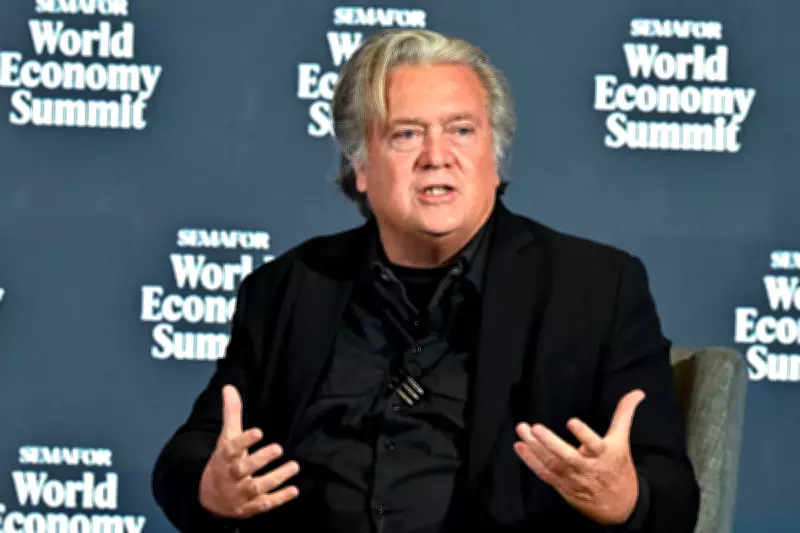
The United States Department of Justice (DOJ) has formally requested a federal judge to dismiss the criminal contempt case against Steve Bannon, a prominent far-right media personality and former advisor to Donald Trump. This move comes after Bannon recently completed a four-month prison sentence for defying subpoenas issued by the congressional committee investigating the January 6 attack on the US Capitol.
DOJ Cites Interests of Justice and Legal Questions
In a filing submitted to the court, the DOJ, under the leadership of Attorney General Bondi, argued that dismissing the case is "in the interests of justice". Additionally, the department is urging the Supreme Court to review whether the January 6 committee was "unlawfully composed", raising significant legal questions about the committee's authority and structure.
Potential Impact on Bannon's Conviction and Appeal
If District Judge Carl Nichols, who was appointed by former President Donald Trump, agrees to the dismissal, Bannon's jury conviction for contempt of Congress could be completely erased. This decision would also likely bring an end to Bannon's ongoing appeal at the Supreme Court, effectively concluding the legal proceedings against him.

Context and Similar Cases
This action by the Justice Department follows a similar pattern observed in other cases involving individuals associated with Donald Trump. Notably, the DOJ previously dropped its defence of Peter Navarro, another former Trump advisor, who also served a four-month prison sentence for contempt of Congress. These developments highlight ongoing debates about the enforcement of congressional subpoenas and the legal ramifications for those who defy them.
Bannon has been a vocal figure in far-right circles, recently making headlines for controversial statements, including suggesting that Immigration and Customs Enforcement (ICE) should "surround the polls" in upcoming elections. The DOJ's request to dismiss his case adds another layer to the complex legal and political landscape surrounding the January 6 investigations and their aftermath.