Former FBI Agent Demands Investigation into DHS Tactics After Minneapolis Shootings
A former FBI special agent and policing scholar has called for a comprehensive investigation into Department of Homeland Security tactics following the controversial fatal shootings of two US citizens by federal immigration agents in Minneapolis. The incidents have raised serious questions about law enforcement practices, constitutional protections, and the rule of law.
Operation Metro Surge and Fatal Encounters
In December 2025, the Department of Homeland Security launched "Operation Metro Surge" in Minneapolis, deploying agents from US Immigration and Customs Enforcement and US Customs and Border Protection to enforce immigration laws. The operation's stated goal was to arrest what officials described as the "worst of the worst criminal illegal aliens." However, the initiative has significantly impacted US citizens, particularly those protesting immigration enforcement efforts.
On January 7, 2026, ICE agents shot and killed 37-year-old Renee Good, a US citizen and mother of three, in her vehicle on a residential Minneapolis street. Just seventeen days later, on January 24, 2026, CBP agents fatally shot another 37-year-old US citizen, Alex Pretti, on a public street in the same city. Both incidents occurred during Operation Metro Surge activities.

Constitutional Questions and Deadly Force Standards
The Fourth Amendment to the US Constitution protects citizens against unreasonable seizures, with law enforcement use of force legally considered a seizure that must be reasonable. Supreme Court precedents in Graham v. Connor and Tennessee v. Garner establish that deadly force is only justified when officers reasonably believe a suspect poses an imminent threat of death or serious bodily injury.
DHS deadly force policy mirrors these constitutional standards, stating that law enforcement officers "may use deadly force only when the LEO has a reasonable belief that the subject of such force poses an imminent threat of death or serious bodily injury to the LEO or to another person." The central legal question surrounding both Minneapolis shootings is whether the agents involved had such reasonable belief.
Examining the Circumstances of Both Shootings
Available evidence from the Good shooting shows an ICE agent filming Good with his phone moments before the fatal encounter. As Good attempted to drive away from agents who were trying to open her vehicle door, the agent positioned in front of her vehicle fired three shots as she drove past. The agent subsequently walked away from the crashed vehicle, muttering profanities.
In Pretti's case, agents approached him standing in a public street, sprayed him with chemical agents, wrestled him to the ground, and repeatedly beat him with an object. Although Pretti was not seen brandishing a firearm, an agent appeared to remove a weapon from his waistband during the struggle before agents shot him ten times. Pretti had previously damaged a law enforcement vehicle eleven days before his death.
Tactical and Policy Concerns Raised
Beyond legal questions, Operation Metro Surge raises significant tactical and policy concerns about DHS law enforcement practices. Firearms safety rules taught at institutions like the FBI Academy emphasize treating all firearms as loaded, keeping weapons pointed in safe directions, and keeping fingers off triggers until ready to fire.
DHS officers are specifically required to "employ tactics and techniques that effectively bring an incident under control while promoting the safety of LEOs and the public," including avoiding "intentionally and unreasonably placing themselves in positions in which they have no alternative to using deadly force." In both Minneapolis cases, critics argue agents placed themselves in poor tactical positions that increased the likelihood of deadly force being used.
Community Policing Versus Warrior Model
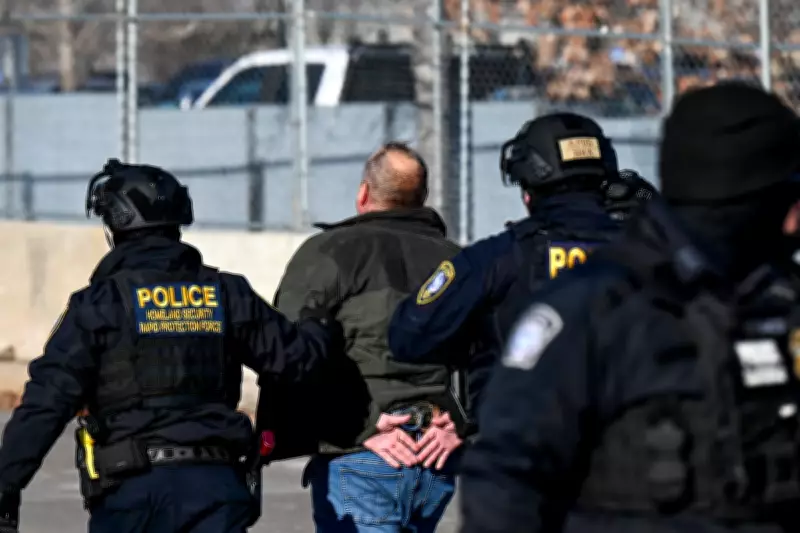
Operation Metro Surge has made ICE and CBP agents highly visible in Minneapolis, shifting them from their traditional investigative roles to more public-facing police functions ranging from traffic management to protest control. However, observers note these federal agents appear to be pursuing a militarized "warrior" model of policing rather than community-oriented approaches.

Masked federal agents in tactical gear patrolling Minneapolis streets blur the line between civilian and military policing, potentially eroding public trust in both federal law enforcement agencies and local police departments. Policing scholars suggest federal agents need to embrace community policing and procedurally just models that emphasize building legitimacy through cooperation and partnership with the public.
The Imperative for Thorough Investigation
Publicly available evidence raises significant questions about whether federal agents acted contrary to established policing principles and constitutional law in the deaths of Good and Pretti. The rule of law, a cornerstone of liberal democracies, requires holding government officials accountable when evidence suggests unauthorized uses of power.
Former federal prosecutors argue the facts warrant thorough criminal investigations into whether agents illegally used lethal force. The central determination must be whether agents reasonably feared for their lives or acted unlawfully out of anger, frustration, retaliation, or other unjustified mental states. A comprehensive examination of DHS tactics is necessary to preserve constitutional protections and maintain public trust in law enforcement institutions.