Former ATF Agent Outlines Critical Next Phase in Guthrie Kidnapping
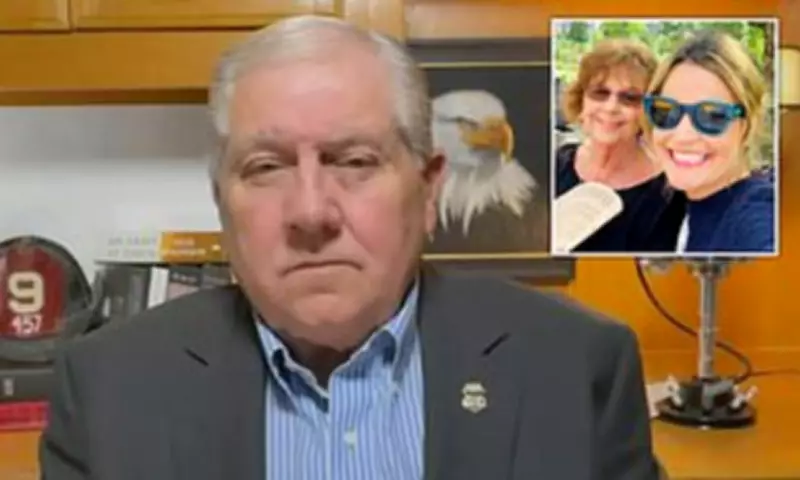
A leading crime expert has provided a detailed analysis of the possible scenarios following the abduction of Nancy Guthrie, the 84-year-old mother of NBC's Today show host Savannah Guthrie. Retired Bureau of Alcohol, Tobacco and Firearms special agent Jim Cavanaugh, who now serves as a crime analyst for NBC News, offered his professional assessment during an appearance on the network's flagship morning programme.
The Need to 'Close the Circle'
Cavanaugh explained that the perpetrators now face a critical juncture in their operation. 'The kidnappers took a lot of risk to do this,' he told co-host Craig Melvin. 'They're going to have to take an additional step, to communicate, to reach their goal.' The former special agent described how the abductors had already invested significant effort in breaking into Nancy's home, assaulting her, and transporting her to an undisclosed location.
'They went to a lot of effort to break in, to assault Nancy, take her away, hide her out,' Cavanaugh continued. 'And now they have to close their circle for their goal and that is they have to communicate.' This analysis came hours after Savannah Guthrie issued an emotional plea for her mother's safe return in a video statement flanked by her siblings Annie and Camron.

Possible Communication Methods and Outcomes
Cavanaugh outlined what he believes represents the best possible outcome for the situation. 'The best thing they can do, their best option is to release Nancy,' he suggested, proposing locations such as church steps or storefronts where she could be left safely. Alternatively, he explained that the abductors might attempt to establish communication through traditional means.
The crime expert speculated that the perpetrators might send what he described as a 'snail mail package' containing proof that Nancy remains alive. 'Then the communication can happen where they can try to reach their goal,' Cavanaugh explained. 'That's what should happen, that's what we want to happen, either communication or release her, if your crime has not worked.'
Family's Cautious Approach to Ransom Demands
The Guthrie family has acknowledged receiving ransom notes sent to news outlets and the Federal Bureau of Investigation, with the communications requesting Bitcoin payments in exchange for Nancy's release. However, Savannah and her siblings have wisely insisted on receiving concrete proof that their mother remains alive before engaging further.
Cavanaugh supported this cautious approach, noting that the demands could potentially have originated from 'someone in Kathmandu' rather than the actual abductors. He suggested that legitimate proof of life might include personal items such as jewellery, a lock of hair, or photographic or video evidence showing Nancy in captivity.
Case Complexity and National Attention
The former special agent also theorised that the kidnappers may have underestimated the consequences of their actions. 'They got too big too fast,' Cavanaugh observed, noting that the abduction has rapidly become one of the most prominent news stories across the United States. 'They took Nancy, whether they knew this was Savannah's mom, or just thought it was a wealthy woman.'
'This thing got real big, real fast and so their concern now is the communication,' he continued. 'So they're apprehensive about doing it. So they either have to do it (communicate) or release Nancy.' The intense media scrutiny and law enforcement attention may have created additional pressure on the perpetrators to either establish contact or abandon their criminal enterprise.
Investigation Details and Medical Concerns
Nancy Guthrie vanished from her $1 million Tucson home sometime between late Saturday and early Sunday morning. Investigators have discovered several concerning details at the property, including drops of blood on the doorstep and evidence that her doorbell camera had been removed from its mounting bracket.

Pima County Sheriff Chris Nanos confirmed that his department has urgently requested the recordings from that camera but has yet to receive them. Investigators are currently reviewing other doorbell camera footage from the neighbourhood, though they have cautioned that there is no guarantee this will yield actionable information.
The Catalina Hills suburb where Nancy resides is described as particularly secluded, with properties situated on large lots without street lighting, potentially providing cover for criminal activity. FBI agents conducted a search of the property on Wednesday evening, temporarily cordoning it off with yellow crime scene tape before departing several hours later.
Medical concerns represent a significant aspect of the investigation. Nancy requires medication every twenty-four hours to maintain her health, and her medications were discovered at her home on Sunday morning, raising serious concerns about her wellbeing. Additionally, her pacemaker stopped transmitting information to her Apple Watch, which was left inside the property, at approximately 2am on Sunday, potentially indicating when she was removed from her home.
Family History and Personal Background
Nancy Guthrie has resided at her Tucson home since 1975, creating deep roots in the community. Savannah Guthrie was actually born in Australia while her late father Charles was working there for a mining company. The family returned to the United States when Savannah was five years old, settling into Nancy's Tucson home where they have lived ever since.
Tragedy struck the family when Charles died of a heart attack in 1988 at just forty-nine years old, when Savannah was sixteen. This personal history adds additional emotional weight to the current situation, with the family now facing another potentially devastating crisis.
As the investigation continues, Cavanaugh's analysis suggests that the coming days will prove critical in determining Nancy Guthrie's fate. The former special agent's insights provide a framework for understanding the complex dynamics at play in this high-profile kidnapping case, highlighting both the challenges facing law enforcement and the difficult decisions confronting the perpetrators.