Fake Uber Driver Convicted for Serial Rapes, Faces Life in Prison
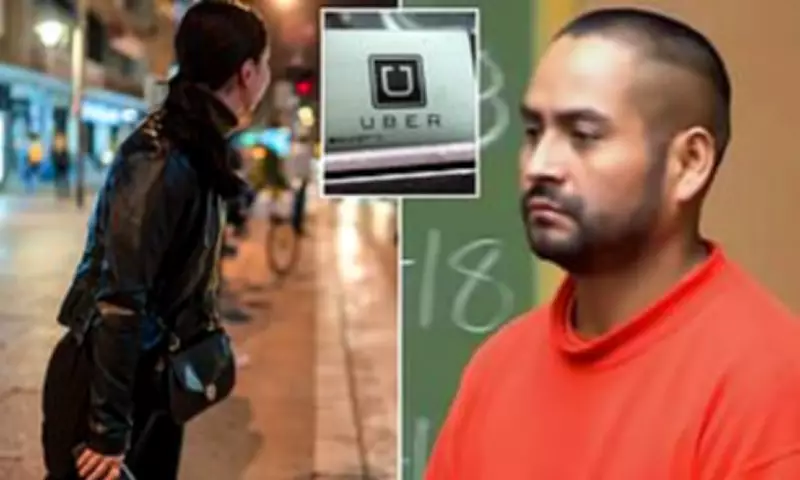
Orlando Vilchez Lazo, a 44-year-old man who impersonated an Uber driver outside San Francisco nightclubs to abduct and brutally rape women at knifepoint, has been found guilty and now faces life imprisonment. The verdict was delivered after a grueling 12-week trial, with San Francisco District Attorney Brooke Jenkins announcing the decision on Friday. Vilchez Lazo was convicted on a harrowing list of charges, including two counts of kidnapping with intent to commit rape, three counts of kidnapping, four counts of rape by force or fear, and two counts of sexual penetration with a foreign object.
Deceptive Tactics and Evidence
Vilchez Lazo used a car adorned with rideshare stickers from Lyft and Uber to lure unsuspecting women, who believed they were entering legitimate cabs. District Attorney Jenkins revealed that multiple phones, taken from victims to prevent them from calling for help, were discovered in his residence. Some victims were able to identify him in police lineups, providing crucial evidence. Uber confirmed that Vilchez Lazo never drove for their platform, while Lyft stated he had been a driver but lied about his immigration status during the application process. According to U.S. Immigration and Customs Enforcement, Vilchez Lazo, originally from Peru, was living in the U.S. illegally when he committed these heinous crimes.
Impact on Rideshare Safety
Jenkins emphasized that Vilchez Lazo's assaults prompted significant changes in rideshare company practices to enhance safety for female passengers. "How many women had to be reminded at that time to be sure to check license plates when they were getting ready to enter a rideshare?" she questioned. "That they didn't say their name, but rather, wait for the driver to say their names?" She added that companies were forced to implement stricter background checks for drivers. "This conduct led to so many changes and so much fear stoked in women who were simply trying to get home safely," Jenkins stated, highlighting the broader societal impact of the crimes.

Timeline of Attacks and Investigation
The series of sexual assaults began in 2013 and continued over several years, with DNA evidence playing a key role in linking Vilchez Lazo to the crimes. The case faced numerous delays due to legal challenges over DNA evidence and the complexity of reconstructing events involving multiple victims. The first incident occurred in 2013, when Vilchez Lazo picked up a 21-year-old college student leaving a bar in the Mission District. He drove her to an abandoned industrial area, locked the car door, and sexually assaulted her. In February 2018, he targeted a 22-year-old woman leaving a nightclub in the South of Market neighborhood, using a similar ruse to isolate and rape her.
Subsequent attacks followed a consistent pattern: Vilchez Lazo would approach women near clubs, often yelling "Uber, Uber" to mimic a driver, steal their phones, and take them to Mansell Street where he committed the assaults. In one instance, he pressed a sharp object against a victim's neck, cutting her in multiple places. After escaping, she sought help from nearby residents who contacted the police.
Arrest and Sentencing
In July 2018, an undercover surveillance team from the San Francisco Police Department spotted a car matching descriptions from the earlier rapes, circling near Howard and Second Street without picking up fares. Officers pulled the vehicle over, identified Vilchez Lazo, and arrested him. Jenkins praised the victims for their "courage" and "conviction" in testifying, noting that the defense subjected them to intense questioning, accusing them of consenting to the assaults. She explained, "This is what victims go through in the criminal justice system, and each and every day, we work hard in this office to help them tell their stories." Vilchez Lazo is scheduled for sentencing at the end of April, though the exact date has not been set, and he could receive a sentence of 100 years-to-life in prison.