FBI Director Initiates Criminal Probe into Minneapolis Activists' Encrypted Communications
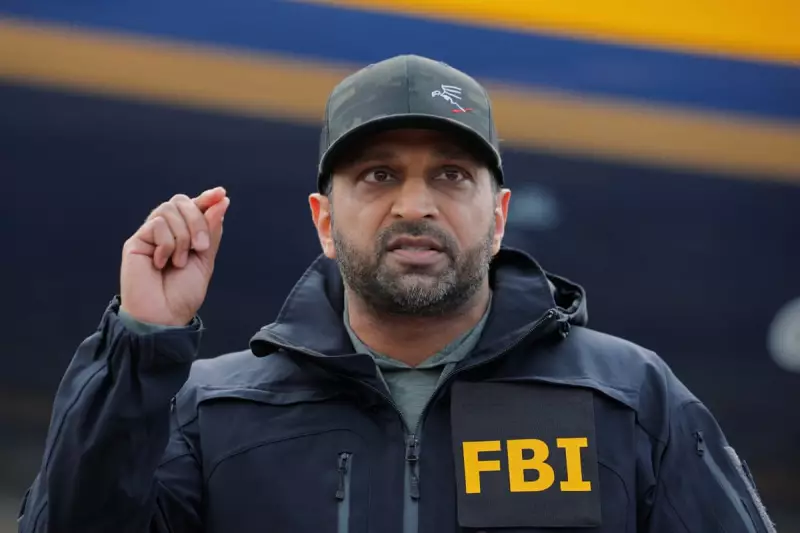
FBI Director Kash Patel has announced the opening of a formal criminal investigation into group chats used by Minneapolis activists on the encrypted Signal messaging application. The decision follows social media posts by far-right personality Cam Higby, who claimed to have infiltrated anti-ICE communication channels.
Far-Right Influence Sparks Federal Action
Patel revealed the investigation during an appearance on The Benny Show, the podcast hosted by right-wing commentator Benny Johnson. Higby had previously used the platform to disclose his alleged infiltration of a Signal group chat populated by Minneapolis-based activists opposing Immigration and Customs Enforcement operations.
According to Higby's posts, which he promoted extensively on Johnson's program, the encrypted communications appeared to show activists sharing descriptions and license plate information of suspected ICE vehicles in Minneapolis. Higby asserted that the chats demonstrated "the sole intention of tracking down federal agents and impeding, assaulting, and obstructing them."

Patel's Immediate Response to Social Media Claims
Patel, who made frequent appearances on Johnson's podcast before his appointment as FBI director, confirmed he had acted swiftly upon seeing Higby's social media disclosures. "As soon as Higby put that post out, I opened an investigation on it," Patel stated during the broadcast.
The FBI director elaborated: "We immediately opened up that investigation, because that sort of Signal chat – being coordinated with individuals not just locally in Minnesota, but maybe even around the country – if that leads to a break in the federal statute or a violation of some law, then we are going to arrest people."
Patel was careful to distinguish between protected activities and potential criminal behavior, emphasizing: "You cannot create a scenario that illegally entraps and puts law enforcement in harm's way." He specifically noted he was not investigating peaceful protests or First Amendment protected activities.
Legal Experts Question Basis for Investigation
Kevin Goldberg, vice-president at the Freedom Forum, reviewed Higby's posts and expressed skepticism about their legal implications. "I got the sense the [Signal chat] group has been organized for purposes that are fully protected by the first amendment: to observe, to speak and to alert others of possible dangers," Goldberg told the Guardian.
He added: "I didn't see anything that impedes or obstructs justice. The claimed 'doxing' of law enforcement is not necessarily illegal." Goldberg referenced a 1958 Supreme Court decision establishing the right to organize secretly provided no illegal activity occurs, questioning what specific illegal activity the FBI was investigating.
Patrick Eddington of the libertarian Cato Institute offered stronger criticism: "The use of encryption is as American as apple pie. The founders used it before, during and after the revolution." He continued: "The notion that Kash Patel, who clearly failed to investigate the criminal conduct of Pete Hegseth, now wants to go after people for utilizing first amendment protected activity and technology to warn their neighbors about violent out-of-control so-called federal agents policing their neighborhoods is beyond outrageous."
Contrasting Investigative Priorities Raise Questions
The FBI's rapid response to activist communications based on far-right social media posts occurs simultaneously with the bureau's insistence that it is not investigating the fatal shooting of Alex Pretti. The veterans affairs nurse was shot multiple times by border patrol agents in Minneapolis on Saturday.
According to Patel's statements to Fox News and a sworn court declaration by a Homeland Security Investigations official, that investigation is being handled exclusively by HSI, an arm of the Department of Homeland Security. NBC News reported on Monday that investigators are examining body-camera footage from the agents involved, which may provide additional perspectives on an incident already captured extensively on civilian cellphone cameras from multiple angles.

The contrasting approaches to these Minneapolis incidents – one prompting immediate FBI action based on social media claims, the other being handled by a different agency despite involving fatal law enforcement contact – highlight ongoing debates about investigative priorities and political influences on federal law enforcement activities.