German Bank Heist: Professional Gang Steals Millions in 48-Hour Vault Raid
In the pre-dawn darkness of December 27, a fire alarm shattered the winter stillness in Gelsenkirchen-Buer, western Germany. At 6:09am, emergency services descended upon a branch of the Sparkasse savings bank, tracing the alert to its underground vault. A sealed shutter blocked their entry, and peering inside revealed no smoke, no flames—nothing to suggest the catastrophe unfolding just feet away.
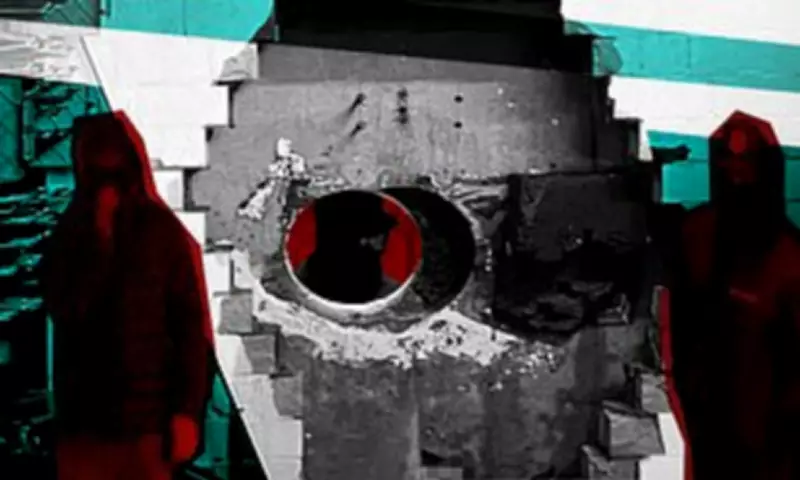
Behind a closed archive room door, a professional crew was already drilling through a thick concrete wall. The vibrations were so intense they triggered alarms at a neighbouring jeweller 150 metres away, yet within the bank itself, silence prevailed. This marked the beginning of what is now feared to be the largest bank heist in German history.
The Audacious Operation
Over the next 48 hours, the gang ransacked more than 3,000 safe-deposit boxes undisturbed. Using an industrial drill, they carved a precise 40cm diameter tunnel, emerging exactly where no safe-deposit box was located—a detail suggesting insider knowledge. "They must have known details of the layout in order to drill correctly," said Thomas Nowaczyk of Gelsenkirchen Police. "One has to assume that insiders, in whatever form, played a role."

The crew, estimated at five to seven men, exploited the Christmas lull when the bank closed for five consecutive days. They entered through an adjoining underground car park, using a stolen chip card to access restricted areas. Locks were sabotaged with silicone sealant, motion detectors taped over, and they worked knowing the vault's internal surveillance only operated during opening hours.
Meticulous Planning and Execution
Evidence points to lengthy, meticulous preparation. The gang reportedly changed the lock on the room leading to the vault wall to avoid disturbance and used a cooling system—with a hose from a women's restroom sink—to cool the drill bit. Once inside, they worked with chilling efficiency, prising open nearly all 3,200 boxes.
They cherry-picked gold and cash—items hardest to trace—while discarding documents, jewellery, and unique pieces. Forensic teams later found discarded valuables "spread across the rooms" and stacked "several metres high." Precious heirlooms, engraved jewellery, Rolex watches, passports, and vital deeds lay strewn carelessly.
Devastating Losses for Victims
Nearly two months later, the true value of the stolen goods remains unknown, with estimates ranging from €30m (£26m) to an astronomical €500m (£435m). Insurance covers only a fraction, leaving thousands of residents facing financial ruin. Lawyer Daniel Kuhlmann, representing over 600 victims, described heartbreaking cases: an elderly woman lost €390,000 from her home sale, now unable to pay rent; a single father lost savings meant for his children's future.
Many victims come from migrant communities, where gold and cash represent generational lifelines. "Wedding gold, inherited jewellery, cash from the sale of a home—treasures people didn't dare keep at home," Kuhlmann explained. The bank's lack of communication post-heist has deepened distress, with hotlines unreachable for days.
Security Failures Under Scrutiny
Kuhlmann's firm has launched test lawsuits against Sparkasse, examining whether security measures met industry standards. He claims the bank lacked proper systems: no alarms triggered during the 48-hour raid, despite vibrations setting off neighbouring detectors. "The insurance sum is much too low," he argued. "It doesn't protect the client; it serves the Sparkasse's protection."
Sparkasse chief Michael Klotz defended the systems, insisting the branch was secured with "recognised state-of-the-art technology." However, he acknowledged the burglars overcame several independent security measures, a matter under police investigation.
Investigation Challenges
A special task force, BAO Bohrer, with 350 officers, has been established, but progress is slow. "Investigations are ongoing, but so far we've had no hot leads," Nowaczyk admitted. Challenges include examining 10,000 hours of video, analysing cell tower data, and interviewing 3,000 victims—a process expected to take weeks, if not months.

The only lead—licence plates dumped near a Dortmund taxi stand—has proven fruitless. The gang escaped in a black Audi and a white Mercedes van with stolen plates, and their whereabouts remain unknown.
As the hunt continues, victims are left waiting for answers, their trust shattered. In one of Germany's poorest cities, the heist has stripped away not just valuables, but the security and futures of thousands who believed their life savings were safe.