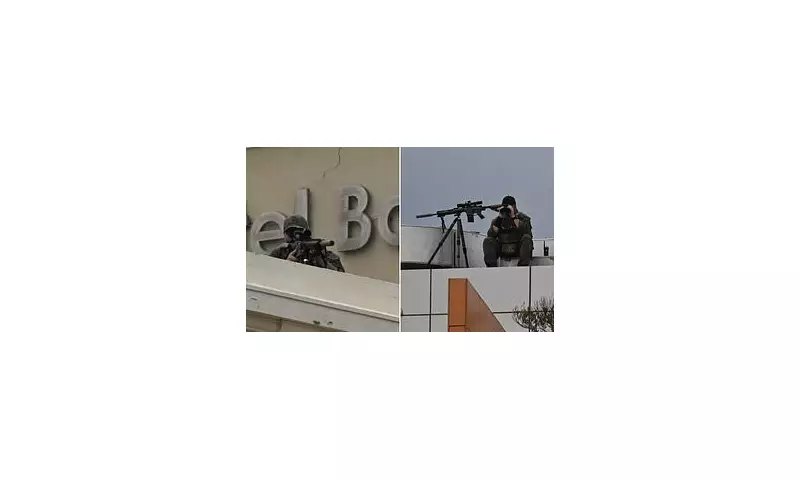
Heightened security measures, including police snipers positioned on apartment rooftops, are in place around Bondi Beach ahead of a solemn vigil tonight. The gathering marks one week since a mass shooting during Hanukkah celebrations claimed the lives of fifteen people.
Security and Solace at Sunset
The vigil will commence at 6.47pm local time, the precise moment the attack unfolded last Sunday. Alongside specialist officers, police riot squad members, mounted police, and health nurses will be present to support attendees. NSW Police Commissioner Mal Lanyon confirmed the visible presence of officers carrying long-arm firearms but stressed this was not due to a heightened security alert level.
"I want to reassure the community that this does not reflect a heightened security alert," Commissioner Lanyon stated. "We know how deeply this tragedy has impacted Jewish families, friends, and the wider community who stand with them. Our priority is ensuring that everyone can come together to honour the victims and support one another without fear."

A Community's Call for Light Over Darkness
The vigil also coincides with the final night of Hanukkah. Rabbi Eli Feldman, who has comforted hundreds at Bondi Pavilion since the attack, urged the nation to embrace the festival's message. "Last Sunday night, messages of darkness descended here on the beach, to try to extinguish the light for the Jewish people," he told ABC TV. "The way that we're going to combat that a week later... is all are invited to come and light the eighth candle here and show that light will always overcome darkness."
Governor-General Sam Mostyn described the day as the start of a 'national project' of healing through "a million acts of kindness." Meanwhile, Prime Minister Anthony Albanese called for a minute's silence at 6.47pm AEDT, describing it as "60 seconds carved out from the noise of daily life, dedicated to the 15 Australians who should be with us today." He will attend the vigil amid criticism from some in the Jewish community regarding the government's response to antisemitic incidents prior to the attack.
Political Fallout and Legislative Response
The tragedy has accelerated legislative action in New South Wales. NSW Premier Chris Minns defended proposed hate speech laws, set to be rushed through parliament before Christmas, against claims they are draconian. The laws will ban slogans such as 'globalise the intifada', which Minns argued plant seeds of hate that can escalate into violence.
"In many cases, when you see violent imagery and hateful slogans and chants ... it is unleashing forces that the organisers of the protests can't control," Minns said. The proposed laws have been condemned by the Australian Federation of Islamic Councils as exploiting "moments of grief... to justify authoritarian overreach."
Separately, Premier Minns will also move to ban the public display of hate symbols, including flags of proscribed terrorist organisations like Hamas and Islamic State. Police revealed that homemade IS flags were found in a vehicle belonging to one of the gunmen. While NSW has announced a royal commission into the massacre, federal Labor has resisted calls for a national inquiry.
The victims of the attack included 10-year-old Matilda, elderly Holocaust survivors Alexander Kleytman and Marika Pogany, and rabbis Yaakov Levitan and Eli Schlanger. As the community prepares to gather, thousands of floral tributes remain at Bondi Pavilion, a stark reminder of the lives lost.