Lovejoy Episode Leads to Recovery of Stolen Napoleon III Tomb Plaques
Two of three priceless altar plaques stolen from the crypt of Napoleon Bonaparte III at a Hampshire monastery have been recovered after an antiques dealer identified them using knowledge gained from a 30-year-old television episode.
Decade-Long Mystery Solved by Television Reference
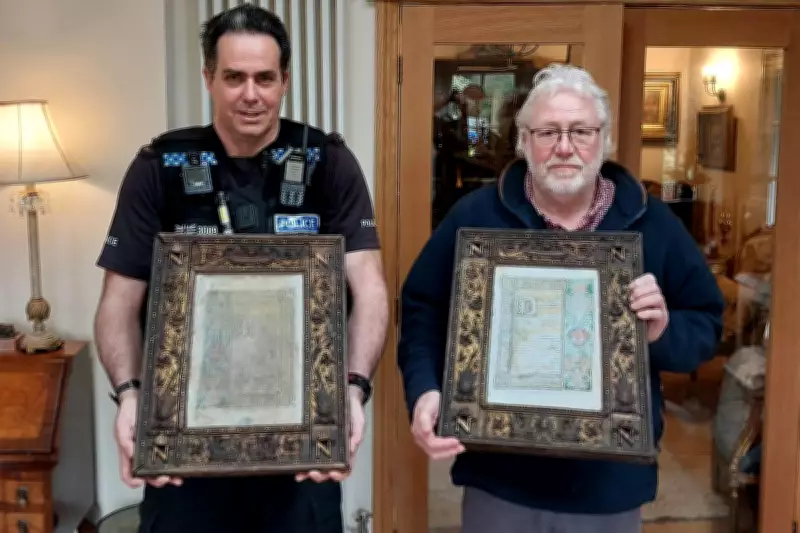
The wooden prayer frames, dating back to the 19th century, were taken during a burglary at St Michael's Abbey in Farnborough in February 2014. For twelve years, the historically significant items were considered lost until Derbyshire-based antiques dealer Paul Gostelow contacted Hampshire Constabulary on February 10 this year.
Remarkably, Mr Gostelow recognised the plaques as originating from the Napoleonic era after spotting a distinctive ball and crown motif in the corner of the frames. He had seen this same design featured in an episode of the BBC comedy-drama Lovejoy, which starred Ian McShane as a roguish antiques dealer during its 1990s run.

Police Investigation Confirms Authenticity
The call to police was intercepted by PC Mark Webb from the Country Watch Rural Crime Task Force, who serves as the force's heritage crime specialist. Following Mr Gostelow's tip, officers conducted investigations with the International Stolen Arts Register, which confirmed the items were indeed the stolen plaques.
"After 12 years they were thought to have been lost, until a chance call to the constabulary," explained a police spokesman. "Paul knew them to be from the Napoleonic era due to the ball and crown in the corner of the frame – which he recognised from an episode of the 90s Brit TV series Lovejoy."
Officers from the task force subsequently travelled to Derbyshire to recover the items, and PC Webb was able to return them to St Michael's Abbey in Farnborough for restoration and eventual return to their original place in the crypt.
Historical Significance of the Stolen Items
Napoleon III, nephew of the more famous Napoleon Bonaparte, fled to England in exile following his capture during the Franco-Prussian War in 1871. He died in 1873 after undergoing surgery for bladder stones.
His widow, Empress Eugenie, purchased a house in Farnborough in 1880 and built St Michael's Abbey as a monastery with an Imperial Mausoleum to house her husband's remains alongside those of their son, Napoleon, who died in the Zulu War in 1879.
The stolen prayer frames held particular historical significance. When the younger Napoleon's body was retrieved from the battlefield, handwritten prayers were discovered in his wallet. Empress Eugenie had these prayers engraved and mounted to create the very frames that were stolen in the 2014 burglary.
Ongoing Search for Missing Plaque
While two of the three plaques have been successfully recovered and returned, police confirm that the third remains missing. "Ongoing work has identified a number of lines of inquiry and efforts will be made to locate the third plaque," stated the police spokesman.
The recovery comes amid renewed interest in Napoleon III's final resting place. In 2023, Roger Karoutchi, deputy speaker of the French senate, called for the remains of Napoleon III to be returned to France, noting that he remains the only French sovereign buried abroad.
The successful identification and recovery of these historically significant items demonstrates how popular culture can unexpectedly assist in solving real-world mysteries, bridging the gap between television entertainment and tangible historical preservation.