Hong Kong Court Upholds Convictions in Landmark National Security Case
A court in Hong Kong has dismissed all appeals by 12 pro-democracy activists convicted in the city's largest case brought under the national security law, upholding their jail terms in a ruling that has reignited concerns about diminishing freedoms in the former British colony.
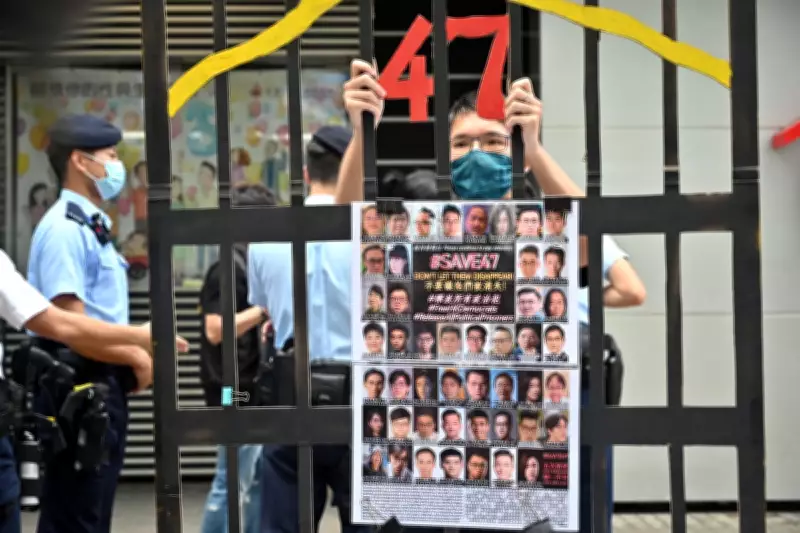
The 'Hong Kong 47' Case and Monday's Ruling
The appeal stems from the high-profile "Hong Kong 47" case, where numerous leading pro-democracy activists and politicians were arrested en masse in early 2021 and charged with conspiracy to commit subversion. Following extensive legal proceedings, most defendants were sentenced in late 2024 to prison terms ranging from 4 to 10 years, with only two acquitted.
On Monday, three Court of Appeal judges at the West Kowloon Law Courts Building upheld both the convictions and sentences of the activists. The defendants included former lawmakers, district councillors, academics, and prominent figures such as legal scholar Benny Tai, activist Joshua Wong, and veteran opposition politicians Claudia Mo, Helena Wong, Kwok Ka-ki, and Leung Kwok-hung (known as "Long Hair").

Of the 12 activists who lodged appeals, former journalist Gwyneth Ho sought only to overturn her conviction, while 10 others—including Leung Kwok-hung and activist Owen Chow—challenged both their convictions and sentences. The court also rejected the government's appeal against the acquittal of barrister Lawrence Lau, meaning he remains cleared of charges.
Court Proceedings and Judicial Reasoning
The 12 defendants entered the court shortly before the 10am hearing on Monday, appearing spirited as they smiled and waved to friends and family in a packed public gallery. Some residents had queued outside the court building since Saturday to secure seats, while those who had already completed their sentences were also present.
Judge Jeremy Poon, during the hearing, described the scheme as a "constitutional mass destruction weapon" aimed at toppling Hong Kong's constitutional order. He emphasized that Legislative Council members could not act contrary to their duty to uphold this order, stating, "If a LegCo member joined the scheme ... he must have necessarily acted in breach of such constitutional duty."
The judges also rejected arguments that the defendants did not receive a fair trial due to excessive judicial intervention, firmly standing by the original verdicts.
Background of the Case and International Reaction
The mass prosecution centered on opposition leaders' and activists' participation in self-organized "primaries" for the 2020 Legislative Council elections, which were ultimately postponed due to Covid-19 before a new electoral system with strict vetting was introduced. Authorities argued that their plan to win a majority and potentially veto the government budget amounted to an attempt to paralyze the government, with Benny Tai receiving the heaviest sentence of 10 years as the alleged mastermind.
Leung's wife, Chan Po-ying—an activist unrelated to the case—criticized the ruling, arguing it was not based on facts and that the defendants' acts aligned with Hong Kong's Basic Law. "It already presumed these people had intended to subvert the state's power," she said.
Amnesty International condemned the decision, with spokesperson Fernando Cheung stating, "Peaceful opposition to a government is not a crime, and all remaining jailed members of the Hong Kong 47 should be released immediately and unconditionally." He added that none of the defendants committed internationally recognized crimes, serving sentences merely for exercising rights to freedom of expression and association.
The trial has intensified concerns about Hong Kong's eroding freedoms, with critics arguing the national security law is being weaponized to suppress political opposition. Western governments and human rights organizations have repeatedly criticized the law as a tool for undermining civil liberties, highlighting the case's broader implications for democracy and rule of law in the region.