Iran's Outsourced Terrorism: Biker Gangs and Hired Hands Target UK
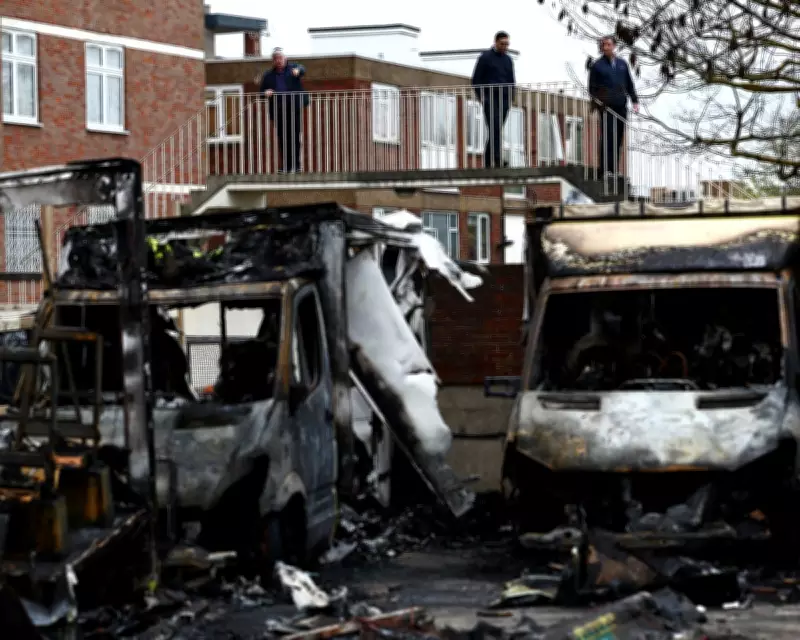
Iran is increasingly outsourcing its terrorism campaigns to biker gangs and hired criminals, according to security experts, with recent incidents like the firebombing of four ambulances in Golders Green highlighting this alarming trend. The attack, which targeted a Jewish charity in north London on Monday, has brought renewed focus on Tehran's use of proxies to carry out violence against dissidents and Jewish communities abroad.
Historical Precedents and Deniable Operations
In a revealing interview last March, Mohsen Rafighdoost, a former minister of the Islamic Revolutionary Guard Corps (IRGC), openly discussed coordinating assassinations across Europe through intermediaries. He cited cases such as the murders of Prince Shahriar Shafiq in Paris in 1979 and General Gholam Ali Oveissi in 1984, often using Basque separatist groups to maintain plausible deniability. The IRGC later denied these claims, attributing Rafighdoost's statements to confusion after brain surgery, but the pattern of outsourcing violence persists.
Kevan Jones, the Labour peer chairing the UK's Intelligence and Security Committee, described a growing reliance on hired hands for dirty work, including violence, kidnappings, and surveillance. "They are doing this through organised crime and through individuals by paying them," Jones noted, suggesting this method likely applies to the Golders Green incident if Iranian involvement is confirmed.

Escalating Threats and Criminal Proxies
UK authorities have tracked a surge in Iranian-backed plots. In October 2025, MI5 director general Ken McCallum reported over 20 potentially lethal Iran-backed plots in the past year alone. Former home secretary Suella Braverman highlighted Iran's use of "elusive, sophisticated, and brutal European-wide gangs" for their operations. An unnamed MI5 official added that Iran is actively seeking mercenaries to build new alliances.
In the United States, court records reveal Hells Angels biker gangs being deployed by Tehran, such as in the plot to assassinate Iranian American dissident Masih Alinejad for $500,000. Similarly, narco-traffickers like Naji Sharifizindashti have executed Iran's commands in Europe, with Swedish authorities noting similar collaborations.
Strategic Shifts and Deniability Tactics
Matthew Levitt, a former US Treasury official, explained that Iran pivoted to using criminal proxies in 2018 after a diplomat was convicted for planning an attack in Paris. "They realised the utility of reasonable deniability and cut-outs," Levitt said. "With criminal proxies, you get someone not squeamish about violence." He suggested the Golders Green attack might stem from a "criminal gig economy" rather than a formal terror group.
Data from the Washington Institute for Near East Policy indicates that nine out of 41 Iranian external operations between 2025 and 2026 were based in the UK. Colin Clarke of the Soufan Centre noted Iran's adoption of Russian tactics, using "disposable agents" to obscure state connections, though these plots can be amateurish. He warned of potential sleeper cells in the UK for crises.
UK Focus and Community Safety Measures
Levitt attributed the high activity in the UK to its large Jewish community and alliance with the US. "The Iranians are not intimidated by law enforcement and they will go where the targets are," he stated. In response, Met commissioner Sir Mark Rowley deployed 264 extra police officers and armed patrols to protect London's Jewish community ahead of Passover.
Dave Rich of the Community Security Trust emphasized the seriousness of this threat. "When you're deploying that many police officers, you're doing that because you think there's a real threat," he said, noting the unpredictability of terrorist attacks.
Ongoing Risks and Media Vulnerabilities
Iran's targeting extends to media outlets like Iran International, a Persian-language TV station declared a terrorist organisation by Tehran. In December 2023, Magomed-Husejn Dovtaev was convicted of surveilling its London headquarters, though Iran denied involvement. Adam Baillie, a spokesperson for the station, reported heightened alerts and regular contact with police due to threats, including cyber hacking attempts.

The stabbing of journalist Pouria Zeraati in Wimbledon in 2024, with two Romanian citizens facing trial, underscores these dangers. As tensions rise, the UK remains a key battleground in Iran's outsourced terrorism campaigns, with authorities scrambling to counter this evolving threat.