Israeli Parliament Approves Death Penalty for Palestinians Convicted of Murdering Israelis
Israel's Parliament has passed a highly contentious law that approves the death penalty for Palestinians convicted of murdering Israelis. The bill's passage on Monday marked the culmination of a yearslong push by Israel's far-right factions to escalate punishment for Palestinians found guilty of nationalistic offenses against Israeli citizens.
Key Provisions of the Legislation
The new legislation makes death by hanging the default punishment for West Bank Palestinians convicted of nationalistic killings. The law also grants Israeli courts the authority to impose either the death penalty or life imprisonment on Israeli citizens convicted of similar offenses. Importantly, the measure is not retroactive and will apply only to future cases.
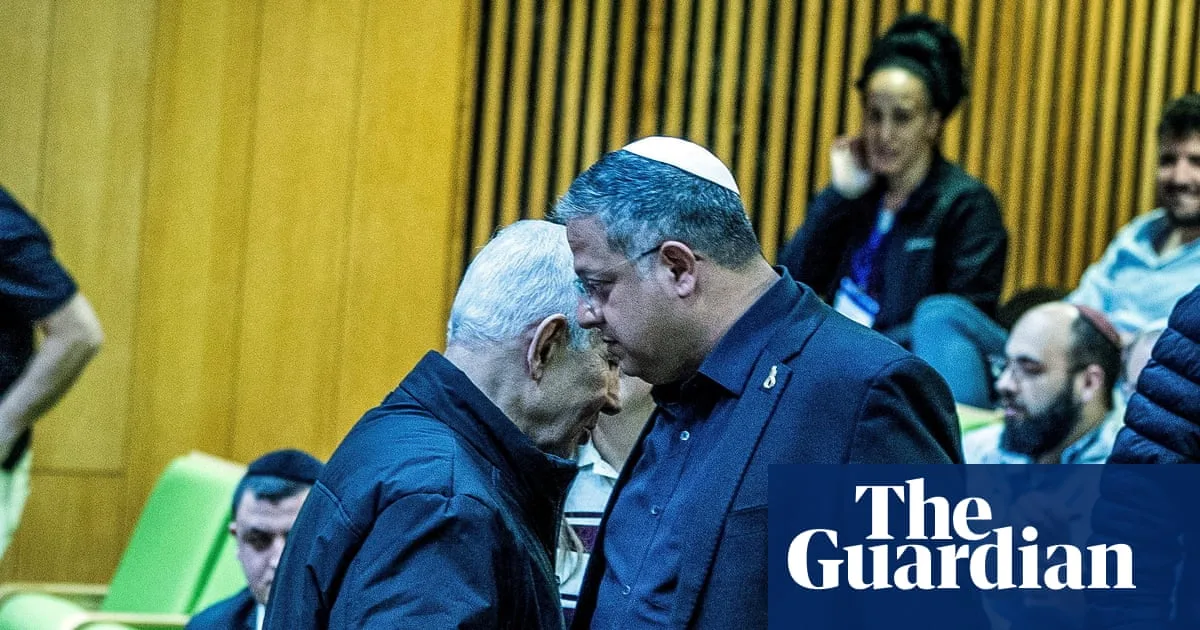
Prime Minister Benjamin Netanyahu personally attended the parliamentary session to cast his vote in favor of the bill. When the measure passed, the chamber erupted into cheers, with Israel's firebrand Minister of National Security, Itamar Ben-Gvir, who spearheaded the legislative push, brandishing a bottle in celebration. Netanyahu remained motionless during the celebration.
Immediate Legal Challenges and Criticism
Within minutes of the bill's passage, the Association of Civil Rights in Israel petitioned the country's highest court challenging the law, calling it "discriminatory by design" and "enacted without legal authority" over West Bank Palestinians. The legislation stipulates that the death penalty provisions will go into effect within 30 days.
The measure has been harshly condemned by both Israeli and Palestinian rights groups, who argue it is racist, draconian, and unlikely to deter attacks by Palestinian militants. International rights organizations and the United Nations have also voiced strong opposition to the legislation.
Political Context and Personal Stories
Far-right lawmaker Limor Son Har-Melech, one of the bill's original sponsors, wiped tears from her eyes as the legislation passed. Har-Melech's first husband was killed by a Palestinian militant attack in the West Bank, adding personal significance to her support for the measure.
Directly before voting began, Ben-Gvir delivered a bellowing speech from the podium, describing the law as long overdue and a sign of strength and national pride. "From today, every terrorist will know, and the whole world will know, that whoever takes a life, the State of Israel will take their life," he declared. Notably, Ben-Gvir wore his signature lapel pin during the proceedings: a small metal noose.
Legal Distinctions and International Concerns
The bill establishes significant distinctions between different court systems. It instructs military courts to mete out the death sentence to those convicted of murdering an Israeli "as an act of terror." These military courts try only West Bank Palestinians, who are not Israeli citizens. The legislation allows military courts to change the penalty to life imprisonment in "special circumstances."
Israeli courts, which try Israeli citizens including Palestinian citizens of Israel, can choose between life imprisonment or the death penalty in cases of murder aiming to harm Israeli citizens and residents or "with the intent of rejecting the existence of the state of Israel."
Amichai Cohen, a senior fellow at the Israel Democracy Institute's Center for Democratic Values and Institutions, highlighted the problematic nature of these distinctions. "It will apply in territories with military courts, which are Palestinian courts. It will apply in Israeli courts, but only to terrorist activities that are motivated by the wish to undermine the existence of Israel. That means Jews will not be indicted under this law," he explained.
Broader Implications and Historical Context
Cohen further noted that under international law, Israel's parliament should not be legislating in the West Bank, which is not sovereign Israeli territory. This concern is particularly significant as many in Netanyahu's far-right coalition seek to annex the West Bank to Israel.
The lawyer for the parliament's National Security Committee raised several concerns during earlier deliberations, noting that the bill does not allow clemency, contradicting international conventions. The legislation specifies that executions should be carried out within 90 days of sentencing.
While Israel technically has the death penalty on the books as a possible punishment for acts of genocide, espionage during wartime, and certain terror offenses, the country hasn't executed anyone since Nazi war criminal Adolf Eichmann in 1962. The new bill will not apply retroactively to any of the militants Israel currently holds who attacked the country on October 7, 2023. A separate bill is under consideration dealing with punishment for those attackers.
Potential Consequences and Opposition Concerns
Some opposition lawmakers worry that the bill could harm future hostage negotiations. Israel exchanged approximately 250 hostages taken during the October 2023 attack for thousands of Palestinian prisoners, highlighting the complex dynamics at play.
The Public Committee against Torture in Israel, a local advocacy group, points out that the state has consistently voted in favor of abolishing the death penalty at the United Nations. Additionally, Israel's Shin Bet security agency had—until recently—objected to the practice, believing it could spur further revenge plots by Palestinian militants.
The legislation represents a significant shift in Israel's approach to punishment for nationalistic crimes and has sparked intense debate about justice, discrimination, and the future of Israeli-Palestinian relations.